



Should a Limited Print Budget Go to Better Paper or Just More Copies?
When the budget is limited, printed pieces should direct spending to paper before jumping to foil stamping, UV coating, or embossing. Paper covers the entire printed surface: it determines color reproduction, tactile feel, and reading experience. Most special processes only work on small areas and cannot mimic paper’s underlying quality. Following 2026 project practice, “choose paper first, then choose finishing” significantly reduces rework and wasted money.
But it is not an absolute order. Packaging meant to catch the eye on a shelf—gift boxes, hardcover slipcases—can rely more on finishing than on fine paper. For long-life materials that people will read repeatedly, such as corporate brochures, product manuals, and meeting packs, paper quality is the decisive first impression. Here is a practical decision framework.
Why paper deserves its budget before special finishing
Printing is “paper as the base, finishing as the highlight.” The same black text appears sharp and glossy on coated art paper, soft on matte art paper, and gentle on uncoated fine paper. For the same four-color image, the difference between high-grammage and low-grammage paper in show-through and saturation is obvious. Foil stamping, UV, and embossing only affect light and feel at fixed positions; they cannot repair the cheap overall look of a large paper area.
Looking at cost structure, paper is the largest part of total printing cost and affects every later process. Special finishing is charged incrementally by area, layout, and number of runs. Based on typical experience ranges, a spot UV on one printed side adds about RMB 300–600, while a small-area foil stamping including plate-making and press setup is about RMB 500–1,000. Upgrading the entire text paper by one grade usually increases the total job cost by only 10%–20%, and every page benefits in tactile feel.
- Good paper benefits every page in the whole piece; special finishing only changes a few local spots.
- If you downgrade the paper to afford more finishing, the finished effect often looks “stuck on” or superficial.
- Whether a finish remains attractive depends on whether the paper surface is flat and even.
Which finishes are worth adding, and which are more like psychological comfort
Special finishing can be divided into three groups by role: tactile (embossing, debossing, foil stamping, spot UV), protective (lamination, overprint varnish), and color-effect (spot color, gold and silver metallic inks). The judgment standard is simple: can the target user notice this finish within five seconds? If not, it is probably only an exciting point in the design file.
- Foil stamping and embossing: suited to logos, cover titles, and packaging accents. Small-area decoration is cost-controlled; large-area coverings are expensive and can easily turn into visual clutter.
- Spot UV: good for supporting graphics and creating a sharp gloss/matte contrast. But the effect is lost in copies and screen captures, so hardcover books need extra caution.
- Lamination: its core role is protection. Gloss film enhances color, matte film reduces glare. Choose it when the cover must resist dirt and repeated creasing.
- Spot color: for brand colors or large solid areas, four-color printing carries a high color-shift risk, while spot color is more stable but adds plate fees.
Here is a test you can use immediately: look at the finished piece from 30 centimeters and from two meters, then cover the finishing area and compare it again. If the artwork still stands without the finish, remove it. Only keep it when the core information or brand temperament depends on that single detail.
The “three layers and two questions” budget allocation framework
The three layers mean splitting spending into: the base layer for paper and prepress proofing; the middle layer for essential operations such as cutting, folding, and binding; and the top layer for decorative finishing. When the budget is tight, protect from the bottom layer upward—do not reverse the order.
The two questions are: First, is the product for one-time use or long-term use? A one-time promotional flyer does not need lamination and heavy paper. For booklets meant to be kept, prefer bend- and tear-resistant paper and thread-stitched binding. Second, is the viewing distance far or near? A roll-up banner depends on dimensional accuracy and ink strength, while an album or book competes on paper surface detail and tactility.
Four practical steps:
- Protect the basics first: text must not show through, colors should not shift, and cutting must be accurate. This is the minimum condition for finishing and binding.
- Decide binding before decoration: for multi-page booklets, consider lay-flat behavior and the risk of pages pulling out first, not which page gets embossed.
- Arrange decorative finishing within the remaining budget; common practice is one major effect or two small accents.
- Ask the printer to quote plate-making, press time, and materials separately, and then decide what to cut.
Cutting a redundant finish often frees up enough money to lift the entire text paper by one grade. This trade-off is most obvious during physical proofing.
Constraints among paper, finishing, and binding
Not all paper can handle every finish. Low-grammage paper can be punched through during embossing; rough specialty paper can break lines in foil stamping; heavy paper in a perfect bind can become so stiff that the back cracks. If you are uncertain during the design stage, ask the printer for a proof sample on the same paper and test the finish on real stock.
A real project: in 2026, a 2,000-copy corporate brochure. The client insisted on a textured specialty paper plus large-area foil stamping. After proofing, the uneven paper surface produced multiple broken points in the foil. We switched to a specialty paper with a more even coating, removed the large-area foil, and kept only the logo foil and spot UV. The budget stayed largely unchanged, and the run was not scrapped. There was one rework for embossing registration that delayed the schedule by three days; compared with scrapping the full batch, that was a small cost.
A common pitfall in such cases is placing a finish where it will be hidden. For example, in a 120-page brochure, UV coating placed near the spine or fold cannot be seen when the page opens, and it only adds cost. Cut it. Two more constraints are worth remembering:
- Perfect-bound text paper is normally 90g–120g; above 128g, folding and spine adhesive often become a problem. Saddle stitching is better for slim booklets.
- When there are many high-precision images, avoid rough specialty paper; coated art paper or matte art paper with an even coating is safer.
Suitable scenarios and boundaries
For printed pieces meant for repeated reading and long-term retention—brand manuals, annual corporate publications, art books, and literary books—prioritize paper when the budget is limited. The trust felt from touching the page has a greater effect on overall evaluation than one or two shiny accents.
For materials that must impress on display—perfume boxes, chocolate packaging, hardcover dust jackets, and annual meeting invitations—finishing can come first. Even medium-grade paper plus high-quality foil stamping or embossing can create a stronger result, because consumers mainly judge by the first glance.
Cases where this does not apply are clear: large-volume same-city posters, inserts inside delivery packaging, and temporary short-flight ads do not need custom specialty paper or layered finishing. Ordinary coated art paper with well-controlled four-color printing is much more cost-effective.
Concrete action: first define the purpose and distinguish near reading vs. distance viewing, one-time vs. long-term retention; then go to the printer to choose paper and proof samples so the real paper plus finish combination is tested; finally use the “three layers and two questions” framework to lock in the budget. In most under-budget projects, the issue is not that the paper is too poor, but that money is piled into effects people cannot see—a lesson that often only sinks in when the physical object arrives.
Frequently Asked Questions
If I can add only one finish, should I choose foil stamping or spot UV?
Foil stamping has a stronger tactile and high-end crafted feel, making it suitable for logos or book titles. Spot UV gives graphics a crisp contrast and costs slightly less. For a brand-oriented cover, a small-area foil stamping is the priority; for an image-heavy brochure interior, spot UV is safer.
Does foil stamping on coated art paper peel off easily?
On smooth coated art paper, normal foil stamping adheres well, but very thin paper or sharp folding may lead to cracking. Avoid large-area foil over creases, and do not place foil lines near the spine.
I want specialty paper but I am not sure the budget is enough. How do I balance it?
You can use specialty paper for the cover or dust jacket and keep the interior on 90–100g matte coated or uncoated fine paper. The added cost is limited and the hand feel is preserved. Pay attention to the thickness ratio between cover and interior; an extra-thick cover with thin interior paper increases binding difficulty.
How thick can the text paper be in perfect binding without it becoming hard to open?
90g or 105g coated art paper or matte art paper feels comfortable; above 128g, the lay-flat performance drops noticeably. If you need a fully flat opening, switch to thread-sewn perfect binding or saddle stitching, which means additional processes and cost.
What are the typical price ranges for paper and finishing?
For the same grammage, specialty paper may be about RMB 0.2–0.8 more per sheet than regular paper. Foil stamping plate-making commonly costs RMB 300–800 per set, and spot UV starts at a few hundred yuan. Always use the printer’s proofing quotation; do not make decisions based on “reference prices” found online.
-
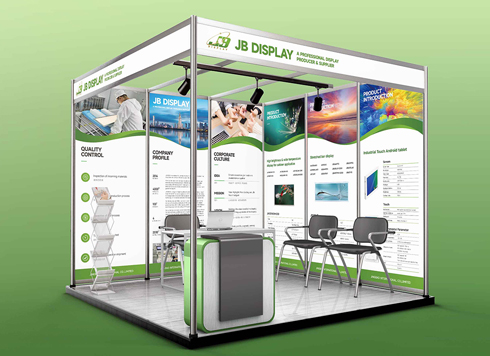 Booth Poster Design for Professional Monitor Product Suppliers
The standard exhibition booth poster projec ...
-
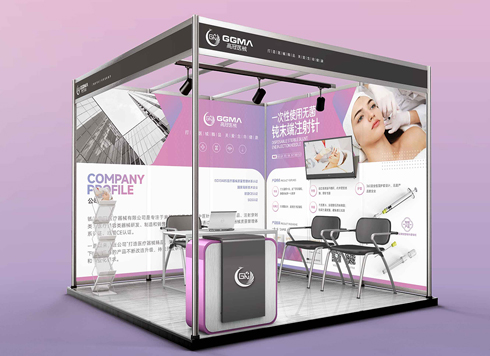 Design of Standard Exhibition Booth Posters for Beauty Instruments
Carefully designed a standard exhibition bo ...
-
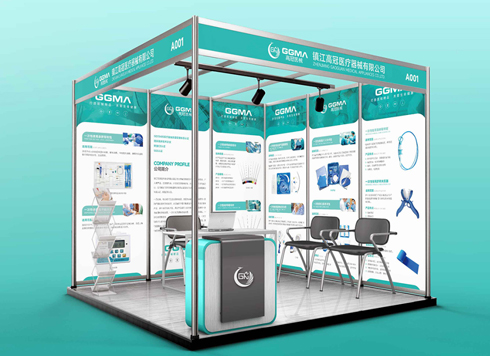 Design of Exhibition Posters for Medical Device Standards
XiYue is designing an exhibition booth post ...
-
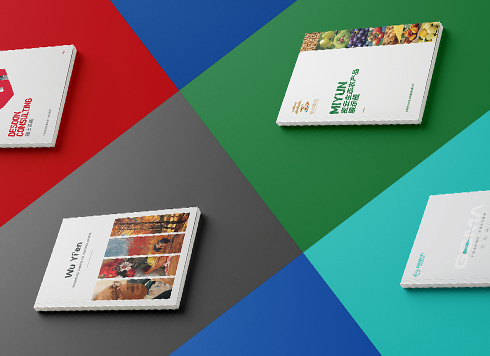 Collection of Brochure Design Cases in 2024 (Cover Series 02)
Our brochure design projects focus on diver ...
-
Brochure spread image prints with a missing chunk in the middle—is it not enough gutter allowance or the wrong binding method?
Date: Sep 14, 2026 Read: 2
-
If the printer provides the die, will packaging design still charge for structural drawings?
Date: Sep 13, 2026 Read: 6
-
Poster QR code won't scan: is it too small or too close to the edge?
Date: Sep 12, 2026 Read: 11
-
Page number rules are set, so why do the manuscript's table of contents and body still not match?
Date: Sep 11, 2026 Read: 14
-
Why Do Actual Materials Still Look Inconsistent Even After the VI and Manual Are Handed Over?
Date: Sep 10, 2026 Read: 17