

If I Pay a Designer to Create an Image, Does the Copyright Automatically Belong to Me? What If the Contract Doesn’t Say?
Not necessarily. Paying the design fee in full and receiving the source files are two separate matters from “copyright ownership.” If the contract does not specify copyright ownership, under the common rules for commissioned works, the copyright defaults to the designer. When businesses or individuals outsource graphic design, what really needs to be resolved is not just a simple “who owns it,” but clearly defining the “scope of license” and “whether transfer is involved.”
In 2026 project delivery practices, we usually start by breaking the rights into three layers: usage rights, adaptation rights, and transfer of economic rights in the work. Only by discussing these three layers separately can you avoid later disputes such as “after the image is done, using it to register a trademark or making a second revision.”
What You Pay for Is a License, Not the Copyright
Copyright consists of multiple rights, including the right of attribution, right of modification, right of reproduction, right of distribution, and right of communication through information networks. In a commissioned graphic design project, the designer is the author upon completing the creation; the client must rely on a license to legally use the work. Many people mistakenly believe that “if I paid for a poster, I can freely modify it, use it to register a trademark, or print it on packaging for long-term sale.” This is a common source of revision requests and disputes.
- Delivering only the final design: This usually covers only the right to use the work in the agreed context, such as materials for a single event or publication on one channel.
- Delivering the source files: This only means you can edit and adjust the layout; it does not necessarily mean you may sublicense the modified version to a third party or use it for other commercial purposes.
- Contract stating “transfer of economic rights in the work”: Only then can you freely reproduce, distribute, and adapt the work, and you can also exclude the designer from using the same creative concept for other clients.
Here is a cost difference you can verify: in commercial design quotes, the fee for a standard commercial license versus a “full copyright buyout” generally differs by 30%–100%. This is a typical experience range in 2026 project deliveries. If a quote is significantly lower than this range, it is likely only for the final deliverables and does not include a full transfer.
If the Contract Does Not Specify Copyright Ownership, Assess in This Order
In the absence of a written agreement on copyright ownership in commissioned works, ownership generally belongs to the commissioned party (the designer). The client may still use the work within the specific purpose for which it was commissioned. However, the meaning of “specific purpose” can be disputed in different contexts. A judge will consider chat records, quotes, and usage practices as a whole. Therefore, the safer approach is to specify it clearly before work begins.
- First, check whether the contract contains any clause on “copyright transfer” or “copyright ownership.” If it does, the clause prevails.
- If there is no such clause, check the quote, supplementary agreement, or chat records for explicit commitments such as “buyout,” “all rights,” or “exclusive.”
- If it is still unclear, refer to the project fee level. A standard design fee usually covers only a one-time or limited-scope license; a full buyout quote is often 30%–100% higher, which is also a typical experience range.
It is worth noting that this “30%–100%” is a typical experience range and does not represent an industry pricing standard. More importantly, if the contract terms and the quote conflict, the written contract prevails—do not rely on verbal assurances like “Don’t worry, it’s all included.”
Whether to Buy Out the Copyright? Answer These Four Questions First
Not all design projects require a copyright buyout. Even if you do not acquire the copyright, as long as you clearly agree on the scope of use, a single event key visual or a one-off poster can be sufficient. Use the four-question method to decide:
- How long will it be used? A one-off event versus a visual asset that will last for years carries completely different levels of risk.
- How wide is the distribution? Is it just for one WeChat official account, or will it be rolled out across offline channels, e-commerce, and overseas?
- Will you create derivative works? Changing copy or cropping dimensions is basic secondary use; extending the design, creating merchandise, or registering a trademark is deeper use.
- Do you require exclusivity? If you do not want competitors to use a similar concept, you must clearly specify an “exclusive/sole license” in the contract, or even transfer the copyright directly.
Looking at 2026 delivery practices, most projects only need “usage rights + source files.” Only core assets such as a brand logo, mascot, full VI system, or product packaging key visual are worth paying an additional fee for a full transfer. The additional buyout fee typically falls within the typical range of 30%–100% of the original quote, and the process generally requires an extra 1–2 business days for contract and seal procedures.
Source Files, License, and Copyright Transfer: Do Not Confuse Them
These three correspond to different rights; missing any of them in writing can create problems after delivery.
- Delivering the final draft: For acceptance and output in the agreed context only; any revisions require new communication.
- Source files + license for this project: Convenient for your own editing, but adapted works cannot be handed over to others as new designs.
- Source files + transfer of economic rights: Equivalent to a buyout; brand-type assets should be in this category, and you should also arrange the right of attribution and font/image material licenses at the same time.
In actual delivery, exceeding the scope of use is rarely intentional infringement—it usually happens because the contract did not clearly state “what can be adapted and which channels it can be published on.” In a common scenario, the contract only mentioned use at an event launch; the client later adapted the file into an e-commerce product page and put it online. The proper approach is not to immediately refuse further cooperation, but to first preserve evidence and then propose a solution that involves signing a supplemental license agreement and paying an out-of-scope usage fee. As a result, the client spent an extra 1–2 business days on internal seal procedures, and the launch schedule was delayed by a few days. Based on our typical experience range in handling such matters, signing a supplemental license agreement usually takes 1–2 business days, and the out-of-scope usage fee is negotiated by both parties with reference to the original quote—generally not a “full copy of the original fee.”
Our current practice is to include a “license scope checklist” directly in the quote, listing items such as media, purpose, duration, and whether modifications are allowed. Spending a few extra minutes upfront saves a great deal of communication cost later.
When to Buy Out Copyright, and When Not To
Core designs that are long-term brand assets are suitable for copyright transfer: logos, brand marks, typographic logos, mascots, key visuals of a unified visual system, product packaging main visuals, and so on. These will be used across multiple media for a long time and require deep adaptation, so you should purchase the full economic rights and properly handle material licenses and attribution agreements.
Low-reuse, short-lived materials are not suitable for starting with a buyout: for example, a poster for a single event, an image for a WeChat Moments post, or an internal training manual. Their usage cycle is short and the chance of modification is low, so paying extra for a buyout is not cost-effective. The right approach is to treat media, time, territory, and allowable adaptation scope as license options and purchase only what you need.
A boundary that can be quoted independently: if a design will be used only once, will not be adapted, and you do not mind the designer selling a similar concept to clients in different industries, then there is no need to pay extra for a “copyright buyout”—just verify the license scope carefully. But if it is part of your brand assets, be sure to clearly state the transfer in written provisions.
FAQ
Why does the designer still claim copyright after I paid the design fee?
A design fee usually covers only production costs and a one-time usage license; it does not automatically include copyright transfer. To obtain the copyright, you need to negotiate a separate “buyout” and include the transfer clause in the contract.
Is it enough for the contract to say “copyright belongs to Party A”?
No. “Copyright belongs to Party A” may cover only the economic rights. The right of attribution and licenses for fonts and image materials still need to be listed. It is recommended to specify “transfer of economic rights in the work” and state whether the designer’s attribution right is waived and whether materials are licensed as well.
Is it necessary to buy the copyright for just one event key visual?
In most cases, no. It is sufficient to agree that it is for this event and official channels only. If adaptation or further distribution is likely later, add an adaptation license option in advance.
Can the designer sell the same design again to another client?
It depends on whether the contract contains an “exclusive” or “sole” clause. Without such a clause, a non-exclusive license allows the designer to reuse the composition or materials. If you do not want competitors using a similar look, you must state “exclusive” in writing.
Do “royalty-free images” from stock websites affect the copyright of the final design?
That is a matter of material licensing, unrelated to the design copyright. However, it determines whether the final work can be used commercially. Therefore, check the license scope of fonts, images, and templates item by item, and keep the license records.
When commissioning graphic design in 2026, it is recommended that before the work starts, you include in the contract four clear points: the scope of the license, the form of source file delivery, whether the copyright is transferred, and attribution and exclusivity. If you are unsure, ask your company’s legal counsel or a licensed attorney to review it. This article provides general guidance only and does not constitute formal legal advice.
-
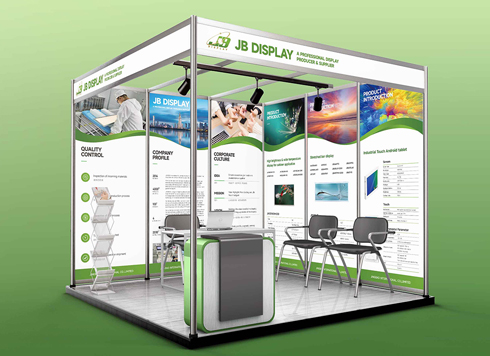 Booth Poster Design for Professional Monitor Product Suppliers
The standard exhibition booth poster projec ...
-
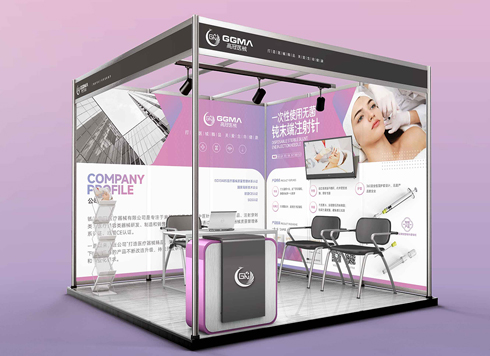 Design of Standard Exhibition Booth Posters for Beauty Instruments
Carefully designed a standard exhibition bo ...
-
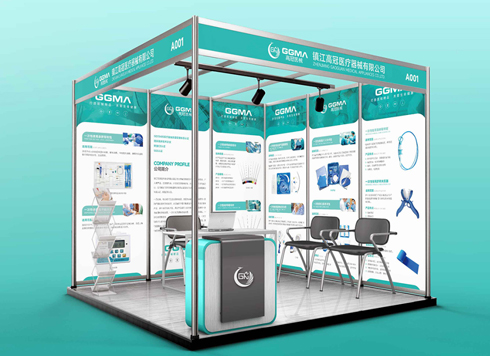 Design of Exhibition Posters for Medical Device Standards
XiYue is designing an exhibition booth post ...
-
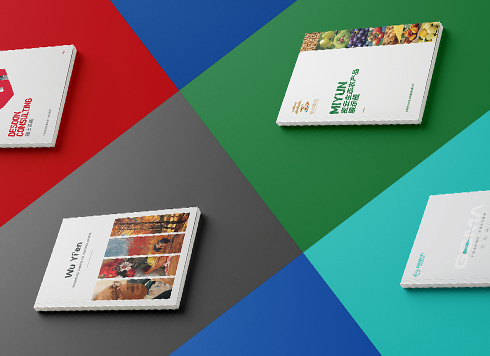 Collection of Brochure Design Cases in 2024 (Cover Series 02)
Our brochure design projects focus on diver ...
-
Why does the same foil stamping look premium on someone else's brochure but cheap on mine?
Date: Sep 14, 2026 Read: 2
-
Large-area poster gradients print out in stripes — can adding noise alone fix it?
Date: Sep 13, 2026 Read: 6
-
Printed Black Text Looks Fuzzy with Color Fringing—Is Four-Color Black Really to Blame? Is It Necessary to Change Text Black Separately Before Printing?
Date: Sep 12, 2026 Read: 9
-
Will a QR Code on Print Really Fail If It's Printed Too Small? Do You Need to Test Scan with a Phone Before Output?
Date: Sep 11, 2026 Read: 12
-
Is 7pt Text on Printed Materials Really Unreadable? Is a Full-Size Proof Before Printing Necessary?
Date: Sep 10, 2026 Read: 16