



Can Packaging Use Free Fonts and Images Downloaded Online and Be Sent Directly to the Printer?
Packaging cannot directly use free fonts and images downloaded online for printing. Once packaging is on the shelf, it is commercial sales; every font and graphic involves copyright licensing. Free materials online are typically limited to personal or non-commercial use, and printing them directly carries risks of removal, compensation, or even lawsuits. Based on 2026 packaging design project delivery habits, the proper approach is to confirm every material has been licensed for commercial use, and the license scope covers printing, sales, and promotion.
Why does packaging design have stricter material licensing requirements than online design?
For online design, such as WeChat article images or web banners, the worst outcome of using the wrong material is deletion or replacement. But once packaging is printed, hundreds of thousands of products have already been distributed through channels. If infringement is discovered, the products must be recalled, destroyed, or repackaged. Even if sold only online, product packaging images are repeatedly displayed on platform pages, which also counts as commercial use. According to our delivery experience, the cost of correction plus destruction caused by a single packaging material infringement typically ranges from tens of thousands to hundreds of thousands of yuan—far higher than the few thousand yuan needed to purchase a license in advance.
Packaging also falls under the commercial act of "reproduction and distribution," making material rights holders more likely to monitor such uses and claim higher compensation. Unlike an image uploaded online, patterns printed on packaging are seen by thousands of consumers, providing clear evidence and obvious impact.
- Fonts, illustrations, photos, and even textures on packaging are "works" protected by copyright.
- Free does not mean commercial use is allowed; "non-commercial use only" is a common restriction in free materials.
- Printing also requires an additional "print license," as many material licenses do not cover mass printing.
How to determine whether an image or font can be used commercially?
The key is not "whether there is a watermark" or "whether it was downloaded from a website," but what the license agreement states. Based on common rules for paid stock photos and font libraries in 2026, licenses that allow commercial use typically include explicit terms covering usage scope, circulation or print volume, attribution requirements, and whether sublicensing is permitted.
Pay special attention to keywords in the license agreement. For example, "royalty-free" does not mean "free" but "no ongoing royalties," and you still need to purchase a license. "Editorial use only" means it can only be used for news reporting and similar editorial purposes, not for commercial packaging. According to common terms in mainstream stock libraries in 2026, standard licenses often impose a cap on print runs, with the typical range from tens of thousands to hundreds of thousands of copies. Exceeding that limit requires an extended license.
Three-step verification method
- Find the original license agreement: Free download does not mean waiver of rights. You must click on the "license agreement" to check usage restrictions, rather than relying on promotional language next to the download button.
- Confirm whether "commercial use" and "print reproduction" are allowed: Many free font libraries only permit personal use, internal use, or have limits on print volume.
- Keep authorization evidence: Take screenshots and archive license terms, purchase records, and download timestamps as proof of authorization after the product goes to print.
Acceptance criterion: You are truly able to use a material only when you have complete authorization documentation proving it is commercially usable and printable. When in doubt, it is better to switch to original materials or purchase a commercial license.
What are the real differences between free and paid materials?
Free materials seem to save money, but the combination of "free + commercial printing" is often the more expensive choice. If infringement occurs, the compensation demanded by rights holders is usually far higher than the few hundred or few thousand yuan you saved in licensing fees. Paid materials have clear prices and offer greater confidence in terms of license scope, after-sales support, and resolution.
- Free materials: Common license restrictions include "non-commercial use," "not exceeding a certain print volume," "attribution required," and "no modifications." These terms are easy to overlook during download.
- Paid single image/font license: Typical price ranges are a few hundred to a few thousand yuan for a font set, and a few hundred to over a thousand yuan for a commercial image. The license scope is visible at the time of purchase, and it is also easier to trace the source.
- Stock library membership: Membership agreements often specify "for personal use only" and "does not cover licenses for people or trademarks in images." Commercial packaging proposals require separate confirmation. A personal membership typically costs a few hundred yuan per year but usually does not include print rights.
Even when you pay, the license scope differs greatly between single-image purchases and corporate memberships. Corporate copyright packages commonly range from several thousand to over ten thousand yuan per year and can cover packaging within a certain print volume. However, confirming specific categories such as food or cosmetics may incur additional fees. For small-batch products with limited print runs and budgets, buying out a single image or font license outright is often more cost-effective.
Which situations are easily misjudged as safe?
- Stock sites label "free for commercial use": Many sites promote "commercial use" on the download page, but when you open the agreement, you find it applies only to personal websites or social media, not to mass printing such as packaging or outdoor advertising.
- Font packages obtained from cloud drives or groups: These lack license agreements and have unknown sources, making them high-risk. Once used, you cannot prove a purchase record or know whether they were redistributed.
- "I already bought a stock library membership": Personal and corporate license scopes differ greatly, and most memberships do not include rights to specific people's likenesses or trademarks.
What should be checked last before packaging design is handed off?
In a graphic design project, the material license list should be delivered together with the design source files. If the designer merely embeds the fonts and places images, but cannot provide licensing records, the packaging design draft is "produced with a hidden illness" as far as printing is concerned.
Acceptance criterion: The client must be able to see the name, source, license expiration date, and usage restrictions for every material. According to corporate project delivery habits, the designer should include a Material Copyright Checklist upon delivery. Otherwise, the client should ask: "Can you guarantee that the fonts and images used here are safe for my printing and sales?"
In practice, we turn the material list into a table, specifying the material name, packaging location, license type, validity period, and license ceiling for each item. When a client says "the image was downloaded online," we are not quick to trust the word "free." Instead, we ask them to forward the download page or license email so we can verify. If the material source is unclear, a safer solution is to redesign that part rather than take the risk of printing.
Field experience: an urgent re-layout triggered by a free font library
In recent years, we have seen such situations more than once: a client, to save budget, asked the designer to use a free font library for the main packaging title. Then, just before the new product launch, they received a lawyer's letter from the font company demanding removal or retroactive license fees. The constraint was that the proofing schedule was fully booked, so the only option was to temporarily change the font and redo the layout. In that case, the designer worked overnight, requested urgent proofing, and ultimately caught up with the launch. Although the product got on the shelf in time, the rush fee and air freight cost an extra 2,000 to 4,000 yuan according to the typical range, and the whole project team worked overtime for two consecutive days. Under a normal replacement process, re-layout, proofing, and confirmation would usually take one week. Since then, we have required clients to sign a material copyright confirmation form before starting, to verify the commercial usability of free fonts/images in advance.
This case highlights that controlling material copyright risk is not about post-hoc remediation. It should be verified during the design phase upfront. Based on our experience, the time cost of verifying materials in advance is usually no more than half a day, while rework after a problem occurs often takes weeks.
Applicable scenarios and boundaries
Situations that require careful copyright control: Any packaging intended for formal printing, sales, or investment promotion, such as retail packaging for food, cosmetics, or daily necessities. Such packaging is for commercial use, with high print volumes and wide distribution, requiring strict verification of material licenses.
Situations where there is no need to worry too much: For internal workshop or brainstorming printouts, or proposal drafts intended for team review, low-resolution materials or temporary fonts can be used for indication. However, they must be replaced before the final external version. Materials clearly in the public domain or marked as CC0 can also be used directly, but you should still keep records for reference.
There is also a common gray area: custom gift boxes or corporate gift packaging that appear to be non-selling items are still considered commercial use if tied to brand promotion or business partnerships. Material rights holders typically will not give up claims just because "it is a giveaway." Conversely, product photos you take yourself or patterns created by your in-house illustrator can be used with confidence if the contract assigns copyright to your company.
FAQs
If free fonts are used on packaging, how does the font company discover it?
Font companies regularly search marketing platforms, stores, and social media for typeface characteristics on packaging. Once they find suspected unauthorized fonts, they will first send a lawyer's letter demanding removal or license payment.
Can I use images from a stock library membership on packaging?
You need to check the membership agreement separately. Many personal memberships are limited to online use and do not cover print reproduction. Packaging printing typically requires an upgrade to a commercial extended license.
If I draw my own patterns or use handwritten fonts, will there still be copyright issues?
Original doodles or handwritten fonts do not involve third-party copyright, but if you inadvertently imitate a well-known person's signature or a brand's logotype, you may still run into portrait rights or trademark rights.
When outsourcing design, who owns the material copyright?
Under common 2026 contract terms, the final packaging copyright belongs to the client, but the copyright of third-party materials used by the designer remains with the original rights holders. Clients should require the designer to provide a traceable license list in the contract.
Action boundary: For officially mass-produced packaging, be sure to include material licensing fees in your budget and follow the three-step process of "license content — license scope — keep records." For single decorative items or internal materials, consider free materials only when risks are manageable. If uncertain, it is better to stipulate in the contract that "the designer is responsible for confirming commercial rights of materials" than to send packaging to market with hidden risks.
-
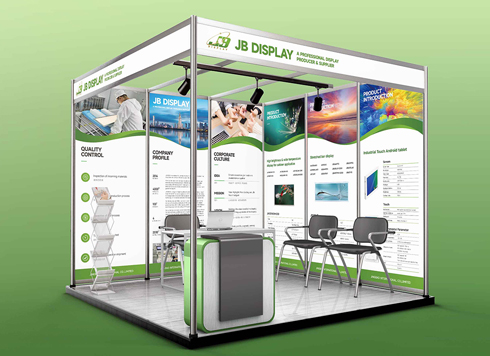 Booth Poster Design for Professional Monitor Product Suppliers
The standard exhibition booth poster projec ...
-
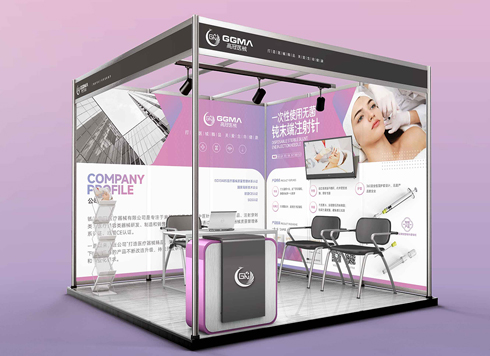 Design of Standard Exhibition Booth Posters for Beauty Instruments
Carefully designed a standard exhibition bo ...
-
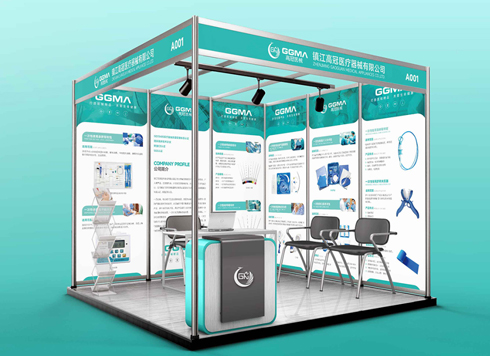 Design of Exhibition Posters for Medical Device Standards
XiYue is designing an exhibition booth post ...
-
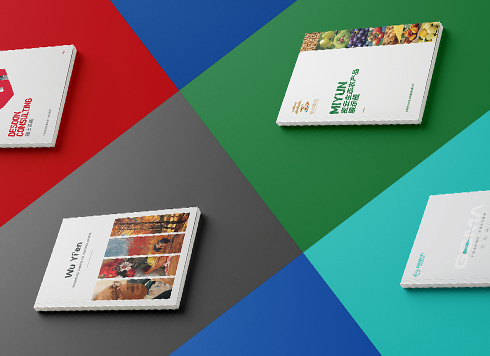 Collection of Brochure Design Cases in 2024 (Cover Series 02)
Our brochure design projects focus on diver ...
-
If the printer provides the die, will packaging design still charge for structural drawings?
Date: Sep 13, 2026 Read: 6
-
Can't Finalize Your Packaging Design? What Should You Check for Acceptance?
Date: Sep 1, 2026 Read: 20
-
Packaging Design Proofing Color Off or Die-Cut Wrong? Align These Three Before Delivery
Date: Aug 27, 2026 Read: 25
-
When Designing Packaging Boxes, Who Should Provide the Die Line: the Design Firm or the Printer?
Date: Aug 26, 2026 Read: 35
-
Packaging Design Quotes Differ by Multiple Times: How Many Revisions Are Normal? What to Check for Acceptance?
Date: Aug 21, 2026 Read: 32