



If the ingredient list formula is tweaked and the client only sends a WeChat screenshot, can the design file go straight to print?
On packaging, the ingredient list, net content, barcode, and producer information: content accuracy is usually confirmed by the brand owner, while the design company is mainly responsible for typesetting it into the layout according to specifications and making the finished product readable and printable. A common delivery practice in 2026 is: the client provides final copy with a version number and date, the designer typesets it, both parties sign off word by word before printing, and the signed version is the production version. Sending only a WeChat screenshot and going to print: the risk is usually not typesetting skill, but that the version was never locked down.
How responsibility is divided: content belongs to the client, typesetting can be delegated, sign-off cannot be skipped
Many clients assume that once the design fee is paid, the whole packaging artwork is the design company's responsibility, but in the printing and packaging industry, content responsibility and layout responsibility are two separate lines. Separating them is not about shifting blame; it is because once content is printed incorrectly, paper cutting and printing costs have already been incurred, and checking beforehand is better than assigning blame afterward.
- Content responsibility (client or brand owner): product name, net content, ingredient list, nutrition facts, producer and address, execution standard, barcode number ownership, and authorization to use certification marks.
- Layout responsibility (designer): font size hierarchy, line spacing, alignment, white space, avoidance with the key visual, Chinese-English pairing order, and pre-press file specifications.
- Sign-off responsibility (both parties jointly): word-for-word pre-press verification, a sign-off sheet stating the version number and date, the signed version as the production version, and re-signing for later changes.
If the designer finds an obvious anomaly, such as net content and specification contradicting each other on the same version, they usually have a duty to flag it, but this does not replace the client's final confirmation.
Why these few lines of small text easily go wrong before printing
Whether the key visual looks good can be judged by the client at a glance; small text such as the ingredient list and barcode often only gets checked when the printer produces a blue-line proof or the finished goods arrive at the warehouse. In 2026, platform spot checks and channel acceptance are more detailed about checking packaging labeling text, especially for products in the same series with multiple flavors and specifications.
- Character height: labeling text such as net content often has a minimum character height requirement; check it against current official labeling rules and the requirements of the sales region, not by how it looks on screen.
- Contrast: small text over textured, metallic, or full-bleed dark backgrounds will have lower readability in the physical product.
- Version drift: when only the flavor name and color band change in the same series, it is easy to miss updating the ingredient list, net content, and producer information.
- Barcode: the barcode number is registered and provided by the brand owner; the designer places it according to barcode standards and leaves quiet zones on both sides. The scale should not be arbitrarily stretched wider or compressed narrower.
The common problem is not insufficient design skill, but information being out of sync across multiple stages: after a formula tweak changes the order of the ingredient list, the old file is not updated; the barcode number changes, but the quiet zone is not reallocated.
The four locks for packaging information: lock the source, lock the version, lock the placement, lock the sign-off
This division is ordered from highest to lowest error probability: source and version govern the text itself, placement governs readability and compliance, and sign-off governs responsibility records. Omit any of the four steps, and later it can turn into a full batch of rework.
- Lock the source: clarify who provides the text and which department at the client confirms it; require an editable final copy, not a photo or transcription from old packaging.
- Lock the version: mark each final text copy with a version number and date, and write into the delivery list which version corresponds to which colorway, flavor, and specification.
- Lock the placement: the area, font size, line spacing, and relationship to the main display panel for labeling information should follow official rules and channel requirements; the designer may adjust position, but cannot shrink it until it is hard to read in the physical product.
- Lock the sign-off: output a sign-off sheet before printing, verify word by word, and sign and file it; any text change requires a new sign-off.
Locking the source guards against verbal transmission and screenshot relay; locking the version guards against multiple files with the same name running in parallel; locking the placement guards against compressing small text for a prettier image; locking the sign-off guards against signing only an electronic file without retaining time and version records. Putting this into a delivery checklist is more effective than repeatedly confirming in a group chat.
What is the difference between client typesetting and designer typesetting?
Both approaches work; the difference lies in responsibility boundaries and rework probability, not in price level. In experience, when the client has dedicated legal or quality control staff to issue copy, client typesetting is more stable; for teams with many product lines and fast version iteration, delegating typesetting to the designer saves more communication cost.
- Content accuracy: with client typesetting, responsibility is clearer; with designer typesetting, the sign-off version prevails, and the designer does not provide a final guarantee of content correctness.
- Typesetting consistency: designer typesetting makes it easier to keep font size, position, and white space consistent across a product series.
- Timeline: delegated typesetting usually adds 1 to 3 working days for text checking and adjustment; this experience range is common in most packaging projects; if client typesetting goes back and forth repeatedly, it may take more time.
- Revision rounds: for pure text adjustments, the typical range is 2 to 4 rounds; more if structure or layout rearrangement is involved.
- Cost: delegated typesetting is generally not charged separately, or is billed hourly in an experience range of several hundred to one or two thousand yuan; client typesetting seems to save this amount, but the cost of one printing error is usually far higher.
- Best fit: client typesetting suits mature brands with dedicated quality control; delegated typesetting suits startup brands, multi-flavor series, and products sold across regions.
This comparison can be used as a checklist: for the same ingredient list tweak, client typesetting and delegated typesetting differ in timeline, revision rounds, and cost basis. Writing the basis into the brief before commissioning is more useful than arguing afterward.
Where delivery usually gets stuck: screenshots, versions, and press scheduling
A common sticking point at delivery is: the client's marketing department copies the ingredient list from the previous packaging version, even though the formula has actually been tweaked, and only one week remains before press time. The constraints are limited budget, compressed timeline, and old files that can be reused. The approach is to require an editable final copy, lock the text final copy and the structural artwork together, first produce a digital proof for text checking, and then run a press proof. The cost is spending an extra half day to one day on word-for-word checking upfront, typically in the range of 1 to 3 working days; but it can avoid rework and reprinting of an entire batch of cartons or labels, whose cost is usually several times the single print run. This is why locking the version down is more cost-effective than fixing it afterward.
In project delivery, pre-press usually archives the text final copy, sign-off sheet, and proofing records together, so that when flavors or specifications change later, the version number can be compared directly instead of digging through chat history again. This action is not complicated, but what it saves is often the cost of an entire print batch.
How to judge whether this version is acceptable
Do not judge acceptance only by the rendering. The acceptable criteria are: when the finished product is in hand, three types of people can each complete their action—consumers can clearly see the net content, checkout or warehouse staff can scan the barcode smoothly, and the client can match it to the text version they submitted.
- Readability: at the physical size and under normal light, labeling text does not require leaning in to identify.
- Scannability: on an actual printed sample or trial print, the barcode can be read in one pass by common scanning equipment.
- Checkability: the sign-off sheet, text final copy, and finished product can correspond one to one, with matching version numbers and dates.
- Traceability: revision records are retained, and when changing specifications, it is possible to check what was changed in the previous version.
The counterexamples are also clear: only group chat screenshots and no final copy file; the barcode was only tested on screen and not verified with a physical print; net content was scaled along with the overall artwork and appears smaller on the finished product than in the proof. If these three situations occur, it is advisable to stop and re-sign off before printing rather than taking a gamble.
Applicable scenarios and boundaries
Situations suitable for delegating text typesetting to the designer are: first launch of a new product, one series with multiple flavors and specifications, sales across multiple channels or regions, and packaging redesign where the content has been updated. In these scenarios, labeling information has many versions and changes frequently, and centralized typesetting makes it easier to stay consistent.
There are also situations where this should not be complicated: internal transfer boxes and packaging not intended for separate retail sale usually do not need full consumer labeling; for products that already have a legal or quality control department issuing unified copy and a fixed layout template, the designer only needs to typeset according to the template and check font size and position.
The boundary can be summarized in one sentence: Whoever confirms the content provides the final copy; whoever executes the typesetting is responsible for readability and printability. For labeling requirements you are unsure about, follow current official rules and channel requirements, and do not judge by how the design file looks.
FAQ
Does the packaging design fee include typesetting for net content and the ingredient list?
Most packaging design quotes include by default the typesetting and placement of existing text, but do not include content writing, regulatory checking, or liability guarantees; if word-for-word proofreading is needed, it is advisable to specify this separately in the contract. In experience, this part is usually not charged separately, or is billed hourly.
If the ingredient list provided by the client is printed incorrectly, is the design company responsible?
Generally, the contract terms and sign-off records prevail. Content correctness is usually confirmed by the client, while the designer is responsible for typesetting according to the copy and flagging anomalies; if the client has already signed the sign-off sheet, the division of responsibility is clearer.
Is the barcode generated by the design company or provided by the client?
The barcode number is provided by the brand owner after registration; the designer is responsible for placing it according to barcode standards, controlling its size, and leaving quiet zones. If there is no registered number, do not make up digits yourself, or channel scanning will fail.
If only a small part of the ingredient list changes for a new flavor, is a new sign-off still required?
Yes. Any text change should be re-signed off, even if only a few words change. The experience-based practice is to issue a sign-off sheet for the changed item, noting the changed position and date, to avoid the old version being mistakenly used in production.
Will inconsistent Chinese and English labeling information be blocked by channels?
It is possible. Chinese and English labeling content should stay consistent, especially net content, ingredients, and producer information. Whether bilingual labeling is required should be checked against the official requirements of the sales region and channel; do not assume based on experience.
If your packaging has already entered pre-press, do two things first: add a version number and date to the text final copy, and schedule another word-for-word sign-off. The applicable boundary is also clear—products with scattered content sources and multiple flavors and specifications are worth doing this way; packaging that is purely for internal transfer and does not enter retail channels can focus energy on structural cost.
-
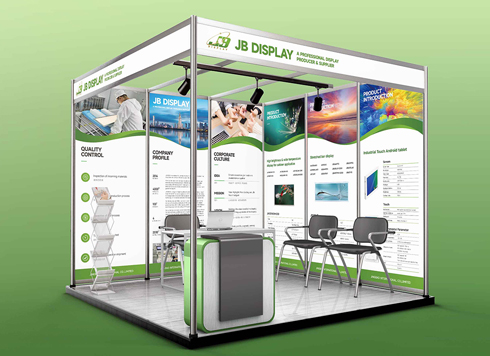 Booth Poster Design for Professional Monitor Product Suppliers
The standard exhibition booth poster projec ...
-
 Design of Standard Exhibition Booth Posters for Beauty Instruments
Carefully designed a standard exhibition bo ...
-
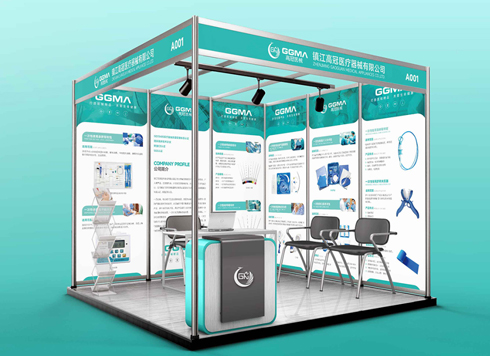 Design of Exhibition Posters for Medical Device Standards
XiYue is designing an exhibition booth post ...
-
 Collection of Brochure Design Cases in 2024 (Cover Series 02)
Our brochure design projects focus on diver ...
-
Same Gift Box Fine In-Store but Falls Apart in Express—Should the Insert Be Made in Two Channel-Specific Versions?
Date: Oct 7, 2026 Read: 14
-
Narrowed packaging barcode in brand navy blue, checkout scans two or three times—is the size too small or the color wrong?
Date: Oct 4, 2026 Read: 18
-
If the printer provides the die, will packaging design still charge for structural drawings?
Date: Sep 13, 2026 Read: 35
-
Can Packaging Use Free Fonts and Images Downloaded Online and Be Sent Directly to the Printer?
Date: Sep 7, 2026 Read: 53
-
Can't Finalize Your Packaging Design? What Should You Check for Acceptance?
Date: Sep 1, 2026 Read: 38