


Print Company Says 15dpi Is Enough for Outdoor Billboards: True or Just Cutting Corners?
When a print company says 15dpi is enough for outdoor billboards, it's usually true in most cases. Image sharpness is not determined by dpi alone but by a combination of viewing distance, actual size, and source image pixels. Based on common delivery practices in 2026, providing 15-30dpi for outdoor billboards at 1:1 imposition is sufficient. Only text and graphics that need to be legible within 2-3 meters should be prepared at 60-100dpi. Avoid habitually applying the 300dpi standard used for brochures—it only makes files huge and slower to transfer without making an 8-meter-wide print any sharper.
Why does a 300dpi image enlarged for a billboard tend to cause problems?
Dpi stands for pixels per inch and only matters when multiplied by the actual size. A 300dpi A4 image, proportionally enlarged to 8 meters wide, may end up with an effective density of only around 10dpi. Conversely, changing the resolution number to 300 in software does not add information to the original photo.
A table shows typical ranges for different media:
- Brochure pages: viewing distance 20-30cm, recommended 300dpi, file width about 3508 pixels (A4).
- Roll-up banners: viewing distance 1-2m, recommended 100-150dpi, at 80×200cm this equals about 4724×11811 pixels, which can be adjusted based on equipment.
- Storefront light boxes: viewing distance 3-10m, recommended 60-100dpi, width usually not exceeding 3000 pixels.
- Outdoor billboards and highway boards: viewing distance 10-50m, recommended 15-30dpi, width about 4000-9000 pixels depending on size.
These ranges are experience values, not mandatory standards. If the print manufacturer has self-check recommendations, follow their equipment and proofing results.
Before commissioning, measure size, determine distance, and calculate pixels—don't just ask about dpi
To avoid rework, we usually use a three-step verification method:
- Measure actual dimensions: Ask the finished width and height. For example, a storefront 3m wide × 1m high, or a highway board 8m wide × 3m high.
- Determine viewing distance: Clarify whether the audience is passing by in a car or standing near the store entrance. Outdoor billboards are usually viewed from more than 10 meters, while storefronts are viewed from 1-3 meters.
- Calculate minimum pixel count: Width in inches × dpi = pixel width. An 8-meter width at 15dpi equals approximately 4724 pixels, and at 30dpi about 9449 pixels; do the same for height.
A simple guideline: if the source material's original pixels are at least 120% of the required value and the enlargement does not exceed 150%, the output will generally not be blurry. If the source image is only 2000 pixels wide, changing the dpi to 300 won't help because the total pixel count in the bitmap has not increased.
When the artwork is not large enough, cropping and rebuilding works better than stretching
A blurry image is usually not due to incorrect dpi settings but to over-stretching the source material. Two common approaches are:
- Option A: Directly enlarge the whole image. Fast, can be ready within half an hour, but only suitable when the board is mounted high, viewed from far away, and the visual features large-grain textures. If there are clear people or small text, enlarging more than 150% will likely lead to rework.
- Option B: Crop and rebuild. Keep the main subject and reduce its area, then use large headlines, color blocks, and gradients to fill the composition. This usually takes an extra 1-2 working days, but it ensures at least the key element stays sharp and gives a more professionally designed ad rather than an obvious stretch.
In project experience, clients often say "the product image cannot be cropped." In that case, place the subject around one-third of the frame, shrink it until it looks visually balanced, and add brand colors and promotional copy around it. Check sharpness at the reduced preview scale based on actual viewing distance; don't zoom in to look for grain.
On-site delivery: a 900-pixel-wide image for a 3m storefront took an extra 1.5 working days
In the first quarter of 2026, we handled a storefront design for a convenience store chain: the client had only a 900-pixel-wide product photo but wanted it to fill a 3m-wide backdrop. At 1:1 imposition, a 3m width at 15dpi requires about 1772 pixels in width. Even enlarged to 150%, this photo was only 1350 pixels—not enough. We first cropped the product from the original image and enlarged it to 150% for a preview, but it was still not sharp. We then scaled the product down to one-quarter of the final area and filled the rest with large promotional text and brand colors. This revision took about 1.5 days and happened before proofing, so no extra printing or installation costs were incurred. If we had insisted on stretching the entire image and printing it directly, discovering the blurriness only after installation would have required redoing the tarpaulin and installation, typically taking 3-5 days at a cost more than ten times the revision fee—this is an experience range, not an exact quote.
Don't just check dpi for the delivery file: format, color, and fonts also cause failure
Before sending to the print shop, three things are more likely to trip you up than dpi:
- File format: Provide an imposed PDF or TIFF at actual size with outlined text, and include an editable source file. If you only send a compressed JPG, the factory cannot check sharpness, and issues can lead to finger-pointing.
- Color mode: Output in CMYK or the factory's specified color configuration. If you work in RGB, colors may appear dull after conversion; it's better to have a small proof first.
- Fonts and layers: Convert text to outlines and embed or package images. Missing fonts and broken links are the most common reason for rework in remote delivery.
A simple standard: when the print company's customer service receives the file and does not have to ask "Where is that image you mentioned in the source file?" it's acceptable.
Applicability and limitations
The 15-30dpi experience range applies to outdoor billboards, rooftop ads, construction site hoardings, and storefronts—distant displays where large headlines and graphic elements dominate. Do not apply this to the following cases:
- Indoor posters, roll-up banners, tablet standing cards: viewing distance about 1m, recommended 100-300dpi.
- Giclée prints, exhibition and competition archival outputs: need 300dpi or the factory's specified resolution.
- Pure digital campaigns that do not involve printing: follow platform pixel dimensions, such as common 1920×1080 pixels, which is unrelated to dpi.
If the contract already specifies resolution, follow the contract. This article only provides an experience range; ultimately, adhere to proofing results and manufacturer's equipment specifications.
FAQ
Is the print company saying 15dpi is enough just to save costs?
Usually not. 15dpi applies to large billboards viewed from over 10 meters away; when multiplied by the actual size, the total pixel count is not low. Setting the file too high only slows down printing and transfer.
What resolution should I provide for an outdoor billboard source file?
Provide 15-30dpi at final size. First ask the manufacturer for the dimensions and dpi they require, then calculate the pixel dimensions; don't carry over the 300dpi habit from brochures.
How much can I enlarge a source file before it becomes noticeably blurry?
Experience shows that beyond 150% you can see edge softness. For more certainty, print a small proof or check using a reduced preview at actual size.
Can I use a mobile phone photo for a storefront sign?
If the sign is large and viewed from far away, it may work temporarily as a background texture. If products need to be seen clearly up close, we recommend retaking the photo. Retaking usually costs less than reprinting and reinstalling.
Before commissioning an outdoor billboard, do three things: measure the actual dimensions, define the viewing distance, and calculate the source image pixel count. Then submit the source file at 15-30dpi and confirm the format and color mode with the print shop. This method suits billboards and storefronts, not indoor close-range posters or giclée prints. If in doubt, spend a few hundred yuan on a small proof; it saves far more than discovering blur after the whole batch is printed.
-
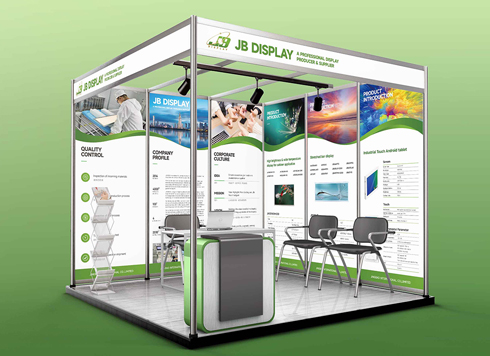 Booth Poster Design for Professional Monitor Product Suppliers
The standard exhibition booth poster projec ...
-
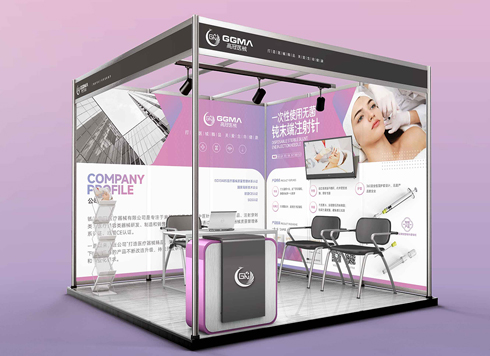 Design of Standard Exhibition Booth Posters for Beauty Instruments
Carefully designed a standard exhibition bo ...
-
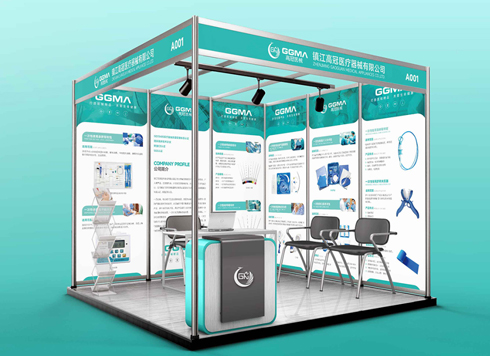 Design of Exhibition Posters for Medical Device Standards
XiYue is designing an exhibition booth post ...
-
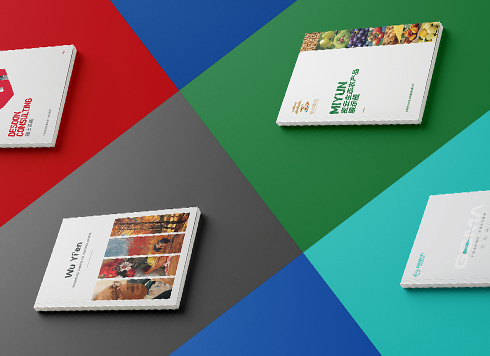 Collection of Brochure Design Cases in 2024 (Cover Series 02)
Our brochure design projects focus on diver ...
-
Brochure spread image prints with a missing chunk in the middle—is it not enough gutter allowance or the wrong binding method?
Date: Sep 14, 2026 Read: 2
-
If the printer provides the die, will packaging design still charge for structural drawings?
Date: Sep 13, 2026 Read: 6
-
Poster QR code won't scan: is it too small or too close to the edge?
Date: Sep 12, 2026 Read: 11
-
Page number rules are set, so why do the manuscript's table of contents and body still not match?
Date: Sep 11, 2026 Read: 14
-
Why Do Actual Materials Still Look Inconsistent Even After the VI and Manual Are Handed Over?
Date: Sep 10, 2026 Read: 17