



Can a Completed VI System Be Used Directly on Online Stores and WeChat Official Accounts?
A well-developed VI system can guide your online store and WeChat Official Account, but you cannot directly use VI files as the interface. A VI system supplies brand logo, standard colors, fonts, and layout rules. Online stores and Official Accounts, however, need to translate that brand language into clickable, resizable interface components. The rule can be summarized as: when a user must complete an action after looking at an image, adapt it first, then discuss consistency.
First distinguish: VI manages a consistent look; online interfaces manage clickability
It is right for brand owners to treat VI as the source of omnichannel visuals. In traditional projects, VI mainly serves static touchpoints such as business cards, packaging, posters, and store signage. Online stores and WeChat Official Accounts are interactive media, so screen size, page speed, tap targets, and accessible contrast must also be considered. Based on 2026 project delivery practice, the team first asks: Is this page for looking or for using?
Pure display pages can reuse VI to the fullest extent. Pages that require registration, add-to-cart, or form submission must hand part of the decision-making authority to interaction logic; otherwise users will not be able to find buttons and may mis-tap. The applicable boundary is: brand-identity materials such as article covers and shop signage can directly reuse VI elements; function-driven pages such as the cart and member center need component-level adaptation before launch.
- VI brand colors usually give a single primary value. Online pages also need light background tints, dark text, and status feedback colors in the same family.
- VI fonts are usually selected for print. On screen, they can have rendering and licensing issues. Without web font licensing, you cannot directly embed them into a WeChat Official Account or online store.
- VI layouts are built for fixed page sizes. Online layouts need to be reflowed to change width for mobile, tablet, and desktop.
What can be moved directly, and what needs to be adapted?
Judging whether something can be used directly is not about style similarity; it is about whether information is lost and whether the element can be clicked. Based on delivery experience, the assets below can be directly reused, while the following items must be rebuilt.
- Parts that can be directly used as brand DNA: vector source files for the logo, monochrome versions, supporting graphics, primary-secondary color ratios, the core font family and type scale, and photography style keywords.
- Parts that should be rebuilt: page headers, product main-image templates, WeChat Official Account covers, buttons and navigation bars, and icon components.
The reason: a logo is a two-dimensional identity symbol and can travel across media. An interface layout includes tap zones, hierarchy, and spacing, so it cannot be copied from a poster. Treat VI as an inspiration bank that makes people remember the brand, not as a ready-made layer bank. If you do want to reuse a poster layout, first test it at mobile width and check letter spacing, line height, and tappable areas.
Translating VI into online interfaces: the five-step digital brand transfer
We often use a five-step digital brand transfer in corporate projects to keep quality and schedule under control. The framework is still applicable in 2026 because it turns abstract ideas into reviewable milestones and avoids rework. Based on recent delivery experience, the total time for these five steps has a typical range: 3–7 working days for a purely static brand page; 8–15 working days for a store or mini-program that needs component redesign and extra testing of interactive states.
- Take stock of brand DNA: List reusable assets and missing items. First check whether the current font license covers online use. If not, obtain a license extension or choose an alternative. This step usually takes half a day to a day. The focus is not just to locate every file, but to confirm what can legally be used on digital channels.
- Build a digital palette: Convert CMYK or Pantone colors to sRGB/HEX, check contrast on white and dark backgrounds, and mark unusable combinations. A common practice is to add a state-color group for light backgrounds, primary buttons, and warning text so operations can call them directly.
- Set minimum sizes: Define the minimum digital size at which the logo can be used outside business cards to prevent it from becoming blurred on small screens, and set body copy at no less than the platform's normal reading size. Test by shrinking the layout on a real device, not only on a computer screen, and mark the guideline as "do not use smaller than" on the chart.
- Create three to five standard components: Use high-frequency positions such as navigation, cards, and buttons, and create normal, hover, pressed, and disabled states in brand colors. These states are usually not in a VI manual, yet they are the interface hooks UI development needs.
- Write one adaptation page: Put the do's and don'ts on a single page, replacing the old habit of reading a whole VI manual before execution. Put the primary HEX colors, minimum font size, button height, and disabled color on the same page so any supplier can quickly align.
Verify each step: in step 1, confirm the source file formats are complete; in step 2, review the actual screen effect rather than the computer preview; in step 3, hold the phone at actual size to inspect; in steps 4 and 5, ask a colleague who was not involved in the design to follow the rules and create a graphic. Only when the result is close to consistent can the standard be considered qualified.
How to tell if an online VI is effective: check these three points
You don't have to polish every page before evaluating. These three checks are enough to tell whether the standard can be carried out.
- Check a monochrome state: Take the color out of the page. If the logo blends into the background, the contrast needs to be fixed, and you should adjust the grayscale relationship first.
- Check a small-screen state: Scale the first screen down to an actual phone width. Confirm that the logo's minimum size, body line-height, and button height are still recognizable.
- Check a non-designer's output: Send the rules to a colleague who wasn't involved in the design, and ask the person to follow them to create a WeChat cover and a product main image. The closer the result, the clearer the standard. Each of these three checks usually takes 20–40 minutes. In our experience, testing with someone who is not on the project reveals issues faster than an internal self review.
Which scenarios need a full VI first, and which only need an online basic version?
If your business builds trust mainly through offline stores, shelf-ready packaging, and printed materials, a complete VI is more valuable because it unifies dozens of stores and hundreds of packaging pieces. Online store and WeChat Official Account become one use scenario: after the VI is done, extract one digital palette and a set of shared components, and that will be enough.
If the business relies mainly on online stores, mini programs, and content traffic, and rarely needs offline materials, an online basic version is the lower-risk choice. This means first setting the logo, 3 primary colors, 2 type sizes, and a set of cover templates. When the operating model works, expand VI to cover packaging, vehicle wraps, staff cards, and other applications.
Here is a comparison we often use to estimate boundaries:
- Online basic version (typical range): 3–8 working days; budget is about 1/3 to 1/2 of a full VI. Good for getting brand identity onto an online store and WeChat Official Account quickly when offline touchpoints are few.
- Complete VI system (typical range): 4–12 weeks; budget depends on the number of application items. Good for brands that must unify stores, packaging, e-commerce, and social media.
In short, first ask yourself whether these materials will be reused over the next six months. If yes, invest in the complete VI.
- Scenarios suitable for VI as the main driver: franchise chains, packaged consumer goods, physical service stores, exhibitions and events.
- Scenarios not suitable for forcing a VI system: utility mini programs, complex back-office systems, and information-feed advertising pages. These need interaction design and content strategy; a VI manual does not solve click-through rate issues.
Delivery field note: a gradient logo that broke apart on mobile
In a brand VI extension project in early 2026, the client asked the mini-program launch page to use the same five-color gradient logo from the VI system, because they thought it was the only way to keep the brand unified. The deadline was one week, and the source files had been delivered in a print format. When we exported the CMYK gradient to RGB and compressed it, we saw tonal banding, and the text over the small icon became illegible.
Our on-site solution was to use a monochrome logo version for the corner mark and move the gradient into the background illustration of the launch page. This preserved the color impression without hurting readability. The page passed both real-device tests and the third-party review in one attempt, saving two rounds of revision.
This kind of small-screen gradient banding is typical when a logo with a metallic effect, gradient, or thin-line detail is extended digitally. Our handling experience: When adapting, do not just export one compressed file. First run it in the smallest practical scenario, often a small icon; after it passes, apply it to larger graphics. If you meet a similar issue, ask one question first: Does the smallest permitted logo size still support recognition?
If we had compressed the print version and launched it directly, we would very likely have seen color banding, the brand text on the launch page would not be recognizable, and the project would have gone back for another revision. This incident also provides an experience range: high rework peaks in online VI adaptation often hit steps 2 and 3, i.e., the digital palette and minimum font size. Spending two extra days on these two saves more money than a later redesign.
FAQ
Can an online store and WeChat Official Account use poster layouts from the VI directly?
A pure banner for display can be reused with adjustments, but it must be reflowed for mobile width. Any block containing links, buttons, or forms must be rebuilt into clickable components; do not paste the poster image directly.
Do CMYK values in the VI need to be converted to RGB?
Yes. CMYK is for print. Screens use RGB or HEX. If you skip the conversion, colors will be obviously grayer or darker. Ask a designer to output one digital palette for operations and developers.
If we already have a VI system, is an interface design guideline still necessary?
Yes. VI handles brand recognition. An interface guideline handles controls, spacing, and interactive states. They work together; otherwise multiple people will not produce the same result.
Can we enter an e-commerce platform with just a logo and no full VI?
Yes. Keep the logo clear, the primary colors consistent, and the main type style consistent, plus a fixed product main-image template, and you can create a basic brand feel. Expand VI later when budget allows.
Action suggestion: Before going live on an online channel, ask the designer for the logo vector files, font license notes, and one set of converted sRGB values. If your team has not built a VI system, launch with the basic version first; do not buy the complete system for a one-time campaign. If you have many offline materials, expand gradually into a full VI to avoid different channels telling different stories.
-
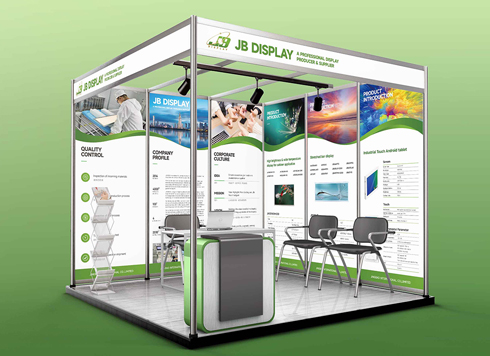 Booth Poster Design for Professional Monitor Product Suppliers
The standard exhibition booth poster projec ...
-
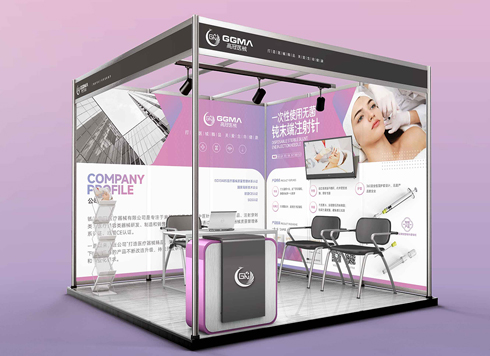 Design of Standard Exhibition Booth Posters for Beauty Instruments
Carefully designed a standard exhibition bo ...
-
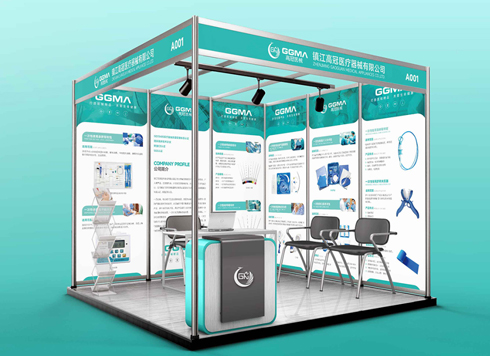 Design of Exhibition Posters for Medical Device Standards
XiYue is designing an exhibition booth post ...
-
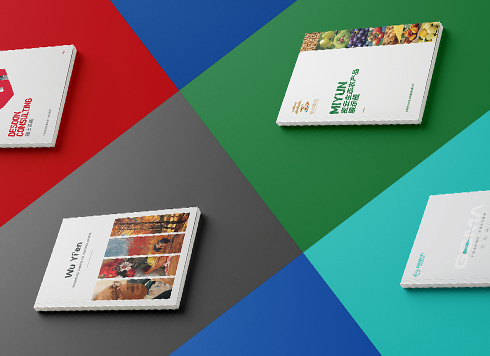 Collection of Brochure Design Cases in 2024 (Cover Series 02)
Our brochure design projects focus on diver ...
-
Art paper covers lose their feel when laminated, but unlaminated covers wear out: what is the right trade-off?
Date: Oct 20, 2026 Read: 5
-
When a pack front is packed with selling points, why does the shelf shopper pick up the less-wordy pack next to it?
Date: Oct 19, 2026 Read: 9
-
Full-bleed poster shows white edges after trimming—printer says the file has no bleed. How much should I believe that?
Date: Oct 18, 2026 Read: 9
-
At the same font size, English looks thinner than Chinese in mixed text—can making the Western type larger really make up for it?
Date: Oct 17, 2026 Read: 10
-
The sub-brand is still internal-only—should the VI system include the master–sub relationship in advance?
Date: Oct 16, 2026 Read: 15