



Printing Process, Paper and Binding: What Acceptance Points Matter When Proofing and Mass Production Diverge?
Printing process, paper and binding refer to the selection and control of printing methods, paper characteristics and binding techniques when turning a design into a physical product. Based on project delivery practices in 2026, the core standard for judging whether a design is professional is not the on-screen effect but whether the physical proof and the final product match what you hold in your hand. In the experience range, there is usually a 5% to 15% deviation in color and texture between proofing and mass production, so acceptance must be anchored to physical standards.
Why Do Printing Process, Paper and Binding Often Cause Disputes at Delivery?
Because many effects on a design cannot be directly reproduced by a printing press. For example, spot colors, foil stamping, embossing and lamination each require separate plate making and adjustment, while the paper's ink absorption, grammage and stiffness in turn affect how these processes perform. At project delivery, the output side and the client often hold different references: one looks at an on-screen color chart, the other at physical samples. That is how disputes arise.
- Insufficient resolution: images below 300 dpi at print size become blurry, especially noticeable in large-format ads.
- Fonts not converted to outlines: fonts may be missing when opened on another computer, and output can become garbled characters.
- Wrong paper selection: with the same four-color printing, coated paper gives high contrast and vivid colors, while offset paper turns grayish after ink absorption and suits reading-oriented books.
- Inappropriate binding: saddle stitching has thickness limits; usually beyond 64 pages, spine cracking or page falling out easily occurs.
Most of these pitfalls stem from a disconnect between the design file and printing standards. If the actual process is not considered during the design stage, for example by directly using screen display values to specify colors, the deviation is only discovered at proofing, and the rework cost is higher than imagined.
Printing Process, Paper and Binding: Use the Three-Step Verification Method for Acceptance
The three-step verification method allows clients who are not printing experts to grasp the key points. Step one: check the paper. Step two: check the process. Step three: check the binding. The order cannot be changed, because the paper determines whether subsequent processes can be rendered, and binding is affected by paper thickness and page count.
- Check the paper: feel it by hand and weigh it with a gram scale. Confirm the grammage and surface texture. Coated paper is smooth and reflective; offset paper is soft and less glaring. Thickness variation within the same batch is generally within plus or minus 5%; if it exceeds that, the paper has been changed.
- Check the process: look at whether spot colors, foil stamping, UV, etc. on the proof are clear and complete, and whether edges have burrs. For emphasized parts, use a magnifier to inspect the dots. Clear dots indicate the printing pressure is appropriate.
- Check the binding: open the sample book flat, and check whether the spine is deformed, whether the thread binding is loose, and whether the cuts are neat. For saddle stitching, also confirm the opening angle to avoid pages popping back due to over-tight binding.
Each step must use the physical proof as the reference, not the design file. At project delivery, if the proof passes but the mass production has errors, it is often because the batch paper differs from the proof, or the press does not have enough time for color adjustment. In such cases, use the three-step method to trace back and identify where the deviation occurred.
In a brochure project at Xiyue Company, the constraints were a tight budget, so only offset paper with four-color printing was possible, and the deadline was only 5 days. We insisted on making an A3 paper proof first so the client could confirm color difference and feel. When the first batch came off press, the cover showed a clear yellowish shift. Tracing back, we found that the offset paper came from a different batch, changing the ink absorption. We then recalibrated the color and switched back to paper from the same batch as the original proof, completing delivery on the fourth day. If we had skipped the paper proof, rework would have taken at least 2 more days.
Trade-offs Among Common Combinations of Paper, Process and Binding
Taking brochures as an example, the differences among three common combinations are clear. Basic digital printing suits self-use materials within 50 copies, costed per page, with moderate color stability; four-color offset printing suits batch brochures of 500 to 2,000 copies, with high initial run cost but low per-unit cost; thread-sewn hardcover suits collector-grade brochures or brand books, adding 3 to 5 days to the schedule, but opens flat and has a feel close to the original.
- Saddle stitching: for publications with few pages (within 60 pages), low cost, production time 1 to 2 days (experience range). The drawback is it cannot handle thick bindings; cross-page designs need 3 to 5 mm bleed reserved.
- Perfect binding: suitable for training manuals and product manuals of 100 to 300 pages, medium price, but pages cannot lie completely flat, and thick inner pages tend to fall out. A test binding must be done before mass production.
- Thread-sewn hardcover: suitable for brochures and collector editions, with thread sewing and adhesive on the spine, high durability, but the schedule is usually 2 to 4 days longer than perfect binding (experience range), and the budget is higher.
For paper selection, coated paper suits high-saturation images, matte coated paper suits mixed text and images, and specialty paper suits brand materials where texture is emphasized. In the experience range, specialty paper of the same grammage costs 30% to 80% more than coated paper, and the schedule may also be 1 to 2 days longer.
Another key point is the choice between spot color and four-color. If the company VI has standard colors, spot color printing is recommended, with a color difference controllable within 3% under standard light sources; for ordinary image content, four-color printing is sufficient, and there is no need to pay extra plate fees for spot color.
When Is It Worth Investing in Processes? When Is It Not Worth the Money?
The investment in printing process, paper and binding should be decided by the usage scenario. Brand materials, proposal brochures delivered to clients, and product packaging that represent the face of the business deserve better paper and processes, because they affect first impressions. For internal drafts, temporary posters, and versions requiring repeated revisions, ordinary copy paper and quick printing are enough, saving cost and shortening the schedule.
- Worth investing: long-term outdoor ads, product manuals, brand brochures, high-end packaging.
- Not necessary: internal circulation materials, temporary notices, draft proposals under revision, disposable promotional flyers.
There are three main situations where it does not apply: First, if the design is not finalized, do not proof in advance; Second, if time is insufficient for the proofing round trip and you need to directly use a four-color reference file, the color difference risk must be stated in writing; Third, if the print quantity is too small to reach the minimum run of the process, forcing it will significantly raise the unit price.
The judgment standard is: as long as the finished product is for external use and will be used for more than a month, it is worth treating the process and paper seriously; if it is only for internal processes, it is unnecessary. In addition, for paper packaging, transportation and storage must also be considered. For example, lamination prevents moisture but reduces the eco-friendly feel of the paper.
Frequently Asked Questions
How Many Revisions Are Needed Before Finalizing Printing Process, Paper and Binding?
Generally, 2 to 3 revisions before proofing is normal; after proofing, no more than 1 revision. Otherwise, the requirements are not clearly defined.
Why Is the Quote Twice as High? Where Does the Extra Cost Come From?
The difference usually lies in paper grammage, number of processes (foil stamping / UV), binding method, and print quantity. The more expensive version uses heavier paper and finer processes, and includes the proofing fee.
Can I Just Use an Electronic Version Without Printing?
Yes, but you lose the meaning of physical verification, and color difference and binding risks become completely uncontrollable during printing. It is recommended to make at least one proof.
How Do I Confirm the Sample Is Fine After Receiving It?
Follow the three-step verification method: check the paper, check the process, check the binding. View color difference under a standard light source and compare with actual requirements. Do not use a phone screen.
Practical advice for clients: when the budget allows, insist on proofing before mass production—the sample is the acceptance reference. If time is tight, clearly state in the contract that "the proof prevails" or "color difference range refers to the four-color standard." For long-term display or external materials, it is worth investing more in process and paper; for temporary internal items, it is not. There is no mystery in printing process, paper and binding—every item can be verified on the physical product.
-
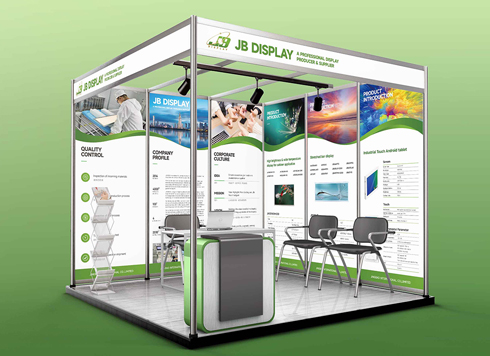 Booth Poster Design for Professional Monitor Product Suppliers
The standard exhibition booth poster projec ...
-
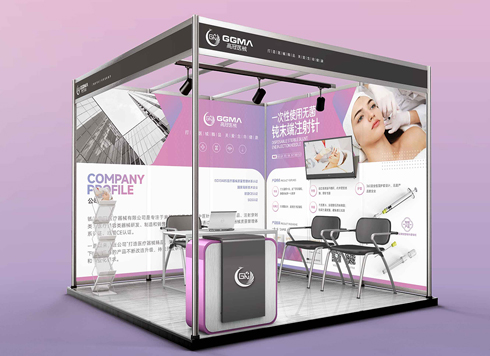 Design of Standard Exhibition Booth Posters for Beauty Instruments
Carefully designed a standard exhibition bo ...
-
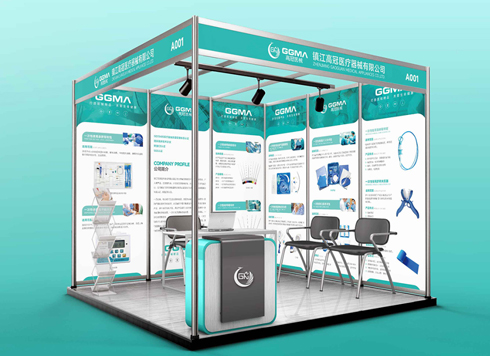 Design of Exhibition Posters for Medical Device Standards
XiYue is designing an exhibition booth post ...
-
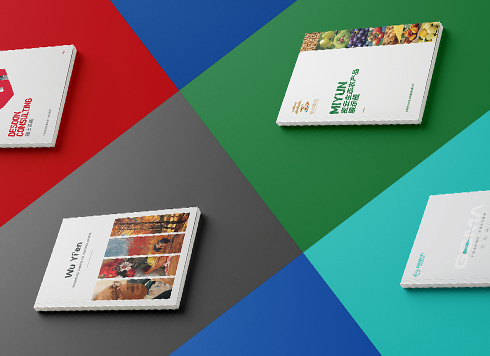 Collection of Brochure Design Cases in 2024 (Cover Series 02)
Our brochure design projects focus on diver ...
-
Printing Process, Paper & Binding: Is the Extra Cost of Proofing Worth It? What to Check Before Receiving Your Order?
Date: Aug 22, 2026 Read: 49
-
Printing Processes, Paper & Binding: Where Does the Difference Between Quote and Final Cost Come From?
Date: Aug 11, 2026 Read: 57
-
How to Handle Printing Processes and Paper Binding? A Complete Guide from Paper Selection to Binding
Date: Aug 6, 2026 Read: 60
-
The printer says spine thickness has to wait for the white sample, but the design draft is pressing for the cover—which number should we set first?
Date: Oct 14, 2026 Read: 3
-
On a round bottle label, the front text looks straight but the sides bunch up—should it have been laid out to the bottle curve from the start?
Date: Oct 13, 2026 Read: 5