



My saddle-stitched brochure ends at 30 pages and the printer insists on 32 — should I add the two blank pages?
When a saddle-stitched brochure's page count is not a multiple of 4 and the printer suggests rounding it up or adding blank pages, that is usually normal sheet-layout and folding logic, not an arbitrary price bump. The question is not whether pages can be added, but where the blank pages go, whether the total-page-count definition was locked in advance, and whether this brochure should have used a different binding method in the first place.
Why Saddle-Stitched Brochures Often Come Back to Multiples of 4
Saddle stitching nests several signatures together and drives staples through the fold at the spine. Each signature is made from one large sheet: one fold typically gives 4 pages, two folds commonly give 8, and further folds give 16 or 32. The cover is usually a separate signature and is counted by the same logic. So when the total page count follows a multiple of 4, the final signature won't end up as a single sheet or a half signature, and the accumulated error from folding, nesting and trimming is easier to control.
A common project handoff habit in 2026 is for the printer to ask first about total pages, text paper gsm and cover stock, then give binding advice. Most will suggest rounding to a multiple of 4, and multiples of 8 or 16 run more smoothly because sheet utilization is higher and the folder doesn't need repeated adjustment. This is not a hard rule at every printer, but following it usually keeps communication costs and the risk of paper rework and reprints under control.
- Pages per signature are set by the number of folds: one fold gives 4 pages, two folds commonly give 8; the thicker a single signature, the harder it is to nest in saddle stitching, and the more likely the spine is to bow.
- Agree on the page-count definition first: whether the front cover, inside front cover, inside back cover and back cover count toward the page total must be aligned with the printer and the client before layout, otherwise 30 pages and 32 pages don't mean the same thing.
- Saddle stitching is not suitable for spine printing: the spine is the fold, and printed text there is easily damaged by the staple legs and the crease; if you need spine information, switch binding methods.
When the Page Count Doesn't Match: How the Four Options Compare
Going from 30 pages to 32 is not only a matter of adding blank pages. Clients and designers often waver between these four approaches, and the usual order of judgment is: first see whether content can fill the gap naturally, then check whether the blank-page position makes sense, and only then consider changing the sheet layout or the binding. Below is a comparison by suitability, cost and typical lead time; the printer's quote and schedule are the final reference.
- Add content to reach a multiple of 4: suitable when there is still brand story, product comparison, case study or event preview material to fill in. The benefit is a natural page count with no empty pages; the cost is that the table of contents, product numbering and spread images may need to be re-laid out, typically adding some layout hours.
- Add natural blank pages: place them first at the title page, copyright page, after the contents, or between chapters. Blank pages themselves are usually not expensive and only slightly increase paper use; the trap is inserting a blank page in the middle of a body spread, which creates an obvious break when the brochure is opened.
- Adjust the sheet layout and number of folds: have the printer check against the actual sheet layout and re-round the total by 8- or 16-page signatures. This requires the printer to confirm folder capability and sheet size; looking only at software page counts on the design side leads to misjudgment.
- Switch binding methods: when the page count is on the thick side, you need lay-flat reading, or you need spine printing, sewn perfect binding or perfect binding is more suitable. Cost and lead time usually rise compared with saddle stitching; the experience range is a few yuan to just over ten yuan more per copy, and a standard delivery including proofing commonly takes 5 to 10 days, with rush jobs quoted separately.
In this comparison, the easiest thing to get wrong is not the cost but the order. Setting the page count first and then choosing the binding is usually less trouble than choosing the binding first and cutting pages; done the other way around, the gutter, bleed, spread images and cover flat size may all have to change. In 2026 many brochures still bounce between saddle stitching and perfect binding, and writing the page-count definition in one line and sending it to the printer in advance usually saves a round of communication.
At Handoff: Where the Cost Showed Up When 30 Pages Became 32
A common scenario: the client's content only ran to 30 pages, the designer finished the whole layout at 30 pages, and the printer said before proofing that saddle stitching needed 32. The constraints at the time were a trade show deadline one week away, a locked budget, and no appetite to change binding methods over two pages. The approach was to lock the total at 32 pages, fill one page each with a blank page after the copyright page and a chapter title page, and re-lay three spread images onto facing-page positions. It shipped on time, but the contents, the three spreads and the product numbering all changed with it, adding roughly a day of work and one extra proofing round.
Most of that cost could have been avoided: if the page-count definition had been locked before layout, the 30 pages of content could have been spread out through caption sizes and type sizes in the first two pages, and filling the gap would only have required touching the front and back matter. As an experience range, saddle-stitched brochures commonly run 16 to 64 pages, and 128 to 157 gsm text paper is a fairly common match; under 48 pages the spine is less likely to bow, and with thicker paper or a higher page count, running a blank dummy in advance is more cost-effective than revising after the fact.
Before Handoff: Check with the Four-Number Alignment
Page-count issues in saddle stitching can go back and forth if you look at page count alone. Aligning four things — page count, signature count, sheet layout and binding — on one checklist greatly lowers the chance of rework. Each step should have a checkable deliverable.
- Set the total page count: confirm whether the cover and front/back matter are included, follow a multiple of 4, and multiples of 8 or 16 are steadier; once the page count is locked, lay out the contents and page numbers.
- Set the signature count: ask the printer how many pages per signature, to avoid a single sheet in the final signature; the thicker each signature, the more likely the saddle-stitched spine will bow.
- Set the sheet layout and folding: have the printer check against the actual sheet layout, not just the page count in design software; different sheet layouts affect the total page count and trim positions.
- Set the binding and gutter: confirm saddle-stitch gutter compensation, bleed and spread image positions together; when the cover and text use different papers, the cover usually needs to be scored first.
At inspection, if the page count matches, page numbers run consecutively, blank pages sit in sensible positions and spread images are not broken, you can generally sign off the proof. If the blank dummy bows open, shows white after trimming, or the fold is not pressed firmly, don't sign yet — ask the printer to explain whether it is a sheet-layout or folding issue.
Where It Applies and Where It Doesn't
Saddle stitching suits brochures and handbooks with a modest page count, ordinary handling frequency, a limited budget and no need for spine printing. When the page count falls in the typical 16-to-64-page range, text paper is 128 to 157 gsm, and the content can be adjusted, rounding to a multiple of 4 is usually less trouble, and blank pages in the front and back matter do not disrupt the reading rhythm.
The unsuitable cases should also be spelled out: brochures with a thick page count, a need to lie flat, spine printing, or long-term handling should usually use sewn perfect binding or perfect binding. If the content only runs to just over 20 pages but is forced to 32 with a large number of blank pages, the brochure will feel thin; in that case it is better to cut pages, split into volumes, or replace blank pages with informative brand pages. In one sentence: if the content can be adjusted and the page count is in the typical range, rounding to a multiple of 4 runs smoothly; if the binding requirements exceed what saddle stitching can do, switch binding methods directly rather than propping it up with blank pages.
Frequently Asked Questions
Does a saddle-stitched brochure's page count have to be a multiple of 4?
The common practice is a multiple of 4, because one large sheet folded in half gives exactly 4 pages. But it also depends on the printer's folder and sheet layout; asking about the page-count definition in advance is safer than reworking afterward.
Will adding blank pages make the brochure look empty?
Blank pages at the title page, copyright page or between chapters usually don't look empty and can even create reading rhythm. If you're worried about emptiness, keep blank pages in the front and back matter rather than inserting them between body spreads.
How thick can a saddle-stitched brochure be?
The experience range is commonly 16 to 64 pages; the higher the paper gsm, the more likely the spine will bow, and under 48 pages is more common. Beyond that range, switching to sewn perfect binding or splitting into two volumes is usually recommended.
If the page count isn't a multiple of 4, how much more does changing the binding cost?
Changing the binding affects the process and lead time, and the cost usually rises; the experience range is a few yuan to just over ten yuan more per copy, with the exact figure to be confirmed with the printer based on quantity, paper and finishing.
If the cover and text use different papers, will saddle-stitch folding misalign?
It can. Different papers have different thickness and grain direction, so the accumulated thickness after folding is inconsistent; the common practice is to score the cover first and check once with a blank dummy before handoff.
Before layout, confirm the page-count definition, then set the binding method, then align the layout and spread images; when the page count falls in the typical saddle-stitch range and the content can be adjusted, rounding to a multiple of 4 is less trouble. For thick brochures, spine printing or lay-flat reading, sewn perfect binding is steadier. For quotes, lead times and the number of revision rounds, check the experience range against the printer's actual schedule.
-
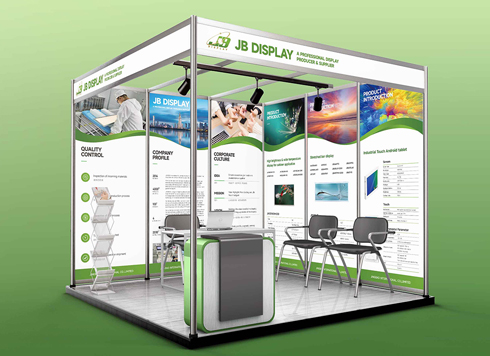 Booth Poster Design for Professional Monitor Product Suppliers
The standard exhibition booth poster projec ...
-
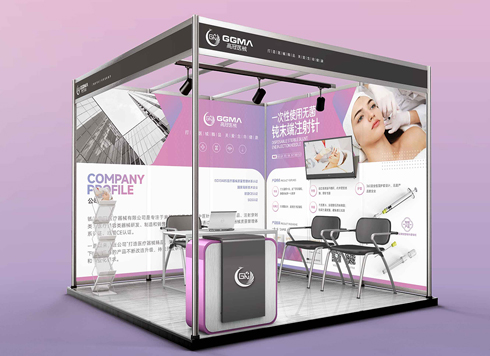 Design of Standard Exhibition Booth Posters for Beauty Instruments
Carefully designed a standard exhibition bo ...
-
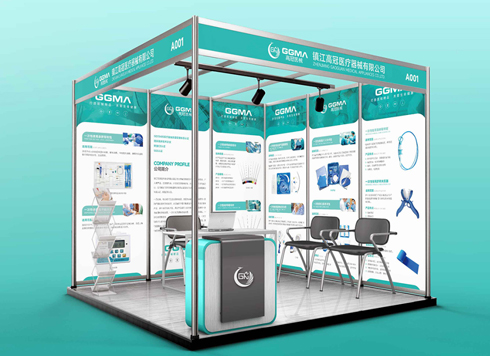 Design of Exhibition Posters for Medical Device Standards
XiYue is designing an exhibition booth post ...
-
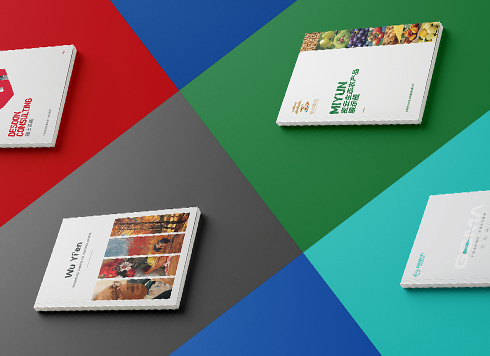 Collection of Brochure Design Cases in 2024 (Cover Series 02)
Our brochure design projects focus on diver ...
-
The same 300-plus-page book is fine for internal handout but comes unglued as a store reference book—should binding be decided by how it is read?
Date: Oct 8, 2026 Read: 16
-
Brochure stuck at 48 pages: saddle stitch or perfect binding?
Date: Sep 17, 2026 Read: 34
-
Printing Process, Paper & Binding: Is the Extra Cost of Proofing Worth It? What to Check Before Receiving Your Order?
Date: Aug 22, 2026 Read: 50
-
How to Handle Printing Processes and Paper Binding? A Complete Guide from Paper Selection to Binding
Date: Aug 6, 2026 Read: 60
-
The printer says spine thickness has to wait for the white sample, but the design draft is pressing for the cover—which number should we set first?
Date: Oct 14, 2026 Read: 3