



How to Review Publication Layout Design: Focus on Type Area, Letter Spacing, and Prepress Proofing
Publication layout design is the professional work of organizing text, images, white space, page numbers, and other elements into an information order suitable for print or digital publication. To judge whether a layout is qualified, you should not focus on whether a single page is stunning, but whether readers can turn pages continuously without effort. In common delivery scenarios in 2026, clients should prioritize checking whether the type area is consistent, whether the type size hierarchy is clear, whether images and text conflict, and whether prepress files meet printing requirements.
The Core Goal of Publication Layout Design: Not Looking Good, but Reading Smoothly
Good layout design serves continuous reading. In 2026, e-books and print books coexist, but the basic logic of layout has not changed: when a reader opens a book, the eye needs a clear reading path. The type area, margins, type size and line spacing, and image placeholders determine reading comfort.
A common misunderstanding is applying poster thinking to books and periodicals. Posters pursue single-page impact, while books pursue consistency across dozens or hundreds of pages. Posters can differ on every page, but books require grid system constraints.
- Core goal: Reduce reading cost, allowing readers to finish reading smoothly without being aware of the designer's existence.
- Specific manifestations: Stable type area position, no jumping headers or page numbers, clear heading hierarchy, and no mutual interference between images and text.
- Counterexample: In a brochure, each page title was rotated at different angles for "creativity," and readers felt dizzy after just a few pages.
An Executable Five-Step Acceptance Framework: From Proof to Print Shop
Clients don't necessarily need to know design, but they should know acceptance. We break acceptance into five steps, each with clear check items. This framework can be directly applied in 2026 project deliveries and is also applicable to electronic publications.
- Check the type area and margins: The text type area of the same book must be consistent. Left, right, top, and bottom margins should meet binding requirements. The side near the binding line should have extra space—usually more than half of the outer margin.
- Check the font and type size hierarchy: Whether the body text size and line spacing form a system; whether the difference between headings and body text is obvious, at least 2 points larger to be easily distinguishable.
- Check image resolution and color mode: For print, images should be 300dpi or higher, with CMYK color mode; RGB images must be converted before prepress, otherwise color deviation will be noticeable.
- Check page numbers, headers, and table of contents: Whether page numbers are in consistent positions, whether odd/even page headers alternate according to convention, and whether the page numbers in the table of contents match the actual body text.
- Prepress proofing check: Confirm the bleed (usually 3mm on each side), whether text is outlined, and whether embedded fonts are complete. Then print a physical proof or digital sample book to feel the ink effect on actual paper.
The characteristic of this framework is "from whole to detail," and each step can be quickly verified. If all five steps pass, the layout will generally not have major problems.
Quotation Differences in Layout Design: Basic Layout vs. Full-Service Design
Clients often wonder: for the same book, why do quotations range from a few thousand to tens of thousands? According to common market practices in 2026, the differences mainly lie in three dimensions: depth of needs diagnosis, number of revision rounds, and scope of deliverables.
- Basic layout: Usually applies existing layout templates to content, delivers PDF electronic files, includes 1-2 rounds of revisions, takes about 1-2 weeks, and is often quoted in the range of a few thousand yuan.
- Full-service layout: Includes content structure analysis, custom grid system, coordination of illustrations and images, printing process recommendations, and color correction at the printing shop. It includes 3-5 rounds of revisions, takes 3-6 weeks, and is usually quoted above 10,000 yuan depending on project difficulty.
The watershed between the two is "whether a reusable design specification has been established." Full-service design organizes the type area, grid, type size, and color system into a specification document, which can be directly applied to subsequent extended pages. Basic layout often targets only a single manuscript.
Reference standard for judging whether a quotation is reasonable: if the content involves a large amount of image placement, data charts, or bilingual typesetting, the cost will increase significantly; for pure text books, basic layout is sufficient.
Common Pitfalls and Judgment Criteria: Which Problems Can Ruin Printed Products
Layout design problems are usually not aesthetic but technical. In 2026, the PDFs received by printing shops still often contain these hard defects:
- Insufficient bleed: Background colors or images near the trim edge do not extend 3mm, leaving white edges after cutting.
- Incorrect color mode: Designing in RGB and outputting directly causes serious color deviation in print, especially dark backgrounds that turn gray.
- Fonts not outlined: When opening the PDF, fonts are missing, resulting in gibberish or replacement fonts.
- Low image resolution: It looks clear on screen, but appears pixelated when enlarged for print.
To judge whether a layout design is mature, you can directly check the source files: whether layers are grouped, whether naming is clear, and whether the print proof matches the screen draft. Mature deliverables include a "prepress checklist" rather than just throwing a PDF.
Applicable Scenarios and Boundaries: When Heavy Layout Design Is Not Necessary
Publication layout design is suitable for content that needs long-term reuse and multiple printings, such as brand brochures, corporate internal magazines, and series books.
Cases where it is not suitable or unnecessary to use heavy layout design include:
- One-time single-page flyers, where using templates is more efficient;
- Content that is still undergoing extensive revisions—it is more cost-effective to typeset after the text is finalized;
- Books dominated by strong artistic expression or illustration, which belong to art creation rather than conventional layout design.
In other words, layout design suits "regular complexity" but not "unsettled chaos." If the content structure changes every three days, doing layout first is a waste of cost.
FAQs
How much does publication layout design usually cost?
Basic layout typically costs a few thousand yuan, while full-service design ranges from 10,000 yuan to tens of thousands, depending on page count, number of images, revision rounds, and printing process requirements.
How long does it take to design the layout of a book?
For books within 100 pages, basic typesetting takes 1-2 weeks, and full-service design takes 3-6 weeks, provided that the text content and image materials are finalized.
How many revisions are considered normal?
Basic layout usually includes 1-2 rounds of modifications, while full-service design includes 3-5 rounds. Beyond that, it may indicate unclear requirements or insufficient professionalism of the designer.
What if materials are insufficient?
You can commission the designer to search licensed image libraries or purchase authorized images, with additional fees; alternatively, you can use geometric shapes, abstract textures, and other material-free solutions to avoid infringement.
Action guide: Before starting the project, confirm the final versions of text and image materials. When the budget is limited, prioritize the type area and type size system over fancy decorations. If the project process is complex, you can work with a team like Xiyue Company that has experience liaising with printing shops to clarify requirements, but in most cases, by following the five steps above, you can also keep an eye on the key nodes yourself.
-
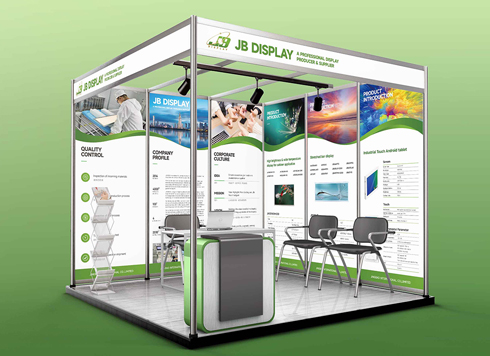 Booth Poster Design for Professional Monitor Product Suppliers
The standard exhibition booth poster projec ...
-
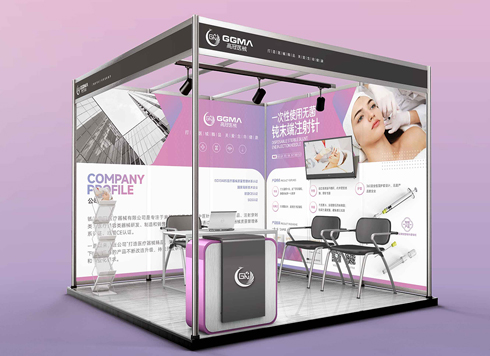 Design of Standard Exhibition Booth Posters for Beauty Instruments
Carefully designed a standard exhibition bo ...
-
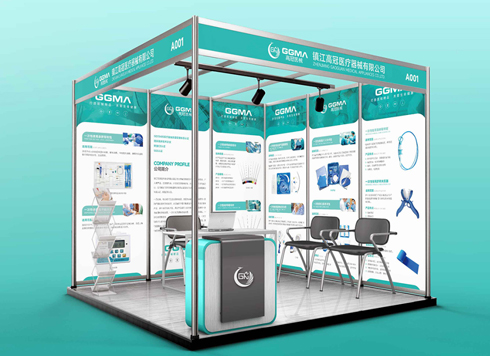 Design of Exhibition Posters for Medical Device Standards
XiYue is designing an exhibition booth post ...
-
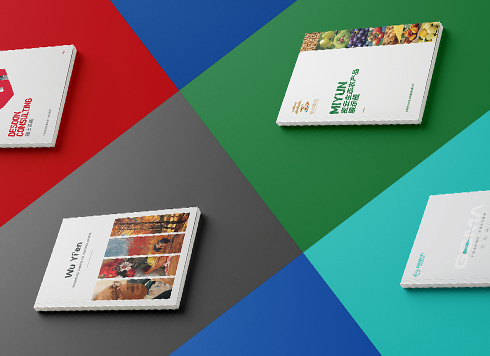 Collection of Brochure Design Cases in 2024 (Cover Series 02)
Our brochure design projects focus on diver ...
-
Single-column text with two-column figures: is a missing column-grid rule behind reflowing text every time a figure moves?
Date: Oct 11, 2026 Read: 11
-
For a book series, if you create a master first and then apply it, why does the layout still drift when someone else takes over?
Date: Oct 5, 2026 Read: 15
-
Body text one size smaller and fewer signatures: why do trial readers say they can't get into it?
Date: Sep 29, 2026 Read: 27
-
Print is already at the printer, but the ebook goes live two months later — can the earlier layout still be reused?
Date: Sep 23, 2026 Read: 32
-
Is Template Layout Enough for Publication Design? What's the Difference from a Designer?
Date: Aug 31, 2026 Read: 54