



Is a VI System Design Worth Tens of Thousands? Check These Five Deliverables First
A VI system design is the core specification of a brand's visual identity system. It typically includes a logo, standard typography, standard colors, auxiliary graphics, and application examples. To judge whether a VI set is qualified, see whether it can keep the brand visually consistent across different materials without redesigning every time. Based on 2026 project delivery practices, a complete VI deliverable should include editable source files, a guideline manual, and practical application templates — not just a logo.
What’s the Difference Between Basic and Full VI? Start with This Comparison
Clients often see quotes that differ by several times — the real difference is in the scope of deliverables. Basic and full packages are two common configurations; which one you choose depends on how widely the brand will be used.
- Scope: The basic version covers the logo, standard typography, standard colors, and basic combinations; the full package adds auxiliary graphics, application systems (e.g., business cards, envelopes, packaging, storefronts), and detailed guidelines.
- Timeline: The basic version typically takes 2–4 weeks; the full package typically takes 6–12 weeks, including multiple rounds of application testing. This is the experience range for regular projects in 2026.
- Cost: The basic version commonly falls in the range from a few thousand yuan to 20,000 yuan; the full package usually starts at 30,000 yuan, depending on the agency’s itemized quote.
- Who it fits: The basic version suits single stores, personal brands, or startup teams with limited budgets; the full package suits chain brands and enterprise groups that need a unified channel image.
If you buy the full package just because of the logo, you’ll overpay for guidelines you may never use. Conversely, if your brand has a lot of offline materials, only getting the basic version means re-communicating every design later, making rework costs higher.
Before Accepting Your VI, Check These Five Files
This five-point checklist is based on common omissions at delivery. Each file corresponds to a specific risk. We recommend checking from fundamentals to applications so you don’t discover missing source files late in the process.
- Source files: Confirm that the logo and standard typography are saved in AI, CDR, or PDF source files, and that layers are preserved. Without source files, any later text or color changes require redrawing.
- Color and monochrome versions: Check whether reverse, grayscale, and monochrome versions are provided. For printing and embossing, missing monochrome versions can make the logo look weak or unusable.
- Standard color values: Verify that all four color systems — CMYK, Pantone, RGB, and HEX — are provided. If only screen colors are given, printing will cause significant color deviation.
- Minimum usage size: Confirm the guidelines specify the logo’s minimum size and minimum clear space. Without this, the logo becomes cramped on small business cards.
- Application templates: Check whether mockups for common materials such as business cards, letterheads, and PPT templates are provided. If only theoretical guidelines exist without application examples, execution tends to drift.
These five files are not optional. In standard corporate project delivery, missing any one of them will cause real obstacles when producing brand materials, and adding files later costs more than designing them from the start.
What Are the Most Common Pitfalls at Delivery?
A common delivery scenario: the client is rushing to get the final logo, but the copyright of the standard font hasn’t been confirmed. The designer used a free commercial font, but the print shop’s file didn’t have the font embedded, so the text became garbled when opened. Per Xiyue Company’s project delivery practice, we confirm the font copyright list at the proposal stage to avoid patching the guideline pages later. In that project, we still had to redo the guideline pages, causing a one-week delay. This cost shows that font copyright and embedding must be clarified before delivery — it’s a common blind spot in VI guidelines.
Another common pitfall is inconsistent color modes. The designer works in RGB, but the print shop requires CMYK, and the proof colors turn out completely wrong. The right approach is to agree at the proposal stage that final output will follow CMYK and to label the color mode on all files.
How to Tell If a VI Is Well Done?
The standard isn’t just about aesthetics; it’s about executability, reusability, and maintainability. A good VI has consistent logic — for example, whether the behavior of standard colors on different materials has been anticipated, and whether the application guidelines cover the high-frequency scenarios the brand actually uses, such as packaging, posters, and employee badges.
- Consistency: Is the same logo displayed with proper proportions and consistent clear space across business cards, signage, and WeChat article headers?
- Executability: Do the guidelines clearly specify production constraints, such as the minimum stroke thickness for the logo when foil-stamped?
- Maintainability: When you add a new business segment, can new applications be created without overturning the existing guidelines?
- Reverse test: Give the same VI set to two different designers and ask them to create the same poster — is the visual style still unified?
If two designers can produce materials using the same set of guidelines and the results still look visually consistent, the VI passes. Conversely, if the guidelines can only be explained by the original designer, the VI’s continuity is insufficient.
Applicable Scenarios and Boundaries
A VI system design suits organizations with long-term brand plans and high-frequency customer-facing materials, as well as companies preparing for funding or chain expansion. It is not suitable for one-off events, temporary promotions, or scenarios where simply changing the logo color is enough. If the budget is tight, starting with the basic version and adding the full package once the business stabilizes is more realistic than forcing a full package from the beginning.
If the need is e-commerce product pages, UI screens, or app icons, that falls under digital product design. A VI system can provide brand guidelines but won’t directly solve interface layout problems — don’t confuse the two.
FAQ
How much does a VI system design typically cost?
The experience range spans from a few thousand yuan to tens of thousands. The basic version commonly costs 4,000–20,000 yuan, and full packages typically start above 30,000 yuan. It depends on scope, agency experience, and revision rounds — review the itemized quote first.
How long does VI design take?
For regular projects, the basic version takes 2–4 weeks and the full package 6–12 weeks. If assets are complete and the decision chain is short, it can be compressed to under a month; otherwise, more revision rounds will extend the timeline.
How many revision rounds are normal?
Common practice is to present 2–3 initial directions, with 2–3 revisions allowed for each. Beyond that, either the requirements are unclear or the original direction needs to be re-discussed — don’t silently add more work.
Can it be called a VI if only a logo is provided without guidelines?
No. A VI must at least include standard colors, standard typography, and application guidelines. Providing only a logo file counts as a brand mark, not a complete VI. Verify the five deliverables before acceptance.
How do you measure the results?
See whether two designers using the same guidelines produce visually consistent materials for the same item; and check after one year whether new materials still coordinate with old ones.
Before commissioning, list your requirements — including the materials your brand will need over the next year — and ask agencies to quote against that list. After receiving the deliverables, go through the five-point checklist item by item and request any missing files. If you only need it for a one-off use, don’t rush into a full package.
-
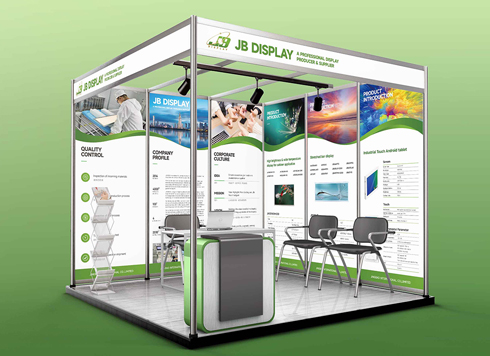 Booth Poster Design for Professional Monitor Product Suppliers
The standard exhibition booth poster projec ...
-
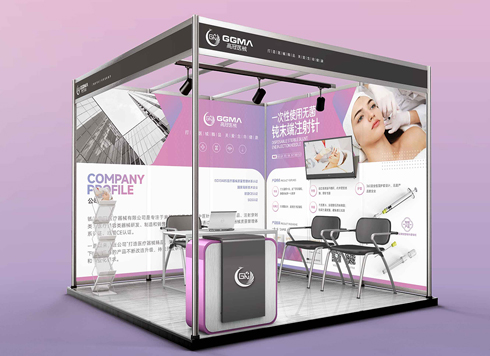 Design of Standard Exhibition Booth Posters for Beauty Instruments
Carefully designed a standard exhibition bo ...
-
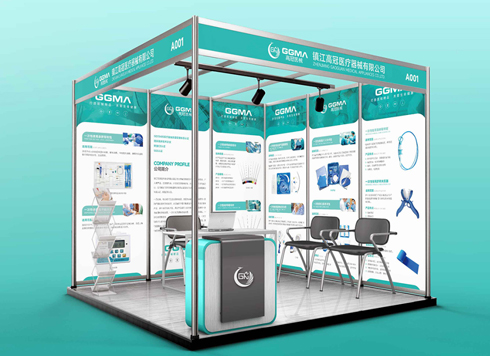 Design of Exhibition Posters for Medical Device Standards
XiYue is designing an exhibition booth post ...
-
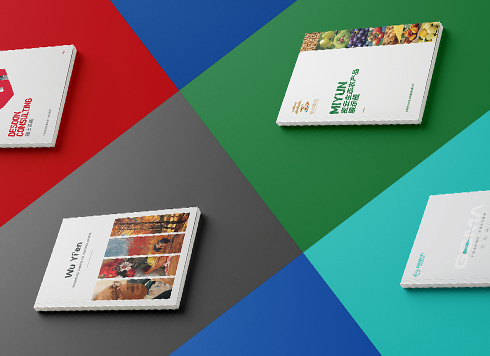 Collection of Brochure Design Cases in 2024 (Cover Series 02)
Our brochure design projects focus on diver ...
-
What Does VI System Design Deliver? Is a Logo Enough?
Date: Aug 13, 2026 Read: 62
-
How to Design a VI System: Key Steps from Process to Acceptance
Date: Aug 8, 2026 Read: 66
-
Switching embroidery factories means the logo has to be redrawn—is the grid construction page the problem?
Date: Oct 10, 2026 Read: 15
-
Brand logo has only one horizontal version—when hang tags, ID badges, and packaging frames won't fit, should you add versions or force-scale?
Date: Oct 4, 2026 Read: 23
-
VI auxiliary graphics look good in the manual but can't be used on posters and packaging—is it a pattern problem?
Date: Sep 28, 2026 Read: 30