



Switching embroidery factories means the logo has to be redrawn—is the grid construction page the problem?
When switching to another factory for embroidery, screen printing, or metal engraving, the logo still has to be redrawn. In most cases, it is not that the construction page was completely missing, but that the page only has a grid and no convertible data. In VI system design, logo standard construction exists to leave convertible proportional coordinates, not to give someone a drawing to trace. Based on common delivery experience in 2026, brands that will need embroidery, screen printing, engraving, storefront signage molds, or illuminated letters within a year are worth doing construction and a key dimension table solidly together; brands that only use regular printing and screen materials usually have enough with vector files plus minimum size and safe space notes.
Grid construction and vector files do not solve the same problem
Vector files solve whether the logo can be enlarged without distortion; grid construction solves whether the proportions hold when a different craftsperson redraws it. It breaks the mark into basic geometric relationships such as circles, squares, and diagonal lines, and marks the relative proportions among corner radius, stroke weight, letter spacing, and clear space, so different media and different factories can reproduce it according to the same set of relationships when they cannot get the source files.
Like standard colors and safe space, it belongs to the foundational layer of the guidelines: usually unobtrusive, but once missing, problems tend to surface in a concentrated way in the middle and later stages. In experience, marks with more complex graphic structures, thinner strokes, and careful corner radii are more dependent on this page as a backstop; wordmarks with simple structures and thick strokes have relatively more tolerance.
- Proportional constraints: records the relative relationships among corners, strokes, and spacing, not absolute millimeter values.
- Coordinate baseline: most approaches provide a reference frame or grid to make it easier to convert to the target size.
- Reproduction reference: embroidery, screen printing, engraving, and similar scenarios often can only read single-line artwork, so the construction page is an important reference.
When distortion happens even with a grid, the problem is usually in these four places
A common cause is not that too few grids were drawn, but that the drawing was made without matching data. The factory receives a scan or exported bitmap, sees lines, and cannot read proportions; once scaled, stroke weight and corners go wrong together. Another frequent issue is providing only the primary version, without a one-color version or reversed version, so prepress relies on manual inversion, and thin strokes easily blur out.
In 2026, in a clothing project, I saw a typical case: the budget was tight, the VI delivery cycle was only about three weeks, and the manual included a grid construction page but no dimension table. Later, when producing a batch of embroidered work uniforms, the factory redrew from a low-resolution image, stroke weights and corners distorted, and rework and re-embroidery took two to three days, also blocking the uniform distribution milestone. A key dimension and stroke width proportion table was added later, and the same batch of materials stabilized. Within the typical range, this kind of rework usually adds one to three working days to confirmation time for a single batch of materials; the cost mainly falls on scheduling, not on the production time of the construction page itself.
- Drawing without data: without key dimensions and proportions, reproduction can only rely on visual estimation.
- Inconsistent baseline: different people draw from different baselines, and conversion results do not match.
- Missing one-color and reversed versions: screen printing, hot stamping, and engraving need line art versions, and generating them on the spot easily distorts the mark.
- Version confusion: after a minor logo adjustment, the construction page is not synchronized, and the factory receives an old version.
Choosing among three configurations: work backward from the reproduction stage
The reason to work backward from the reproduction stage is to first check whether proportions are right, then whether the data is complete, then whether the medium can support it, and finally to keep the base file that will be used over the long term. If any of these four steps is missing, problems will surface in a concentrated way at the factory end.
- Check proportions: confirm that geometric relationships and stroke weight proportions match the final artwork, and whether corners are consistent.
- Check data: whether there are key dimension annotations, minimum size notes, and safe space ranges.
- Check media: whether one-color, reversed, and single-line artwork versions (for embroidery and engraving) are complete.
- Keep the base file: retain editable vector source files, font outlining notes, and exported final files, with version dates noted.
Each step has a different focus: the proportion layer looks at stability, the data layer looks at convertibility, and the media layer looks at whether the mark can still be read under extreme processes. Keeping the base file is often overlooked, but if details need minor adjustment a year or two later, without an editable source file the only option is often to redraw, at a much higher cost than keeping one extra file at the time.
- Option A | Geometric construction plus key dimension table: suitable for brands with more cross-media reproduction; rework risk is relatively low; the additional workload usually falls within the experience range of one to two working days.
- Option B | Only a geometric construction page: suitable for manual display and internal confirmation; the factory still needs to convert manually; rework risk is medium, and problems commonly appear with small sizes and handcraft processes.
- Option C | Vector files plus minimum size notes: suitable for brands with a single material type that only use regular printing; when embroidery, engraving, and similar processes come up, artwork may need to be added on short notice, adding another round of communication.
The point of comparison is not the number of pages, but whether the factory can reproduce independently. The cost difference among the three configurations usually falls within the typical range of a few working days of design time and one or two proofing rounds; what really creates the gap is the scheduling loss from rework after distortion.
When it is worth doing, and when it can be skipped for now
Not every brand must include a full page of detailed construction. The standard can be the materials list for the next year to year and a half: if embroidery, screen printing, engraving, storefront signage molds, illuminated letters, or similar scenarios that require proportional redrawing appear, it is worth doing; if the brand only does regular printing and screen display, key dimensions plus vector files are usually enough.
Cases where it can be skipped for now: when the brand name and logo are still being adjusted frequently, doing precise construction first often means it will change along with them; for temporary identities for a single store or short-term event, complete construction has limited value. In these two cases, it is more practical to first lock down vector files, usage scope, and safe space.
Cases that need caution: for brands whose delivery depends on external factories and that hand off between different factories, do not finish by delivering only a PDF manual; otherwise, every factory switch means confirming proportions all over again.
At acceptance, how do you judge whether this page is enough?
Acceptance does not look at whether the grid is beautifully drawn; it looks at whether others can actually use it. A common approach is to have different people each reproduce it once according to the manual and see whether the results are close; if another factory can restore proportions close to the final artwork by looking only at the manual, it passes.
- Convertible: proportions and key dimensions can be derived from the annotations without looking at source files.
- Fallback-capable: one-color, reversed, and single-line versions are available to handle embroidery and screen printing.
- Traceable: versions and dates are marked, and changes are recorded.
- Counterexample: having only low-resolution screenshots or mockups and no values at all basically means no guidelines were made.
Another often overlooked point is color versions: the construction page only solves shape, while color still needs separate one-color and reversed notes. If the shape is right but the color is reversed, the final product is still unqualified, so both must be checked together.
FAQ
Is it okay to just use any template for grid construction?
No. A template gives you a drawing method, but the proportions must be derived backward from your own final artwork. Corner radius, stroke width, and spacing must match the mark itself, or the conversion will still distort.
If only a PDF manual is provided, can the factory reproduce from it?
It can be viewed but not edited. PDFs are suitable for reading and confirmation; embroidery, screen printing, and similar scenarios usually also need editable vector files or single-line artwork, and a common practice is to deliver both together.
Does a denser grid mean more accurate reproduction?
Not necessarily. High density without baselines and values leaves people unable to convert; the key is clearly marking convertible proportional relationships, not the number of grid lines.
For a small brand with a limited budget, can this page be skipped for now?
Yes. If there are only regular printing and screen materials within a year, start with vector files plus minimum size and safe space notes, and add construction when cross-media needs appear; the risk is relatively manageable.
After a minor logo adjustment, does the construction page need to be redone?
It usually needs to be updated in sync, but the whole manual does not need to be relaid out. When changing corner radius, stroke width, or letter spacing, update the corresponding proportional annotations and dimension table together, and note the new version date.
If in the coming year there will be embroidery, screen printing, engraving, storefront signage molds, or similar scenarios that require proportional redrawing, it is advisable to add a key dimension table, single-line artwork, and editable source files at VI delivery. In project implementation, we usually deliver these together with the manual to reduce repeated confirmation at the factory end. If the brand identity is still being adjusted and materials only use regular printing, first lock down the vector files and usage scope; the construction page can be added later.
-
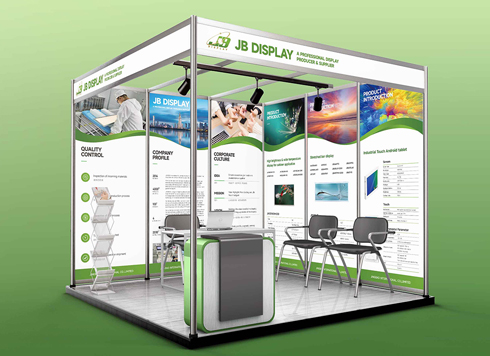 Booth Poster Design for Professional Monitor Product Suppliers
The standard exhibition booth poster projec ...
-
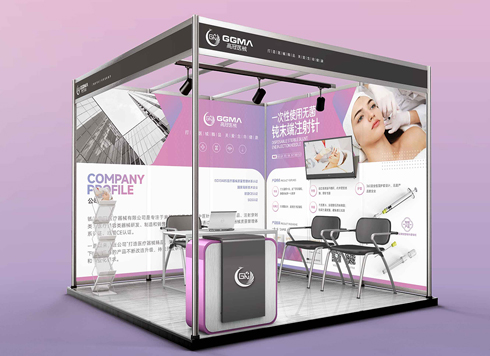 Design of Standard Exhibition Booth Posters for Beauty Instruments
Carefully designed a standard exhibition bo ...
-
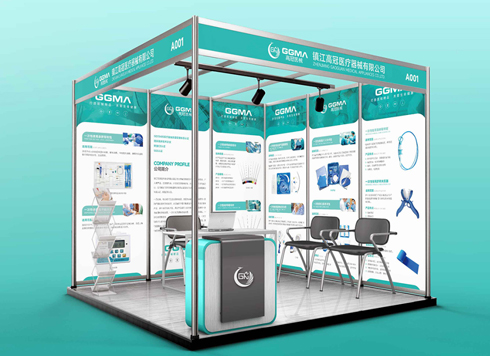 Design of Exhibition Posters for Medical Device Standards
XiYue is designing an exhibition booth post ...
-
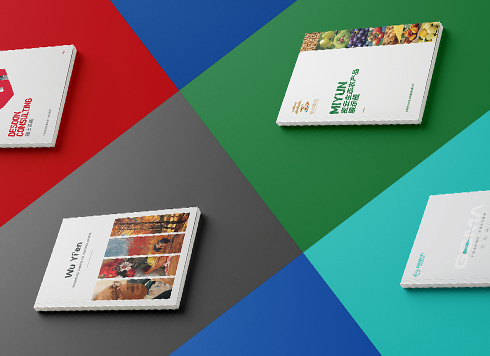 Collection of Brochure Design Cases in 2024 (Cover Series 02)
Our brochure design projects focus on diver ...
-
Brand logo has only one horizontal version—when hang tags, ID badges, and packaging frames won't fit, should you add versions or force-scale?
Date: Oct 4, 2026 Read: 22
-
VI auxiliary graphics look good in the manual but can't be used on posters and packaging—is it a pattern problem?
Date: Sep 28, 2026 Read: 29
-
Brand Color Looks Different on Packaging Bags and Store Light Boxes: Which Should Be the Acceptance Standard?
Date: Sep 16, 2026 Read: 32
-
What's the Difference Between Basic and Full VI System Design? What to Cut First on a Tight Budget?
Date: Aug 30, 2026 Read: 51
-
Is a VI System Design Worth Tens of Thousands? Check These Five Deliverables First
Date: Aug 24, 2026 Read: 71