



How to Run a Graphic Design Project: Complete Workflow from Requirement Confirmation to Delivery and Acceptance
For a graphic design project to be delivered on time and within budget, the key is not the designer's inspiration, but "document first, then execute." In 2026 project delivery practices, the process is split into five controllable stages: requirement confirmation, quotation and scheduling, design execution, revision confirmation, and source file delivery. This order cannot be reversed; otherwise, cascading problems such as repeated revisions, cost disputes, and copyright conflicts will arise. Below are the specific actions and inspection criteria for each stage.
Why Should Graphic Design Projects Be Managed by Process?
Process management is not about adding administrative burden but reducing communication costs. Graphic design involves three parties: the requester, the executor, and the decision-maker. Without a unified requirement baseline, everyone has a different definition of "good-looking," making rework almost inevitable. A clear process locks in the scope early, ensuring every round of revision has a basis.
- Expose requirement differences earlier, avoiding mid-project overhauls
- Control budget: once scope is clear, additional requirements can be priced separately
- Facilitate acceptance: each step has verifiable deliverables
Compared with verbal communication, written confirmation has gradually become an industry consensus by 2026. No matter how small the design project, it is recommended to keep written records, at least including style preferences, delivery formats, and revision limits.
Five-Step Framework: Standard Actions from Requirements to Delivery
The following framework consolidates common pain points in graphic design projects and is divided into five steps. Each step has clear inputs and outputs; completing the previous step before moving to the next avoids most rework. It applies to common types such as brand visuals, marketing collateral, and e-commerce product pages.
- Requirement Confirmation: Fill out a design brief including purpose, audience, dimensions, style references, brand guidelines (if any, such as color values and fonts), delivery format, and copyright ownership. Must be confirmed by the decision-maker before starting.
- Quotation and Scheduling: Quote based on workload, number of revisions, and delivery date. The designer should specify a deliverable list, e.g., source file formats, editable documents, and file sizes.
- Design Execution and Internal Review: The designer provides an initial draft within the agreed timeframe, first self-checking issues such as dimensions, bleed lines, and font embedding.
- Revision Confirmation: Clearly limit the number of revision rounds, e.g., two rounds of free adjustments. Each round of revisions should be consolidated into a written list to avoid piecemeal verbal communication.
- Source File and Copyright Delivery: After final payment, provide editable source files (e.g., AI, PSD, CDR) and vectorization license notes, along with a packaged specification document.
Among these five steps, the first and fifth are often neglected. An incomplete first step leads to subsequent back-and-forth; an underspecified fifth step may result in disputes over delivering JPGs without source files. Based on 2026 project habits, it is recommended to explicitly include copyright ownership and source file formats in the contract, not just verbal promises. Additionally, if the team already has brand guidelines, the colors and fonts in the first step can be directly referenced to save communication time.
How to Self-Check Design Drafts and Evaluate a Designer's Professionalism?
Judging a design draft's quality cannot rely solely on aesthetic feelings. It can be checked from four dimensions: whether the information hierarchy is correct, whether the visual impact matches the brand tone, readability in actual application scenarios, and ease of extension. For example, a poster may look fine on screen, but if printed with grayish colors, it is due to not designing in CMYK mode.
- Information Hierarchy: Are the title, body text, and call-to-action clearly prioritized?
- Brand Consistency: Do the colors, fonts, and logo applications comply with existing VI guidelines?
- Technical Specifications: Is the image resolution at least 300dpi? Are fonts outlined?
- Revision Boundary: Are revisions within the contractually limited rounds? Are new requirements priced as additional items?
To evaluate a designer's professionalism, look for three signals: response speed, whether they proactively provide reference cases, and whether they explain their design decisions. Suppliers who are unwilling to put revision limits and copyright ownership in the contract should be approached with caution.
Comparing Pricing Models: Per-Piece vs. Per-Day?
Per-piece pricing suits scenarios with clear requirements and controllable quantities, such as a single poster or illustration; per-day pricing suits large projects requiring continuous revision and repeated polishing. In 2026, clients increasingly prefer a hybrid model: a base package plus per-item additions, which avoids sky-high quotes and prevents negotiations from breaking down due to frequent changes.
- Per-Piece: Higher unit price, but total cost is controllable; suitable for one-off designs with granular requirements. Delivery typically takes 3–5 business days.
- Per-Day: Estimated by working days; senior designers have higher daily rate ranges; suitable for complex projects involving multiple roles and meetings.
- Package + Add-ons: A fixed fee covers a base number of revisions, with extras charged per item; suitable for enterprises with fluctuating needs in long-term cooperation. This is currently a more prudent approach.
Cost-wise, under equal communication costs, the package model is more controllable than pure per-day pricing, but only if the scope is very detailed. If requirements cannot be defined upfront, per-day pricing is fairer; otherwise, the designer bears ongoing rework risk. When comparing, the focus is not on unit price but on whether the output matches your scenario.
Applicable Scenarios and Boundaries: When Should This Process Be Used?
The above process is suitable for standardized needs such as corporate brand materials, e-commerce product pages, and offline event visuals. It also applies to individual design service outsourcing. However, for one-off quick image edits, internal minimal assets, or scenarios where only verbal descriptions are given and changes are allowed on the fly, the full process is not needed—otherwise, it increases communication costs.
For example, low-risk deliveries like social media posters or temporary proposal images can be simplified to three steps: confirm style, produce the image, and verify. There is no need to force the five-step framework. Additionally, when there is no decision-maker on the requester side, do not rush to start—without a final approver, no matter how complete the process, it will fall into loops.
FAQ
How to negotiate a reasonable graphic design quotation?
First lock the requirement scope and revision count, then discuss the unit price. Additional fees such as rush charges, delays, and copyright taxes should also be agreed upon in advance. Referring to industry average ranges is appropriate, but the key is to break the quote into an auditable list.
How many rounds of revisions are normal for a design draft?
Industry practice includes 2–3 free revisions. If exceeded, the designer has the right to charge for additional items. To reduce ineffective rounds, each revision should be summarized in writing based on the client's feedback.
Must source files be delivered?
Whether source files are delivered depends entirely on the contract. Paid designs usually should deliver editable source files, but some illustrations or font copyrights have restrictions, so authorization scope should be confirmed in advance.
How to prevent design companies or designers from delaying work?
Clearly state delivery dates, daily feedback deadlines, and penalty clauses in the contract. At each milestone, require progress drafts or explanations rather than waiting until the last minute to see the initial draft.
By following the above process, you can avoid at least 70% of rework. If you are planning a graphic design project, start with organizing a requirements checklist; if there is significant uncertainty in requirements, choose a package-plus-add-ons model for more flexibility. For very small, temporary designs, the full process is unnecessary—quick verbal confirmation and fast output suffice.
-
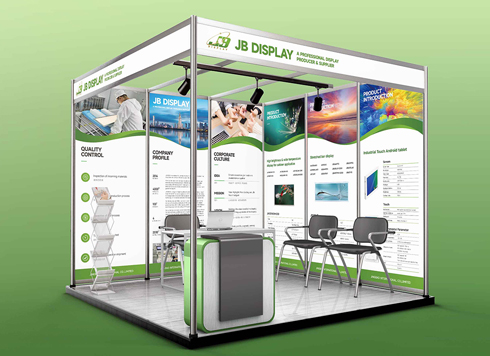 Booth Poster Design for Professional Monitor Product Suppliers
The standard exhibition booth poster projec ...
-
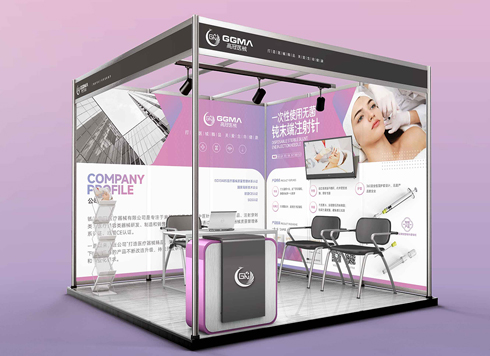 Design of Standard Exhibition Booth Posters for Beauty Instruments
Carefully designed a standard exhibition bo ...
-
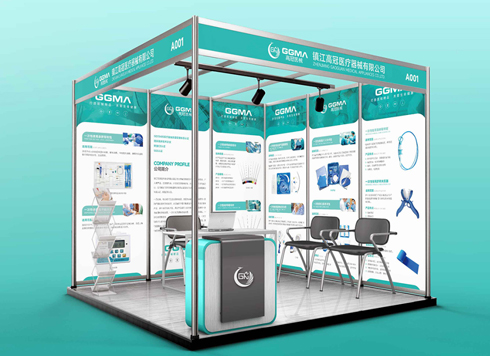 Design of Exhibition Posters for Medical Device Standards
XiYue is designing an exhibition booth post ...
-
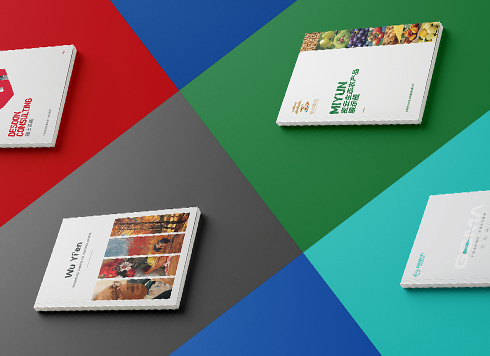 Collection of Brochure Design Cases in 2024 (Cover Series 02)
Our brochure design projects focus on diver ...
-
Advertising poster design still needs changes after multiple rounds—is it a matter of missing assets or unclear acceptance standards?
Date: Aug 20, 2026 Read: 53
-
Client wants source files before final payment — do designers always have to hold the line? Miss these handover details and your reputation suffers
Date: Aug 30, 2026 Read: 42
-
Should You Ask for Source Files When Outsourcing Graphic Design? How Much Extra Does It Usually Cost?
Date: Aug 28, 2026 Read: 52
-
When Designing Packaging Boxes, Who Should Provide the Die Line: the Design Firm or the Printer?
Date: Aug 26, 2026 Read: 68
-
Does Using Free Fonts in Commercial Design Come with Copyright Risks?
Date: Aug 22, 2026 Read: 58