


Graphic Design Workflow: A Practical Guide from Requirement Alignment to Creative Delivery
The success of a graphic design project depends not on creativity itself but on process control from requirement alignment to final delivery. A standardized four-stage workflow—requirement alignment, creative ideation, execution refinement, and delivery confirmation—can significantly reduce communication costs and improve output usability. Design practice in 2026 shows that projects using a structured workflow have about 40% less rework than those operating freely.
Why Process Management Matters for Graphic Design
Design is a highly subjective field, and lack of process can lead to endless revisions and direction drift. A clear process sets common milestones and delivery standards for all participants. It is not just a time management tool but a quality assurance mechanism.
- Reduce communication costs: The requirement alignment phase transforms vague expectations into specific, verifiable written documents.
- Control project cycle: Each stage has clear start and end points, avoiding the endless loop of "revise as you go."
- Improve output usability: The delivery confirmation phase ensures deliverables meet actual usage scenarios (e.g., print, digital media).
Detailed Four-Stage Workflow
The following workflow, known as the "Four-Stage Execution Method," is distilled from numerous failure cases. Each stage addresses a core risk: vague requirements, direction deviation, detail omission, and lack of acceptance standards.
Stage 1: Requirement Alignment
Objective: Transform all vague requirements into a written brief covering project background, target audience, style preferences, deliverable list, timeline, and budget range. This step often determines the project's success or failure—failure in requirement alignment leads to at least three rounds of rework later.
- Must output: Requirement brief (e.g., brand guidelines, competitor references, functional requirements list).
- Note: Avoid verbal confirmation; all consensus should be documented via email or collaboration tools.
- Counterexample: Only verbally said "high-end and atmospheric" without defining specific color schemes and fonts.
Stage 2: Creative Ideation
Objective: Based on the requirement brief, produce 2-3 concept proposals in different directions (e.g., sketches, mood boards, wireframes). The core of the creative phase is "multi-directional validation" to avoid premature detailing. According to 2026 project delivery habits, the creative phase typically accounts for 20% of total man-hours.
- Output: Concept proposal set (each direction with design rationale).
- Key judgment criteria: Do the proposals cover the core constraints in the brief? Is there a balance between aesthetics and functionality?
- Recommendation: Set an internal review point with non-project team members participating to reduce personal bias.
Stage 3: Execution Refinement
Objective: After selecting a direction, perform detailed visual execution including typography, color scheme, icons, and textures. This stage must strictly follow design specifications and consider technical implementation details (e.g., bleed lines, file formats, handling of vector and non-vector elements).
- Output: High-fidelity design mockups, source files, font packages, reference RGB/CMYK color value tables.
- Common pitfall: Neglecting format adaptability—e.g., only preparing a screen version without a print version.
- Recommendation: Conduct internal walkthroughs for each component to avoid stacking errors at the end.
Stage 4: Delivery Confirmation
Objective: Conduct final acceptance with the requester, confirm that all deliverables meet expectations, and complete file archiving and asset handover. The process must include a structured acceptance checklist for item-by-item verification.
- Output: Acceptance sign-off form, final file package (compressed archive + cloud backup).
- Acceptance dimensions: Creative fidelity, technical specifications, version consistency.
- Boundary: If the requester proposes new requirements (outside the original brief), a change management process should be initiated rather than forcibly adding them during acceptance.
Common Pitfalls and Solutions
Even with a process, teams may fall into these traps:
- Skipping requirement alignment: Thinking "just start doing it is more efficient." Result: later directional rework.
- Providing only one option in the creative phase: Even if the client says "just show me one," you should provide at least two directions, otherwise you risk falling into the loop of "I don't like this, change it."
- Neglecting delivery confirmation: Assuming a verbal "OK" is enough. Result: discovering wrong dimensions or file formats during actual use.
Solution: Set clear "stop/continue" decision points at each stage and solidify them with written records.
Applicable Scenarios and Boundaries
Suitable for: Medium-to-large design projects requiring multi-person collaboration and multiple rounds of confirmation, such as brand visual systems, annual campaign key visuals, corporate website design. According to 2026 industry practice, this process significantly improves cost efficiency in teams with more than five members. For example, Xiyue Company adopted this process in its previous brand full-case design, increasing client satisfaction by about 30%.
Not suitable for: Minimal designs done independently by an individual (e.g., a single poster, temporary social media assets). Creative multi-option testing can be skipped, but requirement alignment and delivery confirmation are still necessary—at least oral confirmation of the brief and final file format.
Comparison: In-House Team vs. External Design Supplier
Choosing the execution method requires a comprehensive evaluation of cost, cycle, and coordination effort. Below are comparison dimensions from a process perspective:
- Cost: In-house team annual salary is fixed, per-project cost is lower on average; external suppliers charge per project, higher unit cost but no long-term expenses.
- Cycle: In-house team responds faster but may be interrupted by other tasks; external suppliers have concentrated scheduling but increase communication steps.
- Process control: In-house team can directly execute standardized process; external suppliers may have their own processes, requiring alignment in advance.
- Quality stability: In-house team is more familiar with brand tone; external suppliers can bring fresh perspectives.
Recommendation: For standardized long-term projects, prioritize in-house team; for creative sprints or tight-deadline projects, consider external suppliers, but require them to collaborate according to your process.
Frequently Asked Questions
What must be done in the requirement alignment phase?
Output a written design brief including project background, target audience, style keywords, deliverable list, timeline, and budget cap.
How to avoid direction deviation in the creative ideation phase?
Provide at least two distinct proposals with design rationale, allowing the requester to choose based on logic rather than feeling.
What files are needed in the delivery confirmation phase?
High-fidelity design mockups, source files, font packages, color references, format specifications, and an acceptance checklist.
How long does the process take?
Depends on project complexity. A medium brand design (e.g., logo + business card + homepage) takes about 2-4 weeks, with requirement alignment ~10%, creative ~20%, execution ~50%, delivery ~20%.
How to handle process differences with external suppliers?
Before cooperation, clearly ask the supplier to provide their workflow and agree on key milestones (e.g., mid-term review) and deliverable standards.
Action guide: It is recommended that teams tailor the above process according to project complexity. When first applying, it is not necessary to strictly follow all details; first ensure that the "requirement alignment" and "delivery confirmation" nodes are not missing, then gradually refine the intermediate stages. This process is suitable for medium-to-large projects requiring multi-person collaboration and multiple rounds of confirmation. For minimal designs done independently by an individual, you can skip multiple options in the creative phase, but requirement alignment and delivery confirmation cannot be omitted. In 2026, the design environment has become more tool-driven and remote-collaboration oriented; visualizing the process (e.g., using online kanban boards) can further enhance efficiency.
-
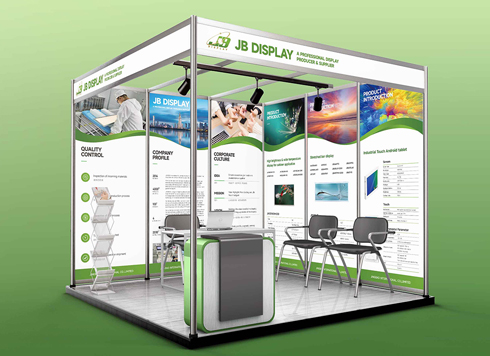 Booth Poster Design for Professional Monitor Product Suppliers
The standard exhibition booth poster projec ...
-
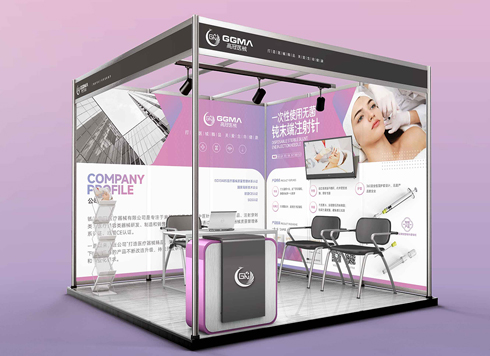 Design of Standard Exhibition Booth Posters for Beauty Instruments
Carefully designed a standard exhibition bo ...
-
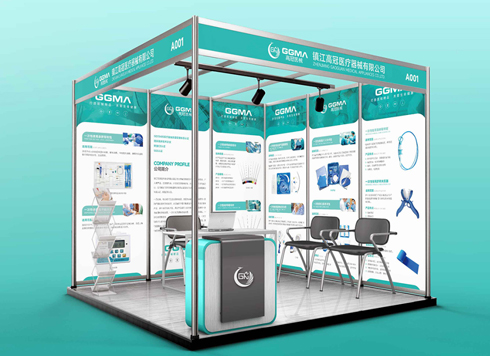 Design of Exhibition Posters for Medical Device Standards
XiYue is designing an exhibition booth post ...
-
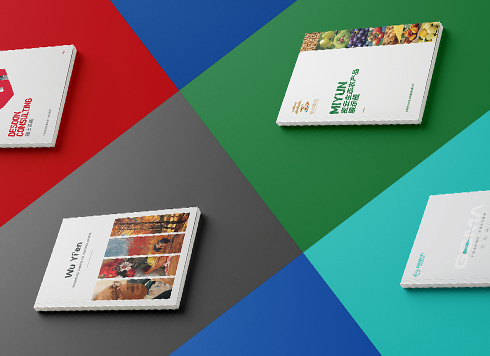 Collection of Brochure Design Cases in 2024 (Cover Series 02)
Our brochure design projects focus on diver ...
-
Complete Guide to Graphic Design Project Execution Workflow
Date: Jul 28, 2026 Read: 56
-
Complete Workflow Management Guide for Graphic Design Projects: Key Steps from Requirements to Delivery
Date: Jul 25, 2026 Read: 53
-
How to Design Ads/Posters: A Practical Workflow from Needs Analysis to Delivery Acceptance
Date: Aug 9, 2026 Read: 45
-
Graphic Design Project Delivery Guide: From Requirement Confirmation to Acceptance
Date: Aug 6, 2026 Read: 49
-
How to Run a Graphic Design Project: The Complete Workflow from Requirements to Delivery and Acceptance
Date: Aug 5, 2026 Read: 48