




Low-Code UI Customization: A Complete Guide from Information Architecture to Delivery Acceptance
What is Low-Code UI Customization
Low-code UI customization refers to completing the full interface design—from information architecture to visual interaction—using visual drag-and-drop, preset component libraries, and configuration logic, with little to no coding required. Its core value lies in shortening delivery cycles while retaining brand differentiation and user experience control. By 2026, over 60% of B-end product teams will use low-code platforms for UI customization, but only about 30% of projects will establish systematic design governance, directly linked to the lack of a methodology covering information structure to acceptance closure.
A successful low-code UI customization project should exhibit the following characteristics:
- Clear information architecture: Page hierarchy does not exceed three levels; navigation paths align with user mental models;
- Coherent interaction logic: Consistent operation feedback with no ambiguous states;
- Distinct visual hierarchy: Colors, spacing, and component sizes comply with brand guidelines and readability standards;
- Reusable component specifications: Core components (buttons, tables, modals) have unified style and behavior definitions.
Why a Systematic Customization Method is Needed
Many teams directly modify default templates of low-code platforms, leading to interface fragmentation and soaring maintenance costs. Common pain points in 2026 include: inconsistent component styles causing redundant development, user feedback of “messy interface,” and heavy rework when integrating new features. A systematic customization method reduces decision entropy by pre-setting constraints, ensuring design output remains consistent across iterations.
Main risks of not adopting a systematic method:
- Experience disconnect: Different pages adjusted individually by different designers or developers, resulting in fragmented visual styles;
- Technical debt accumulation: Each customization bypasses the platform abstraction layer, making future upgrades difficult;
- Decreased usability: Arbitrary changes to interaction patterns increase user learning costs.
The Four-Dimensional Approach: Complete Steps for Low-Code UI Customization
The four-dimensional approach unfolds across information architecture, interaction logic, component specifications, and delivery acceptance. Each dimension has clear inputs and outputs, suitable for fast-paced projects in 2026. Steps are explained in order below.
1. Information Architecture: Structure First, Style Later
Information architecture determines how users understand and navigate content. In low-code UI customization, this step is often skipped. Correct approach: first sort out business goals and user journeys, draw page hierarchy diagrams, then select platform container components (e.g., top navigation, sidebar, content area).
- Input: User story maps, feature lists;
- Method: Card sorting and tree testing to validate hierarchy rationality;
- Checkpoint: No page should exceed 7±2 navigation items;
- Common pitfall: Directly copying competitor structure without adapting to own business flow.
2. Interaction Logic: Define Rules, Not Individual Designs
Low-code platforms typically provide basic interactions like clicks, redirects, modals, and forms. Customization should first define global interaction rules (e.g., feedback delays, loading states, error handling), then apply them to specific components. For example, specify that all form submissions show a light prompt for 3 seconds rather than redirecting immediately.
- Key output: Interaction specification document (including state machines);
- Executable standard: All interactive elements give visual feedback within 0.2 seconds;
- Anti-pattern: Different confirmation modal styles for the same action (e.g., “delete”) across pages.
3. Component Specifications: Build an Extensible Design System
Component specifications are the core asset of low-code UI customization. Start with generic atomic components (buttons, input fields), gradually build composite components (search bars, data tables), and define theme variables (primary color, spacing, border radius). In 2026, mainstream low-code platforms support importing design tokens from Figma or Sketch, greatly reducing specification implementation effort.
- Steps: ① Inventory existing component usage frequency; ② Categorize and abstract variables; ③ Write usage guidelines (including disabled states); ④ Sync to platform component library.
- Qualification criteria: 80% of new page interfaces can be assembled directly from standard components, with only 20% needing custom styles.
4. Delivery and Acceptance: From Visual Mockups to Production Environment Closure
Most low-code projects are accepted at the prototype stage, leading to layout misalignment and missing responsive behavior post-launch. Proper acceptance should include three levels: design review, development environment review, and real-device review. Special attention should be paid to edge cases (e.g., long data, display during network delays).
- Acceptance checklist: Consistency (compared with specifications), usability (core task paths reachable), accessibility (color blindness mode testing);
- Tool recommendation: Use low-code platform preview features for screen-by-screen screenshot comparison;
- Common omission: Only reviewing home pages while ignoring secondary pages and empty states.
Applicable Scenarios and Boundaries
Low-code UI customization is best suited for back-office management systems, internal tools, and MVP validation products—scenarios with moderate interaction complexity but high sensitivity to delivery speed. In 2026, Xiyue Company applied this method in a SaaS backend project, compressing the design delivery cycle from 4 weeks to 1.5 weeks while maintaining user satisfaction above 90%.
The following scenarios require cautious use or even abandonment of low-code customization:
- High complexity interactions: e.g., real-time collaborative editing, 3D rendering operation surfaces;
- Strict performance requirements: e.g., financial trading interfaces requiring millisecond response;
- Strong brand full-link experience: e.g., retail apps requiring originality from icons to motion effects.
Solution comparison (template tweaking vs. custom design system):
- Template tweaking: Low cost (2-5 days), but poor scalability, suitable for temporary campaign pages;
- Custom design system: High upfront investment (2-4 weeks), but maintenance costs drop exponentially, suitable for continuously iterating products.
FAQ
How long does it take from prototype to high-fidelity?
Typically 1-2 weeks depending on business complexity. If component specifications are already defined, 70% of prototypes can be directly replaced with standard components, requiring only layout and copy adjustments.
What is the core difference between B-end and C-end UI customization?
B-end focuses on information density and operational efficiency, while C-end emphasizes emotional appeal and brand perception. For low-code customization, B-end should prioritize data table row height and filtering logic, whereas C-end should focus on visual motion effects and responsiveness.
When is it suitable to start building a design system?
When there are more than 3 similar modules planned or an iteration cycle exceeding 6 months, an early design system should be initiated. Common practice in 2026 is to first establish color and spacing variables, then gradually expand components.
How to verify the usability of low-code customized interfaces?
Organize 3-5 target users to complete typical tasks, and observe operation time and error rates. If task completion time exceeds the competitor's by 2x or error rates are above 15%, interaction logic needs adjustment.
Action guide: If the project delivery timeline is tight and the team lacks professional designers, prioritize template tweaking for quick launch; if the product plans continuous iteration and aims to establish a consistent brand experience, invest resources in building a custom design system. Regardless of the chosen approach, information architecture and component specifications are unavoidable fundamentals.
-
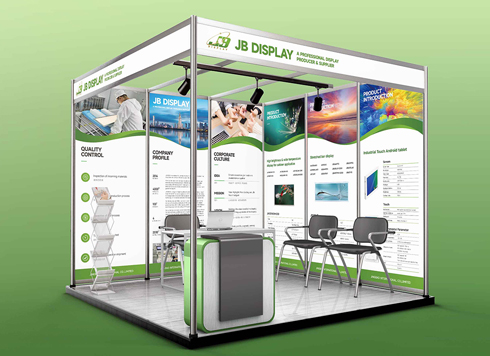 Booth Poster Design for Professional Monitor Product Suppliers
The standard exhibition booth poster projec ...
-
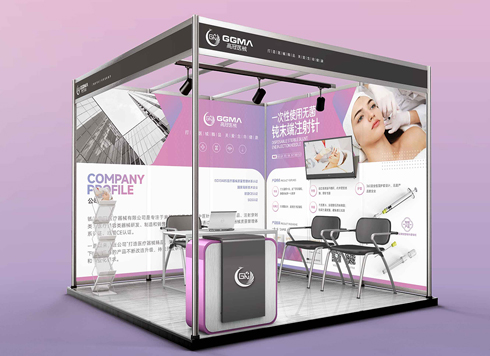 Design of Standard Exhibition Booth Posters for Beauty Instruments
Carefully designed a standard exhibition bo ...
-
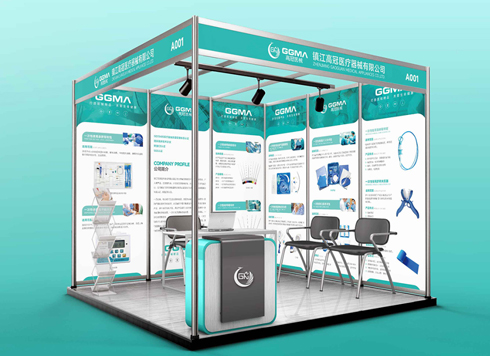 Design of Exhibition Posters for Medical Device Standards
XiYue is designing an exhibition booth post ...
-
 Collection of Brochure Design Cases in 2024 (Cover Series 02)
Our brochure design projects focus on diver ...
-
Metaverse Virtual Space UI Design Guide: Information Architecture and Interaction Standards
Date: Jul 31, 2026 Read: 48
-
In-Store Guide Interface Design Guide: From Information Architecture to Delivery Acceptance
Date: Jul 30, 2026 Read: 47
-
Live Streaming Interactive UI Design Guide: Information Architecture, Interaction Logic, and Delivery Acceptance
Date: Jul 28, 2026 Read: 60
-
Icon Set Customization: A Guide to Process, Acceptance, and Common Misconceptions
Date: Jul 24, 2026 Read: 46
-
UI Design System and Component Library: A Practical Guide from Setup to Acceptance
Date: Jul 23, 2026 Read: 67