

Interactive Motion UI Design Implementation Guide: From Requirements Analysis to Acceptance Delivery
Interactive motion UI is a technical approach in interface design that uses time, motion, and transitions to enhance user experience. Its core purpose: helping users intuitively understand interface state changes, operation feedback, and information hierarchy. A successful interactive motion UI should feel smooth and natural without increasing learning effort. Mainstream practices in 2026 emphasize that motion should serve functionality rather than decoration, enhancing delight while maintaining usability.
Core Value and Components of Interactive Motion UI
Interactive motion significantly improves interface comprehensibility and operational efficiency. It falls into three categories: feedback motion (e.g., button clicks, form submissions), navigation motion (page transitions, menu expansion), and state motion (loading, error messages). Common practice in 2026 prioritizes immediacy of feedback motion (response time <100ms) before considering visual details.
- Feedback motion: Press, hover, success/failure state changes, requiring latency below 0.1s
- Navigation motion: Transitions, scrolling, gesture triggers, recommended duration 0.3–0.5s to avoid user waiting
- State motion: Loading, empty states, network anomalies, need copy to enhance perception
More motion is not always better. Excessive motion distracts attention and increases development cost. In 2026 project delivery habits, interaction logic is first defined, then motion is added to key nodes to avoid over-prioritization. For example, for high-frequency data tables, only row deletion uses a subtle slide motion; other interactions remain static.
Four-Stage Implementation Method: From Analysis to Delivery
To systematically implement interactive motion UI, the recommended "Four-Stage Method" is: Analysis → Design → Prototype → Validation. Each stage has clear outputs and checkpoints, explained below.
Stage 1: Requirements and Scenario Analysis
Clarify the scenarios where motion serves: either improving efficiency (e.g., batch operation feedback) or enhancing brand perception (e.g., startup animation). For example, B-end systems emphasize efficiency, so motion should be lightweight; C-end products can use moderate brand motion. In 2026 trends, users are sensitive to response speed, so analysis should include performance baselines (e.g., frame rate >50fps).
- Identify key touchpoints along user operation paths
- Define motion purpose for each touchpoint (inform, guide, reward)
- Benchmark against competitors and design trends to select feasible motion solutions
- Assess device performance floor, prepare fallback strategies for lower-end devices
Stage 2: Interaction Logic Design
Based on information architecture, determine motion triggers, duration, and result states. For example, a pull-to-refresh motion requires defining start position, loading duration, and success/failure state transition logic. This stage should output a state machine diagram, clarifying transitions between states.
- Draw state transition diagrams (e.g., idle → loading → success)
- Annotate motion parameters for each state (easing curve, duration, scale ratio)
- Align physics engine with development (e.g., Bezier curves, spring animations)
- Document motion behavior for all exception states (failure, timeout, empty data)
Stage 3: High-Fidelity Prototyping
Create interactive prototypes using tools (Figma, Principle, After Effects); in 2026 it is recommended to use Lottie or Rive for runtime code export. Prototypes should be tested on real devices or simulators, and critical motions should have fallback plans. For example, complex particle effects replaced with simple opacity changes on lower-end devices.
- Motion duration controlled between 0.2–0.6s; long motions should be phased
- All motions must have easing functions to avoid mechanical feel
- Provide fallback for lower-end devices (disable or simplify)
- Create motion documentation noting parameter keyframes and formulas
Stage 4: Acceptance and Delivery
Acceptance criteria include: 100% trigger accuracy, performance (frame rate >50fps), pixel-level consistency with design specs. Common practice in 2026 uses automated tools (e.g., Storybook plugins) to compare design specs with implementation. For example, Xiyue Company establishes a motion checklist in delivery projects, checking each item: duration, easing, opacity change, position offset, etc.—10 indicators in total.
Visual Hierarchy and Component Specs
Motion and visual design must work together. Visual hierarchy determines which elements should be emphasized; motion directs gaze flow. Good design lets users understand operation sequence without thinking. In 2026 design systems, motion specs typically include the following dimensions:
- Hierarchy emphasis: Important operations use scale + color change; secondary ones only opacity change
- Consistency: Same function uses same motion; e.g., all back operations uniformly use left swipe + scale
- Responsive adaptation: Motion parameters scale proportionally across screen sizes
Component specs are the foundation for motion consistency. It is recommended to define four states for each component in the design system: default, hover, active, disabled, with corresponding motion assigned. For example, button click motion includes press scale (0.95), shadow deepening, and release spring-back. In mature design systems (e.g., Ant Design) in 2026, motion tokens are built-in and can be directly invoked.
Template Adjustment vs. Custom Design System: Use Case Comparison
When building interactive motion UI, companies often face two paths: template adjustment or custom design system. They differ significantly in cost, timeline, and scalability.
- Template adjustment: Suitable for projects with limited budget, quick launch, and low brand differentiation requirements. Advantages: short cycle (2–4 weeks), low cost (~2–5万 RMB); disadvantages: weak customization, high risk of motion conflicts, difficult maintenance.
- Custom design system: Suitable for long-term operations, multiple product lines, and brand consistency needs. Cycle 8–12 weeks, higher investment (~10–30万 RMB), but unified motion specs, reusable components, and easy scalability. In 2026, most medium-to-large enterprises choose this path, especially for B-end products.
When choosing, assess: project lifecycle, team size, iteration frequency. For short-term campaign pages, template suffices; for long-lived applications, custom is better.
Applicable Scenarios and Boundaries
Interactive motion UI is best for scenarios that need enhanced operation feedback perception, such as form filling, onboarding flows, and data loading. It is not suitable for: scenarios requiring extremely fast operation (e.g., checkout systems), frequent use on low-end devices (motion causes lag), or high-density dashboards (motion distracts information acquisition). In 2026 practice, use motion on core paths; keep secondary pages (e.g., admin panels) static.
Additionally, motion should follow accessibility principles: provide alternative cues (e.g., loading text), allow users to disable global motion. If motion causes WCAG 2.1 non-compliance (e.g., flash frequency >3Hz), it must be modified. For example, in medical or financial apps, avoid blinking motion; use progress bars instead.
FAQ
How to transition prototype motion to development?
Export motion parameters as JSON files using Lottie or Rive format; deliver with development docs specifying easing function formulas.
What are the differences between B-end and C-end motion design?
B-end emphasizes efficiency: motion should be simple and fast (duration <0.3s) to avoid visual distraction; C-end can moderately incorporate brand and fun, but must not hinder operation.
When should motion specs be established in a design system?
When product features stabilize and there are at least three reused motion scenarios, typically 3–6 months after product launch.
How to validate interactive motion quality?
Use prototype comparison tools to check frame-by-frame; test frame rate on multiple real devices; ensure all states (normal, exception) are covered by motion.
Action guide: Before starting, define your core user scenarios and performance baseline. If the team lacks motion experience, start with feedback motion and expand gradually. Remember: motion should be perceptible but not distracting. If budget is limited, recommend template adjustment + minor custom motion combination; for long term, invest in a custom design system for consistent experience.
-
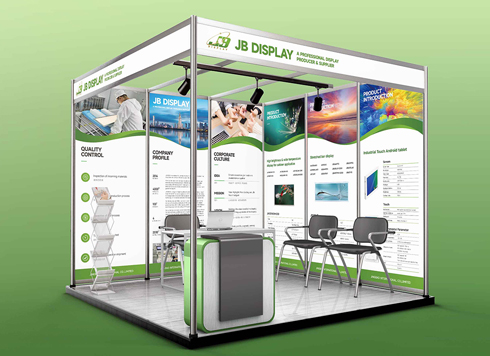 Booth Poster Design for Professional Monitor Product Suppliers
The standard exhibition booth poster projec ...
-
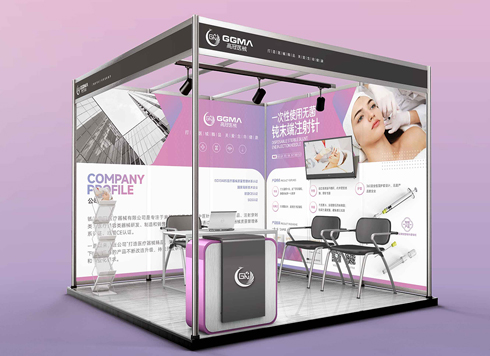 Design of Standard Exhibition Booth Posters for Beauty Instruments
Carefully designed a standard exhibition bo ...
-
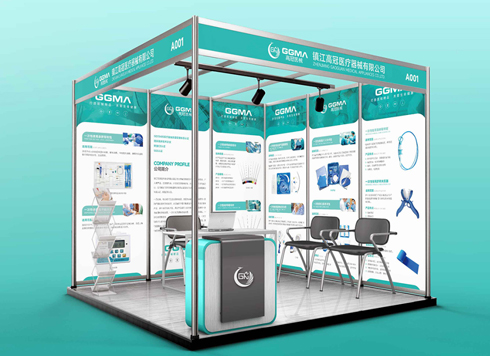 Design of Exhibition Posters for Medical Device Standards
XiYue is designing an exhibition booth post ...
-
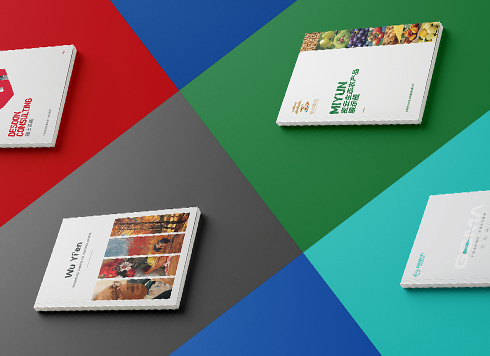 Collection of Brochure Design Cases in 2024 (Cover Series 02)
Our brochure design projects focus on diver ...
-
Icon Set Customization: A Guide to Process, Acceptance, and Common Misconceptions
Date: Jul 24, 2026 Read: 46
-
Full Process Guide for In-Vehicle Infotainment UI Design: From Information Architecture to Delivery and Acceptance
Date: Jul 19, 2026 Read: 64
-
How to Improve Conversion Rates in C-End Consumer Interface Design: A Complete Guide from Information Architecture to Visual Flow
Date: Jul 17, 2026 Read: 42
-
A Complete Guide to Prototyping: From Low-Fidelity to High-Fidelity Workflows and Delivery Standards
Date: Jul 16, 2026 Read: 45
-
Brochure spread image prints with a missing chunk in the middle—is it not enough gutter allowance or the wrong binding method?
Date: Sep 14, 2026 Read: 2