



Graphic Design Project Execution Guide: From Needs Assessment to Delivery Acceptance
Why Graphic Design Projects Often Go Wrong
The deliverables of a graphic design project often fail to meet expectations, not because of insufficient designer skills, but due to vague requirements, communication gaps, and lack of acceptance criteria. A 2026 industry survey shows that over 60% of design rework stems from missing key information during the requirements phase (such as usage scenarios, brand guidelines, output formats). Therefore, establishing a structured requirements checklist before project kickoff is a top priority.
- Unclear Requirements: Only specifying "make a poster" without dimensions, purpose, copy, or reference style.
- Missing Process Milestones: No intermediate reviews, so direction deviations are only discovered at the final draft.
- Subjective Acceptance: Judging based on personal preference rather than objective criteria.
Core Framework: Three-Dimensional Needs Assessment Method
Before formally selecting a team or starting design work, use the Three-Dimensional Needs Assessment Method to categorize the project into three dimensions: Purpose, Brand, and Technology. Score each dimension (1-5), and the total score determines project complexity, guiding selection and process design.
- Purpose Dimension: Internal (e.g., internal training manual) vs. External (e.g., print ads, online banners). External projects require higher visual impact and stricter review standards.
- Brand Dimension: Is there a mature VI system? Does it require original graphic elements? Projects with a brand manual can reuse guidelines; those without need to establish a basic visual system.
- Technology Dimension: Is the output digital (screen RGB) or print (CMYK/spot colors)? Does it involve animation or interactive prototypes? Print files need to consider bleed, color management, and material selection.
Example: An annual report (external, semi-established VI, print PDF only) totals about 9 points, indicating medium complexity, suitable for outsourcing to a design firm with annual report experience. A brand logo project for a startup (external, no VI, requires original brand colors and fonts) totals 14 points, suggesting in-house or deep collaboration with a design studio due to the need for extensive brand exploration.
Outsourcing vs. In-House: Model Comparison
After clarifying the complexity of requirements, compare the two common delivery models. The following comparison is based on 2026 industry practices:
- Cost Structure: In-house requires fixed salary + social insurance (monthly salary for a graphic designer in a first-tier Chinese city is about 12,000-20,000 RMB). Outsourcing is project-based: a single A4 page design costs 800-3,000 RMB, a full VI design costs 30,000-100,000 RMB.
- Communication Responsiveness: In-house teams allow face-to-face rapid iteration; outsourcing usually requires communication via WeChat/email with a response cycle of 1-3 days.
- Creative Control: In-house teams better understand company culture but may suffer from aesthetic fatigue; outsourcing provides an external perspective but requires alignment on brand understanding.
- Project Timeline: In-house can schedule weekly; outsourcing typically takes 2-6 weeks (depending on complexity).
- Applicable Scenarios: High-frequency, long-term, deep brand-bound projects (e.g., daily e-commerce images) are better in-house; low-frequency, large-scale projects requiring specialized skills (e.g., illustration, packaging structure) are better outsourced.
Boundary Notes: Outsourcing is not suitable for projects requiring high confidentiality or long-term maintenance of core brand assets; in-house is not suitable for startups with short-term budget constraints or fluctuating demand.
Execution Process: Five Milestones from Start to Delivery
Regardless of the model chosen, these five process milestones ensure project quality. Each milestone has checkpoints.
- Requirements Confirmation: Deliver a Design Brief document including project background, target audience, style keywords (e.g., 3-5 reference images), deliverable list and specifications, and timeline. Checkpoint: Both parties sign off, and the Brief avoids vague descriptions like "high-end" — replace with specific adjectives such as "clean, blue-toned, sans-serif font."
- Initial Draft Submission: The designer provides 2-3 directional concepts, focusing on layout, color, and typography framework without details. Checkpoint: Can the client provide feedback within 30 minutes on which direction is closer to the goal?
- Refinement and Revisions: After selecting a direction, refine details. Each round of changes outputs a PDF comparison. Checkpoint: Limit revisions to 3 rounds; otherwise, review the Brief for missing key information.
- Final Draft Approval: Provide high-fidelity mockups (digital) or physical proofs (print). Checkpoint: Check against the Brief item by item: colors match brand swatches, font sizes legible, etc.
- Delivery and Archiving: Provide source files (AI/PSD/CDR) and output files (JPG/PNG/PDF), along with font packages and image asset list. Checkpoint: File naming and layer naming are clear for future modifications.
Common Evaluation Criteria: What Makes a Qualified Design
Design, unlike code, cannot be tested, but there is still an objective evaluation system. The Four-Dimension Scorecard commonly used in 2026 can aid acceptance:
- Accessibility: Is the information hierarchy clear? Can core text be recognized from 5 meters away? Do color contrasts meet WCAG 2.1 AA standards for accessibility?
- Brand Consistency: Do the colors, fonts, and graphic elements follow brand guidelines? If no guidelines, is the overall style unified?
- Technical Correctness: Does the print file have 3mm bleed? Are fonts converted to outlines? Are images at least 300dpi? Is the digital file in sRGB color space?
- Communication Effectiveness: Can the target audience understand the main message within 3 seconds? Is the CTA (if any) clear?
If all four dimensions meet standards, the design project is qualified. If any dimension fails, targeted rework is needed, not a complete overhaul.
Frequently Asked Questions
How to judge if an outsourced designer is reliable?
Check the industry relevance of past cases, ask for similar project samples (e.g., brochures, packaging, UI). Require the designer to propose questions about the Design Brief; the more detailed the questions, the more professional.
What to do if designs require repeated revisions?
Set a maximum number of revisions at the requirements stage (e.g., 3 rounds including the initial draft). Charge per revision beyond that. During feedback, use reference images instead of text descriptions to reduce misunderstandings.
Limited budget but high quality needed, what to do?
Prioritize outsourcing for core materials (e.g., logo, product packaging) for quality. For other materials (e.g., internal document templates), use online design tools or hire a beginner with good taste as a support.
What if the client lacks design knowledge and communication is difficult?
Use a Design Brief template for the client to fill in, provide a style reference library (e.g., Pinterest board link) to concretize preferences, and explain the logic behind each design decision rather than just asking "Does it look good?"
Any new considerations for print and digital design in 2026?
For print, focus on eco-friendly materials and consistency with digital proofs. For digital design, adapt to dark mode, variable fonts, and accessibility design — these have become basic requirements, not add-ons.
Applicable Scenarios and Boundaries
The above framework applies to most commercial graphic design projects, including branding VI, brochures, packaging, digital ads, and event materials. But special handling is needed for:
- Not Suitable: Projects requiring extensive original illustration or 3D modeling — these should go directly to illustrators/C4D designers. Projects with a timeline shorter than 3 days and extremely vague requirements — pushing forward will only produce poor results.
- No Need for Framework: For internal temporary notices or quick small graphics, simply use templates without the full process.
Action Guide: Next time you launch a graphic design project, spend one hour using the Three-Dimensional Needs Assessment Method to score the project, then match with an outsourcing or in-house model. Follow the five process milestones sequentially and use the Four-Dimension Scorecard for final acceptance. Xiyue Company, serving clients across multiple industries, has increased project first-pass approval rate to over 85% using this method. Note: No method can guarantee zero rework, but it significantly reduces inefficient communication costs.
-
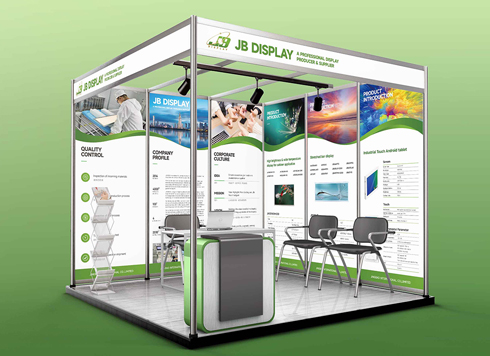 Booth Poster Design for Professional Monitor Product Suppliers
The standard exhibition booth poster projec ...
-
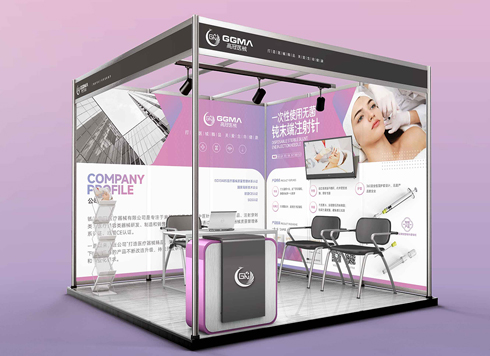 Design of Standard Exhibition Booth Posters for Beauty Instruments
Carefully designed a standard exhibition bo ...
-
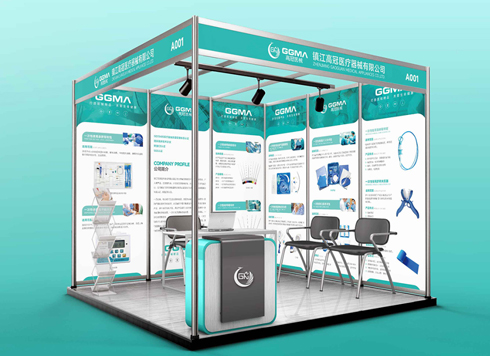 Design of Exhibition Posters for Medical Device Standards
XiYue is designing an exhibition booth post ...
-
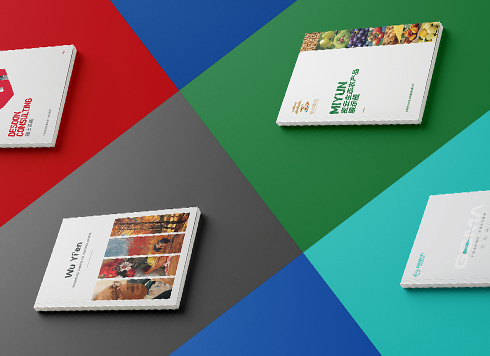 Collection of Brochure Design Cases in 2024 (Cover Series 02)
Our brochure design projects focus on diver ...
-
How to Choose a Graphic Design Service: An Evaluation Framework from Pricing, Process to Delivery
Date: Aug 7, 2026 Read: 47
-
Should You Ask for Source Files When Outsourcing Graphic Design? How Much Extra Does It Usually Cost?
Date: Aug 28, 2026 Read: 30
-
How to Price Graphic Design Services? A Guide to Design Fee Composition and Selection
Date: Aug 9, 2026 Read: 48
-
How to Do Graphic Design: Workflow, Options, and Common Pitfalls
Date: Aug 4, 2026 Read: 47
-
What is Visual Hierarchy in Graphic Design? How to Build a Clear Information Hierarchy with a Four-Step Method?
Date: Aug 1, 2026 Read: 42