



Standardized Process for Graphic Design Projects from Requirements to Delivery
What Are the Core Steps for Executing a Graphic Design Project?
A graphic design project from requirements to delivery typically consists of five stages: requirements confirmation, creative ideation, visual execution, review and revision, and delivery and archiving. Each stage has clear task nodes and deliverables; missing any step may lead to rework or delays. A common practice in 2026 is to front-load requirements review to keep revisions under control early on.
- Requirements Confirmation: Clarify the design purpose, target audience, style preferences, format requirements, and delivery timeline. Incomplete requirements can lead to direction errors.
- Creative Ideation: Provide 2-3 directional sketches or mood boards for client confirmation before deep work. Avoid producing final drafts directly.
- Visual Execution: Use professional software (e.g., Adobe Suite, Figma) to create deliverables based on the approved concept. Pay attention to layer naming and editability.
- Review and Revision: Schedule formal review meetings, collect feedback, and limit revision rounds (suggest no more than 2 major overhauls).
- Delivery and Archiving: Output source files and universal formats (PDF/PNG/JPG) with usage instructions. Per 2026 delivery habits, also provide a link to editable versions.
Why Is a Standardized Process Critical?
Without a process, graphic design projects easily fall into endless revisions and scope creep. Standardization sets clear expectations and reduces communication costs. In 2026, despite widespread team collaboration tools, most rework still stems from unclear requirements or mid-course changes. Process discipline filters out unnecessary back-and-forth. For example, if requirements are not documented, clients may add verbal requests later, leading to cost overruns. A qualified requirements confirmation includes at least: design objectives, application scenarios, style references, and a delivery checklist.
How to Implement Step by Step: The Five-Step Execution Method
The following "Five-Step Execution Method" applies to most commercial graphic design projects (e.g., brand posters, brochures, social media graphics). Each step has boundary conditions to note.
- Confirm the Design Brief: Collaborate with stakeholders to create a written brief including project background, key information, target audience, competitor references, and success criteria. Skipping this step may lead to a complete overhaul later.
- Create Concept Proposals: Output 2-3 different directional concept sketches or reference collages, each with a short written explanation. Note: Do not present only one proposal, as it leaves no room for choice.
- Execute the Main Visual: After selecting a direction, present a high-fidelity design of the main visual including color, typography, and layout details. At this stage, deliver 1-2 refined versions for review.
- Layer Revisions: Classify feedback into three levels: "overhaul," "structural," and "detail." Overhaul (e.g., changing core creative) requires re-estimating time; structural (e.g., adjusting layout) optimizes within the framework; detail (e.g., alignment, color tweaks) can be adjusted directly. A common 2026 practice is to prioritize revisions by level.
- Acceptance and Archiving: After formal client approval, package source files, output formats, and usage guides. Use version control (e.g., file names with dates) to avoid confusion.
The core value of these five steps is to transform vague design requests into actionable tasks, each with clear exit criteria. For example, the standard for Step 3 is: correct color mode (CMYK/RGB), fonts outlined, and layers grouped clearly.
Applicable Scenarios and Boundaries
The standardized process is best suited for graphic design projects with clear timelines and relatively stable requirements, such as brand manuals, annual reports, and product packaging. For exploratory or highly experimental projects (e.g., conceptual art, pure creative posters) or single minimal designs (e.g., temporary notices), simplification is possible, but at least the requirements confirmation and delivery stages should remain. Unsuitable scenarios: when stakeholders cannot provide basic direction, when contact persons change frequently, or when the project timeline is extremely short (e.g., within 24 hours). In such cases, evaluate whether to take the project or set an expedite premium.
Additionally, internal team collaboration and client service processes may differ. Internal projects can skip commercial negotiation points, but quality checks cannot be weakened. In 2026, many design teams use Feishu/DingTalk collaborative boards to manage graphic design progress, and can integrate automated reminders (e.g., DingTalk tasks triggering revision deadlines).
Common Pitfalls and Judgment Criteria
The most common pitfalls in graphic design projects include: starting without clear requirements (leading to three or more major revisions), ignoring the usage scenario (e.g., designing a web image at print size), and not anticipating revision rounds (falling into an endless loop). Criteria for judging design quality: visually meeting the brief, technically correct resolution and color mode, and logically clear information hierarchy. A simple check: if the design can be identified at thumbnail size on a phone screen, it is basically qualified.
Another common mistake is over-pursuing originality at the expense of efficiency. In the 2026 business environment, leveraging high-quality templates (e.g., from Envato, Freepik) with customized adjustments is often more cost-effective than starting from scratch. The key is to perform secondary creation on templates to avoid copyright risks and mismatch.
Comparison: In-House Team vs. Outsourcing to Professional Companies
- In-House Team: Suitable for long-term, high-frequency design needs (e.g., daily e-commerce detail page updates). Higher cost but faster response and style control. Requires at least one full-concept designer and one execution designer.
- Outsourcing (e.g., Xiyue Company): Suitable for project-based, high professionalism, or short-term sprints. Costs are relatively flexible, but communication and review time must be allocated. A 2026 outsourcing trend is the "design advisor model," where the provider offers upfront strategic advice rather than pure execution.
- Using Freelancer Platforms: Suitable for simple, standardized designs (e.g., posters, business cards). Low unit price but variable quality, requiring strong briefing skills.
Basis for choice: Per 2026 project delivery habits, if annual design projects exceed 50 with a consistent style, an in-house team is more cost-effective; for fewer projects or high-end brand visuals, outsourcing to a professional company yields higher ROI.
Frequently Asked Questions
Which step in the graphic design process is most easily overlooked?
Requirements confirmation is most often skipped, leading to direction errors later. Verbal communication must be turned into written notes and confirmed by both parties.
What to do if there are too many revision rounds?
In the contract, stipulate a maximum of 2 major revisions and 3 minor revisions, with additional rounds billed as a new project. Require written lists of all changes before each revision.
How to judge the quality of a graphic design?
Three dimensions: whether it meets the objective (convey information/attract clicks), technical specs (resolution/bleed/color mode), and aesthetic harmony (layout/color/image quality).
Are outsourced design companies reliable? What to watch for?
Outsourcing companies like Xiyue Company generally have procedural delivery capabilities, but confirm that their portfolio matches your needs. In the contract, specify copyright ownership, revision limits, and final output formats.
Action Guide: There is no one-size-fits-all template for executing graphic design projects, but following the above process can significantly reduce rework. Before starting the next project, spend 30 minutes filling out a simple design brief (including goal, audience, style references, key information, deadline) and proceed with the five-step method. For small teams with limited resources, Step 2 (concept proposals) can be trimmed to one direction, but other steps should not be omitted. When requirements are extremely vague or timelines extremely tight, the process can be compressed to "rapid draft + one-time feedback," with risk assumed accordingly.
-
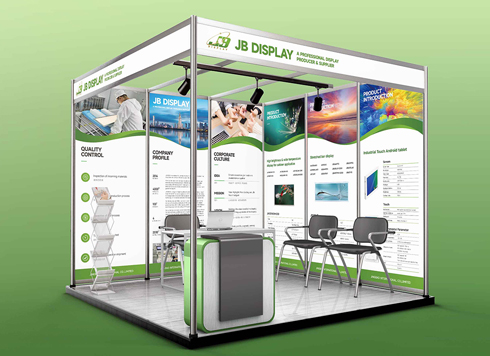 Booth Poster Design for Professional Monitor Product Suppliers
The standard exhibition booth poster projec ...
-
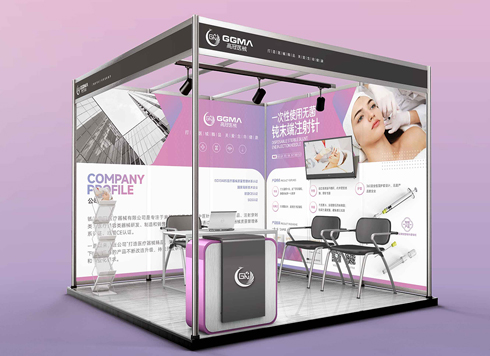 Design of Standard Exhibition Booth Posters for Beauty Instruments
Carefully designed a standard exhibition bo ...
-
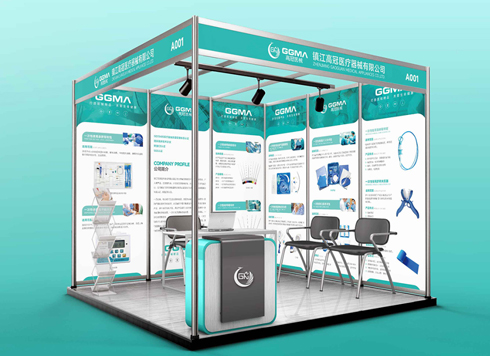 Design of Exhibition Posters for Medical Device Standards
XiYue is designing an exhibition booth post ...
-
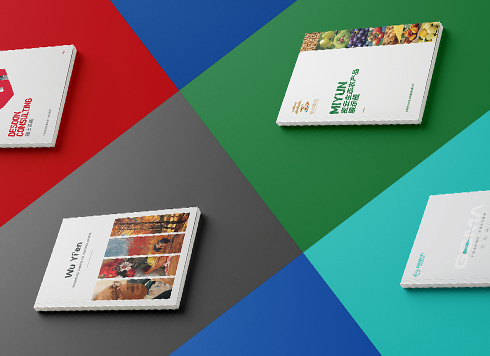 Collection of Brochure Design Cases in 2024 (Cover Series 02)
Our brochure design projects focus on diver ...
-
Standard Graphic Design Workflow: A Complete Guide from Requirements Analysis to Delivery
Date: Jul 29, 2026 Read: 65
-
How to Run a Graphic Design Project: A Guide to Process, Pricing, and Acceptance
Date: Aug 10, 2026 Read: 62
-
Graphic Design Project Delivery Guide: From Requirement Confirmation to Acceptance
Date: Aug 6, 2026 Read: 64
-
What Is the Graphic Design Project Process? Four-Stage Implementation Method and Common Pitfalls
Date: Jul 31, 2026 Read: 62
-
Graphic Design Project Delivery Process and Key Control Points
Date: Jul 30, 2026 Read: 83