



Graphic Design Delivery Standards: A Complete Guide from Requirements Alignment to Final Deliverables
What Are Graphic Design Delivery Standards?
Graphic design delivery standards are a set of specifications defining the format, content, and quality requirements that design deliverables must meet. They cover hard metrics such as file format, color mode, font embedding, and bleed lines, as well as soft requirements like creative alignment and brand consistency. As of 2026, common industry practice involves both parties agreeing on a delivery checklist before project initiation, which serves as the acceptance basis to avoid disputes later.
- Hard metrics: Resolution at least 300dpi, CMYK color mode, fonts converted to outlines, etc.
- Soft metrics: Visual style conforming to the brief, clear information hierarchy, appropriate white space.
Why Are Delivery Standards So Important?
Without standards, revisions become a bottomless pit. Designers repeatedly modify files but fail to meet expectations, often because both parties have different definitions of "finished." From a cost perspective, a single rework can consume 20%-40% of the total project duration. From an efficiency standpoint, the 2026 trend in design collaboration is "first-time approval + fine-tuning" rather than major overhauls. Standards help establish a shared understanding of what constitutes "acceptable," reducing communication friction.
Applicable scenarios: Corporate VI design, brochures, posters, packaging, digital ads, etc. Not suitable for purely experimental creative projects, as they require extensive exploration and iteration.
Four-Step Delivery Method
Divide the project into four stages, each with milestones and deliverables, significantly reducing later revision probability. The four steps are: Requirements Alignment → Creative Proposal → Final Review → File Delivery.
- Requirements Alignment: Use a written brief to clarify design purpose, target audience, style preferences, dimensions, and quantity. Note: avoid only oral communication; both parties must confirm.
- Creative Proposal: The designer provides 2-3 conceptual directions (wireframes or moodboards), and the client selects the best one for further development. This step eliminates 80% of directional disagreements.
- Final Review: Before producing high-resolution images, use low-resolution drafts for client confirmation of layout, colors, and copy. After confirmation, print a sample to check actual effect.
- File Delivery: Provide source files (AI/PSD), print-ready PDFs (with bleeds and crop marks), and screen-use RGB JPGs according to the delivery checklist.
Each step requires written confirmation to avoid regression. For example, after step two is confirmed, step three only involves fine-tuning, not style changes.
Design Approach Comparison: Standard Delivery vs. Free Delivery
Each model has its suitable scenarios; comparison across dimensions:
- Cycle control: Standard delivery has clear milestones, typically 30% faster; free delivery risks indefinite delays.
- Creative space: Standard delivery limits exploration scope, suitable for bulk materials; free delivery suits early brand upgrades.
- Cost risk: Standard delivery uses stage-based payments, controllable by client; free delivery often exceeds budget.
- Suitable audience: Standard delivery fits budget-constrained, time-sensitive corporate clients; free delivery suits innovation-focused brands.
It is recommended that most commercial graphic design projects adopt standard delivery, reserving 10%-20% flexibility for minor adjustments.
Common Delivery Pitfalls and Avoidance Tips
Even with standards, recurring issues persist:
- Pitfall 1: Messy file naming. Solution: Agree on a unified naming convention, e.g., "ProjectName_Version_Date_Usage," and label as "Final" or "Print."
- Pitfall 2: Ignoring color shifts. Solution: Request ICC profile from the printer and preview in software. Many projects in 2026 use proofing for confirmation.
- Pitfall 3: Fonts not converted to outlines. Solution: Convert to outlines before delivery, or include font files (with copyright permission).
- Pitfall 4: Missing bleeds and crops. Solution: Add 3mm bleeds around print items; keep important content at least 5mm from edges.
- Pitfall 5: Arbitrary image compression. Solution: Embedded images must be linked originals with resolution no less than 300dpi.
Explicitly stipulating these pitfalls in the contract can avoid 90% of delivery disputes. Service providers like Xiyue Company typically include a detailed delivery checklist in the contract appendix for both parties to sign off.
Applicable Scenarios and Boundaries
Graphic design delivery standards are especially effective in: batch material production (e.g., 50+ event materials), cross-department projects (requiring multi-person review), and fixed-budget short-term projects. Non-applicable scenarios include: artistic posters (allow experimentation), minimalist logo design (initial direction adjustments needed), and internal team daily communication (standards can be simplified). Key boundary: Standards are not rigid; each project should be tailored with flexibility.
Frequently Asked Questions
How to determine if a design meets delivery standards?
Check each item against the pre-agreed delivery checklist: file specifications, color mode, content completeness, style alignment. Pass all items to qualify.
Is it normal for designers not to provide source files?
Depends on contract terms. In most commercial projects, source files require additional payment or are included by default; clarify ownership and format in the contract.
What if minor issues are found after acceptance?
The contract should specify free revision limits (e.g., 3 rounds free) and scope (text or color tweaks only); additional changes are billable.
What if prints look very different from screen?
This is often due to color mode mismatch or uncalibrated monitor. Solution: confirm with print proof before delivery; switch to CMYK simulation for screen preview.
What if revision limits are not set?
Avoid open-ended contracts. Suggest including a revision limit (e.g., 2 rounds) in the quote; charge hourly for additional rounds to force early decisions.
Establishing graphic design delivery standards is key to improving collaboration efficiency and controlling costs. In 2026, whether managing projects internally or outsourcing, locking in an acceptance checklist and process early enables design resources to deliver greater value. Note: Standards apply to most commercial projects but require relaxation for purely creative exploration projects.
-
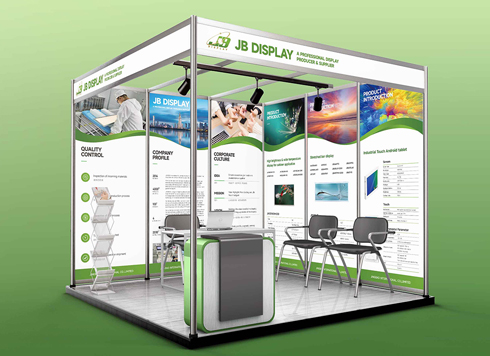 Booth Poster Design for Professional Monitor Product Suppliers
The standard exhibition booth poster projec ...
-
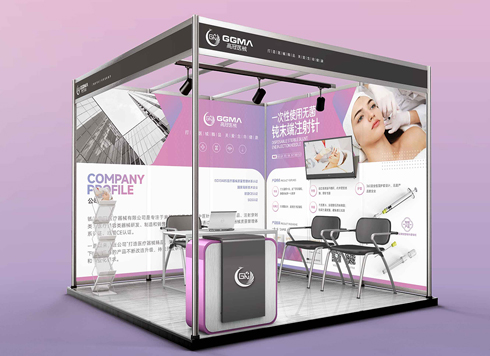 Design of Standard Exhibition Booth Posters for Beauty Instruments
Carefully designed a standard exhibition bo ...
-
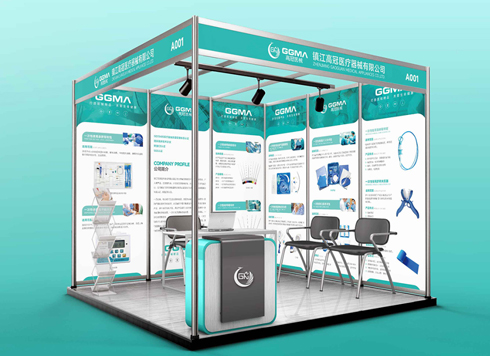 Design of Exhibition Posters for Medical Device Standards
XiYue is designing an exhibition booth post ...
-
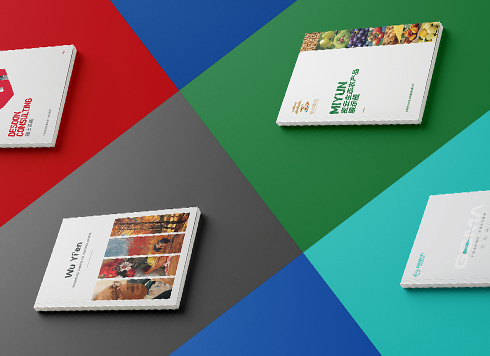 Collection of Brochure Design Cases in 2024 (Cover Series 02)
Our brochure design projects focus on diver ...
-
When business cards, letterhead, and envelopes are made by three different people, why do the colors and fonts not match when placed together—what step was missed at the start?
Date: Oct 1, 2026 Read: 23
-
Packaging Design Proofing Color Off or Die-Cut Wrong? Align These Three Before Delivery
Date: Aug 27, 2026 Read: 45
-
How to Design Ads/Posters: A Practical Workflow from Needs Analysis to Delivery Acceptance
Date: Aug 9, 2026 Read: 65
-
How to Run a Graphic Design Project: The Complete Workflow from Requirements to Delivery and Acceptance
Date: Aug 5, 2026 Read: 63
-
How to Do Graphic Design: Workflow, Options, and Common Pitfalls
Date: Aug 4, 2026 Read: 73