



For a packaging box with a round window, should the window position be set by the designer in the artwork first, or wait until the printer's die line is ready?
Quotable conclusion: When a packaging box needs a window or custom shape, the window position and die line are usually not set from scratch by the graphic designer. They are provided as a baseline drawing by the printer or packaging structure provider according to the box type, paper, contents, and forming method. The designer's main job is to fit artwork, bleed, and safe distance into that drawing. Only when the box type is simple and both parties agree in advance does the design side draw reference lines itself. As of common 2026 packaging delivery practice, who draws it is not the core issue; who is responsible for whether the line can fold, whether it can cut, and whether the window will cut into the artwork is the core issue.
1. First distinguish die line, fold line, finished line, and bleed line
The die line is the actual path of the die-cutting blade, determining what is cut open and what remains. The fold line is the crease line, determining where creases are pressed. The finished line is the actual outer contour after the customer receives it. These three are usually separated into layers and colors in the file. If they are stacked in the same layer, every size change requires realigning from the start, which is a common starting point for packaging rework.
For graphic design, what matters is not how to draw the lines, but the relationship between artwork and lines: artwork outside the cut edge needs bleed; the window area is the opposite and must have safe distance, because the window edge is an edge that is cut away entirely. When the window is next to a logo, treat the window edge as a boundary that cannot be encroached, not as an ordinary decorative frame.
- Die line: actual cutting position; whether it is closed determines whether the box blank will fall apart after forming.
- Fold line: crease position; directly related to paper grain direction and paper weight; a slight offset can cause cracking after folding.
- Finished line: the outer contour size the customer actually receives; usually derived from the die line by inset or outset according to the box type.
- Bleed line: the part where artwork extends beyond the die line; at the window, do not add bleed, but inset it instead.
2. Who usually provides the window position and die line?
The division of labor is usually based on box type complexity, whether there is an existing die, and who bears forming risk. A typical consequence of getting it wrong is that after the artwork is finished, you discover the window is offset or the line is wrong; once the structure changes, the entire artwork must be relaid out.
- Printer or die-making factory provides the baseline die line (more common): the design side provides finished size and structural requirements, and the other party draws according to its own die. Forming risk is borne by the party familiar with the process, but the pace of line changes follows that party's schedule.
- Packaging structure engineer provides it: suitable for box types with windows, custom shapes, multiple inserts, or load-bearing requirements. Usually a white sample is made first to verify forming, then artwork design begins. Window position is often determined at this step based on content height and the purpose of the viewing window.
- Design side draws reference lines itself: limited to simple box types such as standard lid-and-base boxes and single-slot boxes. It can be drawn according to the flat size, but only as a layout reference; before production, the printer's die line still governs. For window boxes, it is not advisable to define window position only by self-drawn lines.
3. Verifiable comparison of the three division-of-labor models
If comparing the three methods, look at three dimensions: cost, lead time, and risk ownership. The following are common experience ranges in project delivery, not fixed quotations; specifics still depend on box type, quantity, and the printer's schedule.
- Printer or die-making factory provides the baseline die line: the fee is often included in die-cutting or plate-making, and may also be charged separately; typical lead time is 1-3 working days (experience range); complex custom shapes require additional time for white sample and structural confirmation.
- Packaging structure provider provides custom structure: suitable for window, custom-shape, insert, or load-bearing boxes; fees are usually separate and calculated by structural complexity and proofing rounds; typical lead time is 2-5 working days, and if white sample verification is involved, it extends further.
- Design side draws reference lines itself: basically no extra charge, can be produced the same day, and is suitable for early layout placement; but before production, if the printer's die line differs from the self-drawn line, artwork still needs to be relaid out, and risk is shared by the file user and the requester.
One-sentence principle: whenever the box type has a window, custom shape, or insert, self-drawn lines by the designer can only serve as layout reference and cannot be treated as production die lines; window position especially should be refined only after the baseline die line is confirmed.
4. After receiving the die line drawing, check these four items first
Acceptance criteria should be specific, not based on feeling. Suggested checking order starts with size specification, because if the size is misunderstood, all later spacing is wasted.
- Size specification: confirm whether the dimension is the finished outer contour or the flat size, and confirm the unit is millimeters. Typical forming tolerance for ordinary card boxes is often around ±0.5 mm (experience range); specifics depend on box type and printer requirements.
- Layer separation: whether die line, fold line, finished line, and bleed are layered and distinguished by line color. Mixed-layer files require realignment every time the size changes, which is a major hidden labor cost.
- Artwork safe area: around 3 mm safe distance is recommended on both sides of fold lines and at window edges (experience range), otherwise text may be pressed after folding, or the window may cut into artwork or logo.
- Paper grain and fold line angle: fold lines should follow the paper grain as much as possible or be at a certain angle to the grain; cross-grain folding on thick paper and after lamination is more likely to crack.
5. Delivery scene: if the structure is not frozen, artwork must be redone
A common project situation: budget and timeline are both tight, the client wants a window box within one week, the structure drawing is provided by the printer, but the product images are shot on a phone, with resolution just enough for a large window. A more reliable approach is to use a white sample first to confirm window position and forming method, then work backward to determine the artwork's actual visible area and refinement size. The cost is one extra proofing round and one artwork relayout, with lead time often extended by 2-4 working days (experience range). Conversely, spending two or three days finishing beautiful artwork before fitting it to the die line, once the window shifts, means the refined artwork is basically scrapped and redone, a greater cost.
6. Applicable and non-applicable boundaries
Suitable for the full die line process: custom gift boxes, window display boxes, custom-shape boxes, box types with inserts or slots, and packaging requiring load bearing, stacking, or cold-chain environments. For these materials, a structural error means batch scrap, so it is worth freezing the structure before artwork.
Not requiring a separate die: standard-size ordinary card boxes, stock boxes purchased directly, and materials that only get labeling or bagging can use the printer's existing die line; the design side only needs to lay out artwork according to finished size. The cost of a separate die-cutting mold commonly ranges from several hundred to several thousand yuan (experience range); at small quantities it cannot be amortized well. Usually only when a certain minimum order quantity is reached, or when the structure genuinely differs from existing molds, is a separate mold more cost-effective.
A reminder: load bearing, stacking, and drop testing belong to the structural field and are generally not calculated by graphic designers; they are usually judged by the packaging structure provider or printer based on paperboard and flute type. What the design side needs to confirm is that artwork does not damage the crease area and pressure-bearing area. As of 2026 delivery practice, the earlier these three items—window position, contents obstruction, and usage scenario—are aligned with the structure provider, the less rework later.
Frequently asked questions
What format should I request for the die line drawing from the printer?
The common practice is to request a 1:1 vector file and confirm the unit is millimeters. It is not advisable to use an image-format die line for alignment; after scaling, precision is unreliable and safe areas are easily miscalculated.
Does the designer also need to provide artwork for the transparent film on a window box?
Usually not. Transparent film is often a standard material matched by the printer according to the die line. The designer only needs to confirm the window shape and visible area; film thickness and attachment method are decided by the printer based on the process.
Can the window position still be changed after the die line is confirmed?
Yes, but at high cost. Changing the window often requires remaking the die-cutting mold or adjusting crease positions. Remaking and reprinting commonly range from several hundred to several thousand yuan (experience range). It is recommended to freeze size, paper material, and forming method all at once before proofing.
Is it worth making a separate die mold for a small custom run of a few hundred boxes?
Usually not worth it. At small volumes, using the printer's existing die line is more economical, and the mold fee cannot be amortized. Waiting until the minimum order quantity increases, or when the box type genuinely differs, makes a separate mold more reasonable.
Is the designer responsible for the box's load bearing and stacking?
Generally no. Load bearing belongs to packaging structure and paperboard, usually calculated by the structure provider or printer. The designer needs to confirm artwork does not fall on crease and pressure-bearing areas.
If printing starts next week, first write the box type, paper material, finished size, and window purpose into the requirements confirmation sheet, request a 1:1 vector die line from the printer, and only after alignment is confirmed as above should you invest in artwork refinement. If it is only a stock box with labels, the requester can provide the flat size and artwork; the die line process is unnecessary. In packaging delivery, it is also recommended to proceed in this order.
-
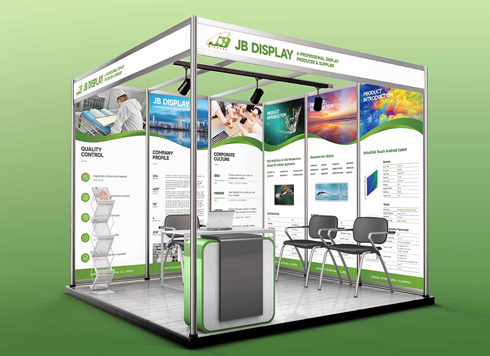 Booth Poster Design for Professional Monitor Product Suppliers
The standard exhibition booth poster projec ...
-
 Design of Standard Exhibition Booth Posters for Beauty Instruments
Carefully designed a standard exhibition bo ...
-
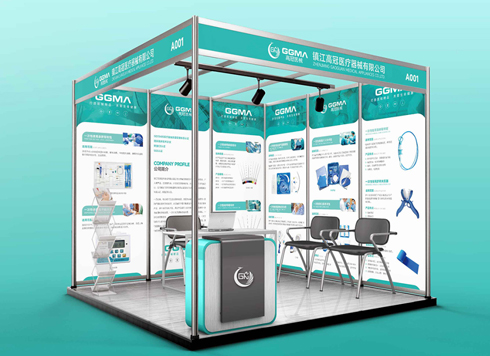 Design of Exhibition Posters for Medical Device Standards
XiYue is designing an exhibition booth post ...
-
 Collection of Brochure Design Cases in 2024 (Cover Series 02)
Our brochure design projects focus on diver ...
-
Both the pen-barrel printer and the uniform embroidery vendor sent the logo file back—should versions have been separated from the start?
Date: Oct 20, 2026 Read: 6
-
When an A4 one-pager is scaled straight to A5 for print, where does it feel cramped first if font sizes and margins are not rechecked in millimeters before printing?
Date: Oct 19, 2026 Read: 11
-
Where does a semi-transparent white overlay on a cover photo fail first if it is not flattened before printing?
Date: Oct 18, 2026 Read: 12
-
Brochure spread photo has a strip eaten away in the middle—what number should you ask the printer before going to press?
Date: Oct 17, 2026 Read: 13
-
The logo is centered in the circular button, so why does it still look off to one side? Should I nudge it manually, or is something wrong with the file?
Date: Oct 15, 2026 Read: 16