



What's the Difference Between Basic and Full VI System Design? What to Cut First on a Tight Budget?
VI system design is not just a Logo file but a set of "usage rules." In 2026, when companies commission VI design, typical deliverables include the basic system (logo, standard typography, standard colors, auxiliary graphics) and the application system (business cards, envelopes, employee ID badges, vehicle graphics, signage, etc.). The core standard for judging a VI design is: when handed to a third party for execution, can they produce consistent and correct materials without relying on the designer's verbal explanations? In other words, the value of VI design lies in "executability," not in the design itself.
What Does VI System Design Actually Deliver? Distinguish Between Basic and Full Package First
Many clients assume VI is just "a Logo plus a few business cards." In reality, VI consists of a basic system and an application system. The basic system provides the rules, while the application system shows examples. If the rules are unclear, all later materials will "drift off track."
- Basic version (common budget range: 12,000–30,000 RMB, experience range): only includes the basic system plus 3–5 core applications (business cards, letterhead, ID badges, etc.). Suitable for startups and teams that want to get the visual identity running internally first.
- Full package version (common budget range: 50,000–150,000 RMB, experience range): complete basic system plus 10–20 applications, including logo specifications, auxiliary graphics, incorrect usage examples, and print process descriptions. Suitable for companies with chain stores, multiple departments, and many materials.
How to Judge Whether a VI Design Is Good? Check Four Steps Before Acceptance
Based on our project delivery experience, we break VI acceptance into four steps: first check logo recognition, second check standard typography and colors, third check whether application extensions are reasonable, and fourth check whether files can be directly produced. Each step has specific checkpoints.
- Logo recognition test: Scale the logo down to 16 pixels and up to storefront size to see if it remains clear and undistorted. Pass line: The main structure is still recognizable when scaled down, and strokes don't blur when scaled up.
- Standard typography and colors: Does the standard typography include a licensed full font or specify replaceable fonts? Are standard colors provided with CMYK, RGB, and Pantone values? Pass line: Corresponding values are available for both print and screen scenarios.
- Application extension rationality: Do designs for business cards, storefronts, vehicle wraps, etc., consider actual materials and processes? For example, is enough bleed left for hot-stamped logos, and are curved vehicle surfaces simplified? Pass line: The design can be reproduced with ordinary inkjet or digital printing.
- File production readiness: Do the delivered files include AI/CDR vector source files? Are fonts converted to outlines? Are images embedded? Pass line: The production vendor can use the files directly for output without rework.
Why Do Quotes Vary Severalfold? What's the Difference? How Many Revisions Are Normal?
In 2026, common VI quotes range from a few thousand to over a hundred thousand RMB, with differences mainly in four aspects: depth of research, degree of originality, number of application system items, and post-delivery support. Projects costing a few thousand RMB usually produce only "one logo draft plus a few templates"; high-budget projects include competitor analysis, brand DNA extraction, multiple proposal rounds, and simulation of application samples.
- Low budget range (3,000–8,000 RMB, experience range): Usually for personal studios or template-based revisions; delivers basic system with few applications, and up to 3 revision rounds.
- Mid budget range (15,000–50,000 RMB, experience range): Professional design firms; includes research and multiple proposals; 5–8 revision rounds; around 10 applications.
- High budget range (80,000–200,000 RMB, experience range): Full-package service; includes brand strategy, complete basic and application specifications; revision rounds may exceed 10, but each round has written confirmation.
Number of revision rounds: The experience range is 3–10, depending on whether both parties align on direction at the start. It's common to see "still revising after 8 rounds" in projects, often because no acceptance criteria were fixed early on, making each round a new exploration. We recommend specifying in the contract that "each revision round is limited to fine-tuning within the confirmed direction."
At Delivery: How to Handle Incomplete Assets and Print Process Constraints?
In projects, it's common for clients to lack complete materials — for example, no high-resolution logo source file, no actual storefront dimensions, or even a standard color described only as "looks like dark blue." Following our enterprise project delivery practice, we send a material checklist before starting and require submission according to the checklist; any missing items are confirmed in writing as postponed. Result: Most projects proceed on time; some projects are delayed by 1–2 weeks due to missing materials. This shows that VI design is not something a designer can complete unilaterally; the completeness of client-provided materials directly determines delivery quality.
Print process constraints are also common. For example, a logo with thin lines may break when printed on dark paper bags; large-area hot stamping may crack on curved bottle surfaces. A mature approach is to specify process boundaries during the application design stage, such as "thin lines should be no smaller than 0.5pt" and "the radius of large hot-stamped areas should be no less than 8mm." These empirical values help avoid production failures.
Applicable Scenarios and Boundaries
VI system design is suitable for the following situations: brands that need a unified external image, especially companies with multiple departments, stores, or suppliers; teams planning to raise funds or undergo due diligence; businesses that need to accumulate brand assets over the long term. Not suitable when: you only need a business card or a single poster and don't need overall rules; your budget is below the normal cost of designing a complete logo (experience range: above 3,000 RMB), in which case it's better to do a basic logo first; or for brands with rapidly iterating product packaging and a focus on online sharing, it's enough to protect core visual assets first, without a full package.
Boundary statement: VI system design solves "consistency and executability," not the promotional problem of "brand not being known." Brand awareness relies on continuous communication, not the VI manual itself.
FAQ
Is a VI system design quote of tens of thousands of RMB reasonable?
In 2026, the typical range is 10,000–200,000 RMB (experience range), depending mainly on the number of application systems and design depth. Below 5,000 RMB is usually template-level; above 200,000 RMB is mostly for corporate group full packages.
How long does a VI design take?
Basic version: about 2–4 weeks; full package: about 6–10 weeks (experience range). The timeline depends on the completeness of materials and the speed of revision confirmations.
What if the Logo appears blurry in print after receiving the VI files?
First check whether you used the vector source file and whether the output was set to 300dpi for printing. If the file itself is correct, the issue may lie in the print shop's output settings; you need to re-output according to the print shop's parameters.
How many revision rounds are normal for VI design?
The experience range is 3–8 rounds. If no confirmation is reached after more than 8 rounds, it usually indicates misaligned direction or missing acceptance criteria early on; we suggest pausing to re-clarify requirements.
How much brand premium can VI design bring?
VI is a foundational project that improves recognition efficiency and perceived professionalism, but it cannot provide quantified premium. Brand premium comes from the continuous accumulation of product, service, and communication efforts; it cannot be promised by VI alone.
Accepting according to the framework above will avoid most VI rework disputes. If your business is at the "get it running first, standardize later" stage, start with the basic version, keep the vector source files, and gradually supplement applications later. If you already have multiple stores or many materials, it's recommended to go straight for the full package. Before each revision, confirm with the designer whether this round addresses direction or details, which can significantly reduce ineffective revisions. At delivery, remember to request vector source files and print specification sheets, as these are the basis for continued use. (In Xiyue Company's enterprise project delivery, this step is often the first item on the acceptance checklist.)
-
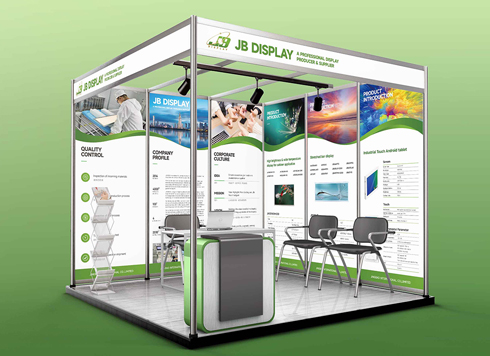 Booth Poster Design for Professional Monitor Product Suppliers
The standard exhibition booth poster projec ...
-
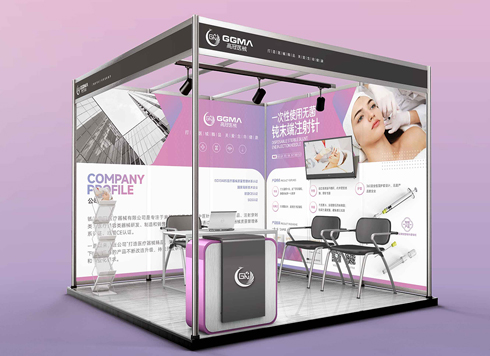 Design of Standard Exhibition Booth Posters for Beauty Instruments
Carefully designed a standard exhibition bo ...
-
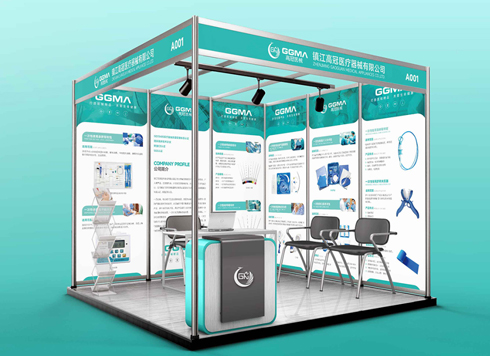 Design of Exhibition Posters for Medical Device Standards
XiYue is designing an exhibition booth post ...
-
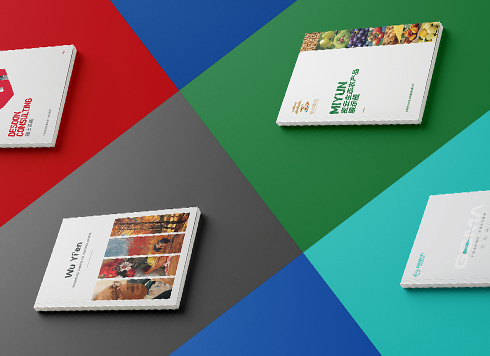 Collection of Brochure Design Cases in 2024 (Cover Series 02)
Our brochure design projects focus on diver ...
-
Switching embroidery factories means the logo has to be redrawn—is the grid construction page the problem?
Date: Oct 10, 2026 Read: 15
-
Brand logo has only one horizontal version—when hang tags, ID badges, and packaging frames won't fit, should you add versions or force-scale?
Date: Oct 4, 2026 Read: 23
-
VI auxiliary graphics look good in the manual but can't be used on posters and packaging—is it a pattern problem?
Date: Sep 28, 2026 Read: 30
-
Brand Color Looks Different on Packaging Bags and Store Light Boxes: Which Should Be the Acceptance Standard?
Date: Sep 16, 2026 Read: 32
-
Is a VI System Design Worth Tens of Thousands? Check These Five Deliverables First
Date: Aug 24, 2026 Read: 72