



Same logo looks clear in a brochure—why does it blur on a shipping box? Can switching the file to a box version save it?
The same logo looks clear in a brochure but blurry on a shipping box. Most of the time this is not because the board is too rough, and it is not only because file resolution dropped. It is because the two printing methods have different “reproduction standards”: brochures use coated-paper offset printing, while shipping boxes mostly use water-based flexo printing on corrugated board. Flexo produces noticeable dot gain on corrugated linerboard, so thin lines and small text are easily filled in by ink, and registration error is also larger than in offset printing. Based on 2026 packaging delivery practice, before sending files, you should adapt a separate version to the box printing method instead of sending the brochure file directly to the box factory. Converting the file to a box version solves most blurriness and filled-in text issues, but it cannot bring back brochure-level gradients and photo details.
Brochures and shipping boxes are both printing—so where exactly is the difference?
Offset printing first transfers ink to a blanket and then presses it onto smooth coated paper, so dot reproduction is relatively fine, with common screen rulings around 175 lpi. Flexo, by contrast, presses the printing plate directly onto the linerboard of corrugated board, with higher pressure, thinner ink, and a rougher paper surface. Dot gain on corrugated board often falls in the 15%–25% experience range, which is noticeably greater than coated-paper offset printing. Another difference is registration: corrugated board has thickness and can spring back slightly after creasing and slotting, so registration tolerance in multi-color overprinting is usually wider than in offset printing.
So a fine stroke that is clearly visible in a brochure can easily be lost on a box. This is not a question of whether the design looks good; it is the combined result of the substrate and the printing method.
- Substrate: Coated paper is smooth with a coating, while corrugated linerboard is mostly kraft-colored or semi-bleached, absorbs ink quickly, and has lower whiteness.
- Printing method: Offset printing is fine; flexo is coarser. The two are not on the same precision curve.
- Viewing distance: A brochure is viewed in hand, while a shipping box is mostly viewed from 1–2 meters away, so the information hierarchy should not be the same to begin with.
- Cost structure: Box printing is priced by number of colors, plate fees, and minimum order quantity; the more colors, the more expensive.
Common corrugated box printing methods and what each is good for
There is more than one way to print a box. Based on common 2026 packaging delivery practice, there are at least four categories: water-based flexo, offset-laminated corrugated, preprint, and digital printing. The choice mainly depends on run size, precision requirements, and cost tolerance.
- Water-based flexo: printed directly on corrugated board, suitable for logistics outer boxes and e-commerce shipping boxes; commonly 1–3 colors, with plate fees charged by color count. A single-color plate fee often falls in the experience range of a few dozen to one or two hundred RMB; production lead time is commonly 3–7 working days; runs from several hundred to several thousand or more are negotiable, and the larger the volume, the lower the unit price.
- Offset-laminated corrugated: first offset-print the artwork on linerboard, then laminate it to corrugated board. The precision is close to a color box, suitable for display boxes and gift box outer packaging; unit price is commonly noticeably higher than flexo, and runs usually need to be 1,000–3,000 or more to be more cost-effective; lead time is commonly 7–12 working days.
- Preprint: web paper is preprinted first and then corrugated, suitable for large runs and high-graphics orders; the minimum order threshold is commonly in the tens of thousands, lead time is longer, and small orders are not cost-effective.
- Digital printing or digital inkjet: suitable for proofs, small runs, and variable information; no plate-making needed, flexible artwork changes, and runs from a few dozen to a few hundred are possible; unit price is commonly higher than flexo, and lead time is commonly 1–3 working days.
Why divide it along these lines? Because the core trade-off in box printing is that precision and cost cannot both be maxed out at the same time. Flexo is cheap but coarse; offset-laminated corrugated is fine but expensive; digital is flexible but has a high unit price. First determine whether the boxes are for logistics or display, then work backward to the printing method. That is easier than designing first and asking for prices later.
Converting a file so it can be printed on boxes: what steps come first?
Sending a brochure file directly to a box factory is a practice with a high rework rate. A more reliable approach is to do a round of four pre-press changes for box printing before sending files, adjusting the file from brochure standards down to box standards according to the characteristics of corrugated linerboard and flexo.
- Thicken thin lines and small text: for thin lines, an experience range of no less than 0.3 mm is recommended; do not set small text with the 7 pt mindset used in brochures—on boxes, it usually needs to be larger to be stable.
- Lower the screen ruling: brochures commonly use 175 lpi; for box flexo, it is commonly reduced to the 100–133 lpi experience range. Larger dots are less likely to fill in.
- Raise light screen tints: 1%–3% light tints on corrugated linerboard can easily fail to print or appear broken; changing them to 5% or above is more stable.
- Leave registration and slotting allowance: reserve a safety zone for multi-color registration, creasing, and slotting positions; do not place text on the crease line.
Each step has a different focus. Thickening counters dot gain; lowering screen ruling helps the flexo plate transfer ink stably; raising light tints prevents mottling in large white areas; leaving registration allowance covers physical deviations in creasing and slotting. Finish these four steps before discussing color. If the order is reversed, you will revise repeatedly.
What counts as acceptable box printing?
For box printing acceptance, it is better to judge by whether it is usable rather than whether it looks exactly like the design proof. For logistics boxes, check information and barcodes first; for display boxes, then check color and graphics.
- Text and lines: no broken lines, no ink smearing, no filled-in areas; key information is legible.
- Barcodes and QR codes: test-scan with a phone before printing, leave enough quiet zone and contrast; if scaled too small, they can easily fail to scan.
- Color: color is basically consistent within the same batch, and solid color blocks have no obvious show-through or mottling.
- Structure: crease positions are correct, slots and flaps do not shift, and the pattern does not move after forming.
- Registration: multi-color overprint deviation is within an acceptable range; in experience terms, it should not affect recognition. Do not hold corrugated boxes to brochure standards.
Conversely, fine-stroke logos, small reversed-out text, and large dark areas built from four-color overprinting are themselves prone to failure on corrugated boxes. Simplify them whenever possible. The pass line is not “beautiful”; it is recognizable from a distance, readable up close, and scannable by barcode.
Applicable scenarios and boundaries
Corrugated box printing is suitable for outer boxes, logistics boxes, moving boxes, and e-commerce shipping boxes—scenarios focused on identification and transport—as well as brand outer packaging with limited budget and larger runs. Its value lies in low cost, transport durability, and recyclability, not in finely reproducing artwork.
The unsuitable cases should also be stated clearly: if you need high-precision photos, delicate gradients, multiple spot colors, extremely small text, or only a few dozen pieces while still requiring fine effects, flexo is often not cost-effective. Switching to offset-laminated corrugated, digital printing, or simply reducing graphic elements is more practical. Do not force display-box precision requirements onto a logistics-box budget.
A common bottleneck in projects is this: the budget is squeezed to a few yuan per box, yet the client asks for the brochure cover's gradients and fine text to be transferred exactly, with a lead time of only about 5 days. Based on 2026 packaging delivery experience, we usually produce two file versions first: one for flexo, simplifying by lowering screen ruling, thickening thin lines, changing gradients to flat tints, and reducing colors to two; the other reserved for digital printing as a backup. After the client chooses based on actual usage, the printed text and barcodes are legible, but gradients become flat tints and the visual result is plainer than the brochure. The cost is about an extra 0.5–1 working day to organize files. This experience range is fairly common in similar projects, but it is lower than reworking and reprinting the entire batch.
FAQ
If I raise file resolution to 300 dpi for box printing, will it stop blurring?
No. Flexo depends on screen ruling and line width, not on piling on dpi alone. Extremely fine lines at 300 dpi can still break or fill in on corrugated linerboard.
Can photos be printed on shipping boxes?
They can be printed, but the effect tends to be grayish and flat, and the more colors, the higher the cost. Photos are better suited to offset-laminated color boxes or display packaging.
If a QR code on a box cannot be scanned, is it because the code is too small?
It is commonly the combined result of size, quiet zone, bar-space contrast, and ink absorption on corrugated board. Test-scanning with a phone before printing is much cheaper than reworking afterward.
Why do box factories keep advising me to switch to a single color?
It is not entirely because they want to avoid trouble. Multi-color flexo increases both registration difficulty and cost; for logistics boxes, a single color is often already sufficient, and recognizability is not necessarily worse.
For only a few dozen boxes, should I choose digital or flexo?
For a few dozen, digital or digital inkjet is usually more realistic. Flexo has plate fees and minimum order thresholds, and when spread across a small batch, the unit price is not low.
If you are about to move brand graphics onto boxes, confirm three things first: whether these boxes are for logistics or display, how many colors you can accept, and roughly what the run size is. Once those three are set, decide whether to use flexo, offset-laminated corrugated, or digital printing, and then adapt the file to box standards. If the run is especially small, the artwork is especially fine, or you need goods in two or three days in a hurry, it is advisable to shorten the design chain and simplify the artwork rather than insisting that flexo produce a brochure effect.
-
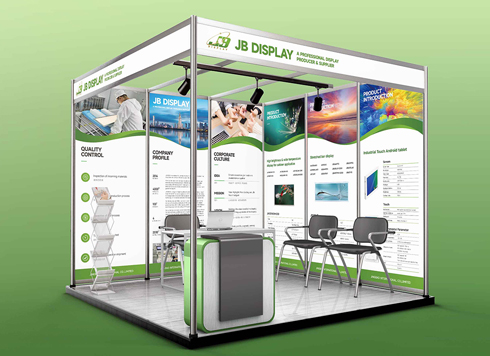 Booth Poster Design for Professional Monitor Product Suppliers
The standard exhibition booth poster projec ...
-
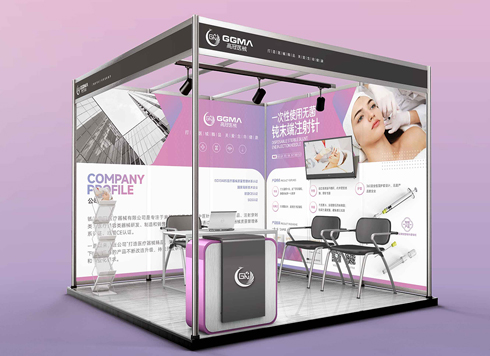 Design of Standard Exhibition Booth Posters for Beauty Instruments
Carefully designed a standard exhibition bo ...
-
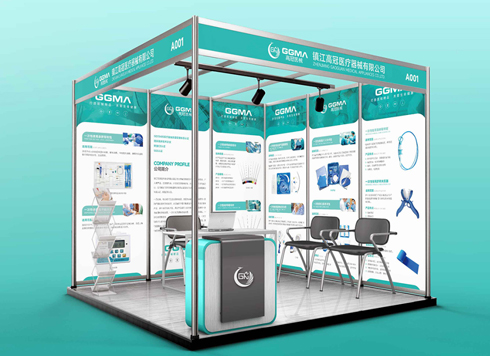 Design of Exhibition Posters for Medical Device Standards
XiYue is designing an exhibition booth post ...
-
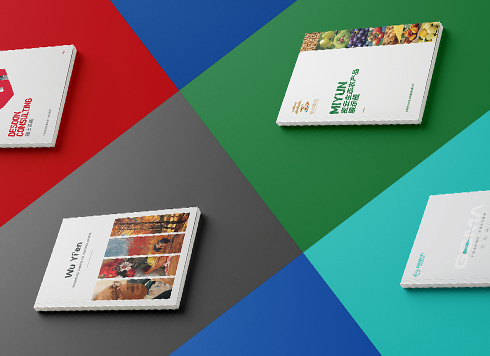 Collection of Brochure Design Cases in 2024 (Cover Series 02)
Our brochure design projects focus on diver ...
-
Brochure body text justified with uneven letter spacing and white gaps at line ends—is the software stretching the spacing? Will left alignment fix it?
Date: Oct 13, 2026 Read: 7
-
White Logo on Black Card Packaging Looks Gray—Was White Ink Printed Only Once? Will One More Pass Fix It?
Date: Oct 12, 2026 Read: 9
-
Why does a folded crease always crack with a white line first—is the paper too thick or the crease not scored deep enough?
Date: Oct 11, 2026 Read: 11
-
Brochure inner page text runs to the finished edge and still gets cut off after trimming—is the real problem not enough bleed?
Date: Oct 10, 2026 Read: 17
-
A drink line ships three flavors and looks like three brands on the shelf — is the flavor color really the problem?
Date: Oct 9, 2026 Read: 18