




For a book series, if you create a master first and then apply it, why does the layout still drift when someone else takes over?
To unify the book layout for a series, the usual approach is not to finish typesetting the first book and copy it directly to the rest, but to first define a transferable master rule set and then apply it book by book. Based on common 2026 project delivery practice, for a series with more than three books, a relatively large total page count, or typesetting split among two or more people, the rework volume from first making a sample book and then applying it is usually lower than typesetting each book independently; only for a single book, with few pages and a confirmed decision not to add more books later, is it unnecessary to make an extra investment in a unified layout. Whether the layout drifts after someone else takes over also does not hinge on that person's skill level, but on whether the master rules were handed over in an editable, reproducible form.
For a unified series layout, what is unified is not that every page looks the same
A series looks 'like a set' not by typesetting every page the same way, but by fixing the type area, style hierarchy, and exception rules so that books of different lengths and image volumes share a consistent reading rhythm. Each book's image volume and word count differ, so pages will inevitably differ, but when readers open any volume, the body text starting position, line spacing and font size, and caption hierarchy should be consistent.
Under common 2026 delivery practice for publication layout design, the parameters that truly need to be locked down are the six categories below; other details can be left for each book to handle freely.
- Type area and page margins: top, bottom, left, and right white space and the head/foot margin ratio determine each book's starting position.
- Body text hierarchy: font size, line spacing, paragraph spacing, and the font-size steps for heading levels one to three.
- Figure captions and table notes: font size, alignment, and distance from the image or table.
- Notes and references: font size and indentation rules for footnotes, endnotes, and indexes.
- Headers and page numbers: whether odd and even pages are symmetrical, and whether they appear on the first page of a chapter.
- Chapter starts: whether chapters start on a new page, whether blank pages are left, and chapter page styling.
Once these parameters are set, they can be reproduced from the rules even if the editor changes, the typesetting company changes, or a reprint happens a year later; conversely, if only a final PDF is delivered without the rules, the next book will most likely require figuring everything out again.
Make a sample first and then apply it: the 'one sample and three sheets' in the delivery checklist
In practice, breaking a series layout into 'one sample and three sheets' makes handover easier: one editable sample plus three explanatory sheets. The reason not to cram all rules into the sample file itself is that different people look at it—editors look at the visual feel, typesetters look at parameters, and printers look at dimensions and bleed; mixing them together makes omissions more likely.
- Sample book or representative sample chapter: usually choose the book with a larger image volume and more complete structure, or first typeset a sample chapter containing a spread image, table, and notes.
- Layout rule sheet: type area dimensions, font size and line spacing, white space, and page number position, precise to numeric values, with no room for 'adjust by eye'.
- Style naming sheet: names and mappings for paragraph styles and character styles, avoiding default names such as 'Style 1' or 'Paragraph Style 2'.
- Exception handling sheet: special rules for spread images, bleed images, tables spanning pages, long table line breaks, indexes, and running heads.
It is also advisable to agree at delivery on how editable source files will be handed over, rather than providing only a PDF. A PDF can be viewed but not edited; when the next book is typeset, the incoming typesetter has no way to start and can only recalculate all the parameters.
Check these points first during acceptance
- Take any typeset file and confirm that the body text starting line and page margin positions match the sample.
- The style panel uses unified names, with no default style names.
- The line-spacing difference between captions and body text, and the spacing between images and captions, fall within the ranges given in the rule sheet.
- After someone else takes over, they can continue typesetting directly without changing font size or line spacing.
Applying a master vs. typesetting each book separately: is the difference in the early or late stage?
Both approaches are common. The choice mainly depends on the number of books in the series, structural differences, and whether more books will continue to be added. Applying a master puts cost upfront; typesetting each book separately spreads cost later.
- Typeset each book separately: each book is flexible, suitable for books with unusual illustration structures; but for three or more books, consistency depends on manual checking, and after multiple rounds of revisions the layout can easily drift, with longer communication time per book.
- Apply a master: create the sample and rules in the early stage, with an experience range of about 3 to 8 working days; afterward each book starts typesetting faster, and changes are concentrated on content rather than layout.
- Timeline reference: pure typesetting for a single book is commonly 2 to 4 weeks; master creation plus the first book is commonly 3 to 5 weeks, then 1 to 3 weeks per book afterward, depending on image processing volume and the number of charts and tables.
- Revision reference: pure layout fine-tuning is commonly 2 to 3 rounds; revisions involving chapter structure adjustments are commonly 4 to 6 rounds. Beyond this range, it is usually because content or structure is not yet settled, not a typesetting speed issue.
Note that forcing two books with very different structures to share one set of interior page rules can actually slow down progress—for example, pairing a text-only novel with an image catalog. In such cases, a more reliable approach is to share outer-layer rules, meaning the type area, headers and page numbers, and font hierarchy stay the same, while interior image plate rules are placed in a separate appendix sheet.
Where handover in practice often gets stuck
A common situation in projects is: the manuscript is delivered in Word, heading levels are achieved by manual bolding, images are mostly screenshots, and caption numbers are repeated in the body text. If content is pasted directly onto the sample styles at this point, common costs are failed automatic table of contents generation and misaligned page numbers, with one round of rework usually taking 3 to 5 days. A more reliable order is to first do style mapping—uniformly rename heading levels, captions, and table styles and map them to the sample, then check image resolution and bleed one by one, and only then apply the layout in bulk.
Another common constraint at handover is: for a five-book series, the first three books are already typeset, and the last two temporarily switch to a different typesetter, who receives only the PDFs of the first three books and no style files. The approach is to first reverse-engineer the type area, font size, line spacing, and caption positions from the first three PDFs, then check differences with the editor and rebuild the style sheet; the cost is a common range of 3 to 5 working days for rework and checking, and caption and header positions must be checked again for each book. If editable source files and the style naming sheet had been handed over from the start, this part could usually be avoided.
A few other high-frequency pitfalls are worth half a day to check before delivery:
- Unifying only on the PDF without keeping editable style files means adding later books requires starting over.
- Caption and table note numbering rules are not locked down, so once the body text order changes, everything becomes misaligned.
- Page number conventions are not unified, and the rule for separately numbering front matter and body text is not written into the rule sheet.
- Letter spacing and punctuation compression rules for mixed Chinese and English typesetting are not built into the styles, so the layout changes when the person or machine changes.
- Font licensing and embedding scope are not confirmed, so fonts get substituted during output or e-book conversion.
Most of these can be checked item by item against official documentation, platform specifications, and printer acceptance checklists; checking them in advance often saves several later rounds of communication.
Applicable scenarios and boundaries
Making a sample first and then applying it is suitable for publications with more than three books in a set, a relatively large total page count, a need for multi-person collaboration or continued addition of books, and a need for series recognition. Conversely, for a single-book publication with few pages and a confirmed decision not to add books or reprint, paying extra for a unified layout is not cost-effective, and typesetting each book separately is relatively less troublesome; for books with extremely large structural differences, such as an image catalog paired with a poetry collection, forcing them to share the same interior page rules is also not recommended.
Another boundary that is easily overlooked: if the books in the series even have different trim sizes, such as one 16mo and one 32mo, then the only things that can be unified are the font hierarchy and the header and page number logic; the type area and image plate rules can only be set separately, and forcing them into alignment would make both trim sizes awkward.
Frequently asked questions
If one book in the series is an image catalog with a lot of images, does it still have to be forced into the same layout?
There is no need to force it. A common approach is to share the type area, headers and page numbers, and font hierarchy, while putting caption and image plate rules in a separate appendix sheet, ensuring only that the overall look and feel is consistent.
Which book is more reliable to use as the sample?
Usually choose the book with a larger image volume and more complete structure, or first typeset a sample chapter containing a spread image, table, and notes. Using the thinnest and simplest book as the sample makes it harder to apply to later books.
After switching to master application, will the number of revisions clearly decrease?
Rework caused by consistency will indeed decrease, but content-level changes remain the same. In practice, pure layout application takes 2 to 3 rounds, while revisions involving content structure adjustments commonly take 4 to 6 rounds.
Is it reasonable for the typesetter to provide only a PDF and say style files are not needed?
Not very reasonable. Later reprints, added books, or someone else continuing the typesetting all require editable source files and style naming. A PDF can be viewed but not edited, which easily leads to rebuilding the rules for the next book.
Should page numbers in a series be continuous across books, or restarted in each book?
Most series number each book independently, making separate sales and revisions easier; only boxed sets that require continuous reading use continuous numbering. This rule should be written into the rule sheet first.
If more books will continue to be added to the series, it is advisable to include the sample, rule sheet, style naming, and exception handling in the delivery checklist at signing, and to agree on how editable source files will be handed over. Conversely, if only a single book is being published, the publishing rhythm is irregular, or the books differ significantly in structure, there is no need to pay extra for a unified layout first. Based on 2026 project delivery practice, getting the 'one sample and three sheets' in hand first and then scheduling each subsequent book usually results in lower communication costs.
-
 Booth Poster Design for Professional Monitor Product Suppliers
The standard exhibition booth poster projec ...
-
 Design of Standard Exhibition Booth Posters for Beauty Instruments
Carefully designed a standard exhibition bo ...
-
 Design of Exhibition Posters for Medical Device Standards
XiYue is designing an exhibition booth post ...
-
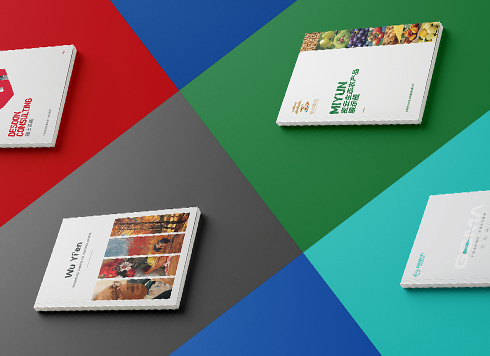 Collection of Brochure Design Cases in 2024 (Cover Series 02)
Our brochure design projects focus on diver ...
-
Single-column text with two-column figures: is a missing column-grid rule behind reflowing text every time a figure moves?
Date: Oct 11, 2026 Read: 11
-
Body text one size smaller and fewer signatures: why do trial readers say they can't get into it?
Date: Sep 29, 2026 Read: 27
-
Print is already at the printer, but the ebook goes live two months later — can the earlier layout still be reused?
Date: Sep 23, 2026 Read: 32
-
Is Template Layout Enough for Publication Design? What's the Difference from a Designer?
Date: Aug 31, 2026 Read: 54
-
Book Layout Design Quotes Can Vary Severalfold, and After Five or Six Revisions You're Still Not Satisfied—Where's the Problem?
Date: Aug 19, 2026 Read: 51