



Is Template Layout Enough for Publication Design? What's the Difference from a Designer?
Publication layout design is the planning work that integrates the page structure, typographic hierarchy, image-text relationships, and print production requirements of books, magazines, and newspapers. The core standard for judging whether a layout design is qualified is not "whether a page looks good," but whether continuous reading is smooth, whether revision communication is efficient, and whether pre-press production avoids rework. Based on 2026 project delivery conventions, a qualified deliverable typically includes a layout specification document, page templates, pre-press files with bleed, and a production specification that clearly indicates paper, ink colors, and binding method.
Many clients ask first: Is using a ready-made template enough? My view is: if it is just a simple document for internal circulation, a template is sufficient. However, when the publication will be printed, has a page numbering system, columns, and image insertion, templates often expose problems — because templates do not include the logic behind "why it is arranged this way." A common situation in projects is: after finishing with a template, you only notice asymmetric margins, inconsistent page numbers, images overlapping text, or misaligned folds after printing. The rework cost is often higher than hiring a designer in the first place.
Why Layout Design Problems Always Surface "Right Before Printing"
Layout design is not just making things look good on a computer screen. The actual results of cutting, folding, and binding cannot be seen on screen. In essence, publication layout design is drawing blueprints for "print production." In common project workflows in 2026, between design completion and pre-press production, proofing (digital proof or press proof) is needed to verify colors and page positions. If the design itself does not account for bleed, margins, saddle-stitching, or perfect binding thickness, issues will surface during the proofing stage.
For example, if a magazine's spread image is designed at single-page width, a portion will be lost in the binding; if there is no white space at the spine, the pages will deform when opened. These are not questions of "looking good or bad," but of whether it can be produced correctly.
A common bottleneck at delivery: the client generates a PDF directly at a quick-print shop, and the printed text block is off-center. Both parties first check the screen, then the file, and finally discover that the original file is missing bleed and registration marks. We then re-export according to pre-press specifications and pass on the first try. The constraint here: only one day left in the delivery schedule, and the printer already has a production slot. The approach: immediately regenerate the PDF using the printer's output parameters and confirm the trim size by phone. The result: an extra half-day of revision fees, but the entire batch was saved from reprinting.
- No bleed set, resulting in uneven white space after trimming;
- Page numbers and running heads look fine on screen but are lost after PDF export;
- Images converted directly from RGB to CMYK, causing dull colors;
- Fold design does not reserve inner margins according to binding method.
Clarify First: What Exactly Do the Deliverables Include?
The price gap in publication layout design largely stems from the scope of deliverables. There are two common categories: the "Basic Edition" and the "Full Pre-Press Edition."
- Basic Edition: usually includes layout design files (JPG/PDF previews), font recommendations, and page templates. Suitable for internal documents and digital reading. Experience range for pricing: per book/per issue by page count, typically around 50-150 RMB/page, with a duration of about 1-2 weeks (depending on the number of pages).
- Full Pre-Press Edition: adds pre-press production on top of the Basic Edition, including PDFs with bleed, print color values (e.g., CMYK values), fold diagrams, binding method instructions, and proofing coordination. Experience range for pricing: typically around 120-300 RMB/page, with a duration of about 2-4 weeks.
Note that these price ranges are only experience ranges based on 2026 project delivery conventions; the actual figures depend on content complexity, number of revisions, and printer requirements. However, the "deliverable checklist" can be clearly written into the contract. When commissioning, ask first: Does the delivered file include a PDF with bleed? Is there a unified style for page numbers and running heads? Are paper and production processes specified?
Evaluate Layout Design with the "Four-Dimension Checklist"
Our team often uses four dimensions—"text block, page numbers, images, and production process"—to check whether layout design is up to standard in book and magazine projects. Why this division? Because these four dimensions correspond to the main reading area, reading aids, visual elements, and physical production, respectively. Any problem in one of these areas will show up in pre-press or the final product.
- Is the text block consistent? Check whether the text block position is consistent throughout the book (or issue), and whether page numbers and running heads are in the same position on every page. Any deviation creates a "jumping" feeling when flipping through.
- Are page numbers and running heads continuous? Page numbers in the body text must not be broken; the table of contents must correspond to actual pages; the hierarchy of running heads should be clear. A common pitfall is that page numbers are not synchronized after body text revisions.
- Are image-to-text distances correct? Are placeholder images distinguished from print images? Has any image been cropped beyond its subject? Are Chinese quotation marks used correctly in citations? These are the most likely to be messy in templates.
- Are production parameters complete? Is bleed indicated as at least 3mm? Are folding methods (saddle-stitched, perfect-bound) specified and inner margins adjusted accordingly? Is CMYK used instead of RGB? Without these specifications, the printer can only interpret things at their own discretion.
What counts as qualified? Check item by item against the four dimensions above. If any one fails, you should request revisions before signing off. In our projects, we also produce an extra proof copy and measure the text block and margins directly on it—much more reliable than staring at a screen.
FAQ
What is the main difference between thousands and tens of thousands in layout design quotes?
The difference usually lies in the scope of deliverables and workload: the lower range is mostly basic layout design, while the higher range often includes complete pre-press files, multiple proofing coordination sessions, and longer revision cycles. The specific range must be estimated based on page count and production complexity.
How many revision rounds are normal?
As an experience range, text replacements during content review are not counted as revisions; if the layout itself is repeatedly adjusted, 3-5 rounds are common in projects. If it exceeds 6 rounds, you should first check whether the acceptance criteria were not clearly defined.
Can I definitely save money by using templates myself?
If the publication is not printed and is only viewed on screen, templates usually save design fees; however, once you go to film and print, templates lack bleed and fold information, and a single pre-press rework could cost more than the design fee.
Is proofing mandatory?
It can be skipped for black-and-white documents; when there is a cover, color inserts, or special paper, it is recommended to do at least one digital proof. According to 2026 printing practices, proofing helps detect color shifts and position issues in advance, at a cost far lower than scrapping an entire batch.
Should I check the digital file or the sample book first?
First check the structure and content of the digital file for errors, then check whether the sample book's production is qualified. The digital file does not include cutting and binding effects and cannot replace the sample book.
Applicable Scenarios and Boundaries
Publication layout design is especially suitable for commissions with fixed page numbers, the need for unified layout, and print requirements, such as books, magazines, corporate internal publications, and annual reports. According to 2026 project delivery conventions, the designer should provide editable source files and printing standards, because adjustments may be needed for subsequent reprints. Professional design is recommended in the following cases:
- Formal publications or materials that the client will use long-term, where the layout needs to be reused repeatedly;
- Print jobs involving special binding, folding, or spot-color printing, which require the designer and printer to align in advance;
- Content with many heading levels, citations, and charts, where templates are difficult to maintain consistently.
The following cases may not require professional layout design: internal electronic documents, plain-text notices without page number requirements, and one-time presentation content for screen projection. In these scenarios, using company templates or document tools is sufficient; spending on professional design is not cost-effective and can slow down progress.
It should be especially noted that layout design is not the same as proofreading. The designer usually reserves space for body text, but the correctness of the text content remains the client's responsibility. It is recommended to arrange a content review before finalization, and then proceed to design and typesetting; otherwise, revision costs will multiply.
Action advice: Before commissioning, write down clearly "who will read this publication, whether it will be printed, how many copies, and what binding method will be used," and then use the four-dimension checklist above to verify the deliverables. If the designer says "guaranteed to pass on the first try," you should still ask how proofing will be arranged. According to Xiyue Company's habits in publication projects, we include layout specifications and pre-press parameters in the delivery checklist so the printer can follow them exactly—this avoids disputes. When the budget is tight, prioritize "PDFs with bleed and production specifications," as these two are the foundation for trouble-free printing.
-
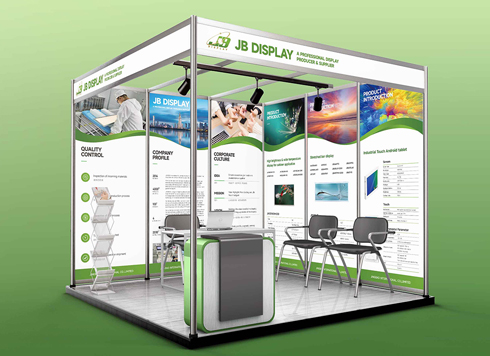 Booth Poster Design for Professional Monitor Product Suppliers
The standard exhibition booth poster projec ...
-
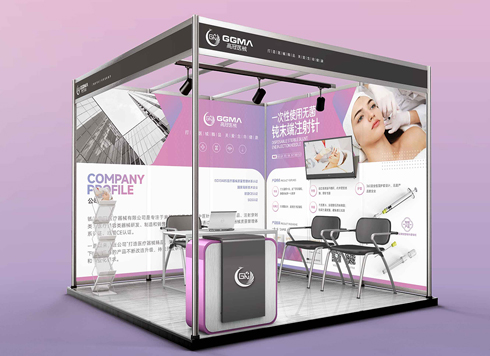 Design of Standard Exhibition Booth Posters for Beauty Instruments
Carefully designed a standard exhibition bo ...
-
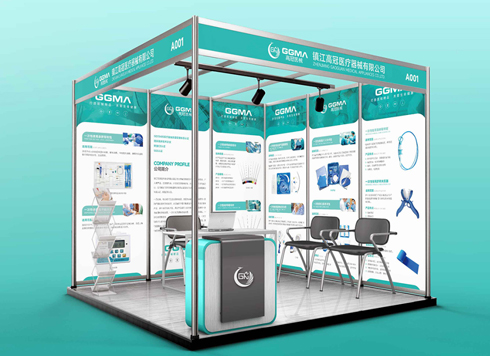 Design of Exhibition Posters for Medical Device Standards
XiYue is designing an exhibition booth post ...
-
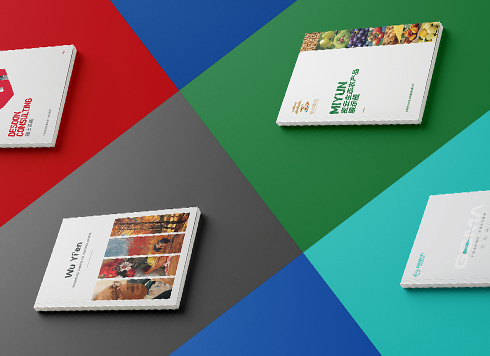 Collection of Brochure Design Cases in 2024 (Cover Series 02)
Our brochure design projects focus on diver ...
-
Book Layout Design Quotes Can Vary Severalfold, and After Five or Six Revisions You're Still Not Satisfied—Where's the Problem?
Date: Aug 19, 2026 Read: 55
-
Single-column text with two-column figures: is a missing column-grid rule behind reflowing text every time a figure moves?
Date: Oct 11, 2026 Read: 18
-
For a book series, if you create a master first and then apply it, why does the layout still drift when someone else takes over?
Date: Oct 5, 2026 Read: 24
-
Body text one size smaller and fewer signatures: why do trial readers say they can't get into it?
Date: Sep 29, 2026 Read: 34
-
Print is already at the printer, but the ebook goes live two months later — can the earlier layout still be reused?
Date: Sep 23, 2026 Read: 35