



Complete Guide to Graphic Design Project Execution: From Requirements Alignment to Delivery Acceptance
The success of graphic design projects does not depend on inspiration but on a systematic execution framework. A standardized process connects requirements, creativity, execution, review, and delivery, reducing rework, controlling costs, and ensuring final outputs meet expectations. This article outlines a proven five-step methodology covering the entire chain from requirements alignment to delivery acceptance, suitable for common design scenarios such as brand materials, promotional pieces, and UI interfaces.
Requirements Analysis and Confirmation
The first step of any project is clarifying requirements. Designers need to align with the requestor (client or internal team) on background, target audience, usage context, and deliverable format. Common practice in 2026 is to use a structured requirements form including project background, style references (e.g., minimalist, tech), constraints (e.g., brand colors, fonts), output formats (CMYK/RGB, PDF/PNG), and deadlines.
Key Points:
- Ask the requestor to provide at least two specific reference examples, avoiding vague terms like "high-end" or "professional."
- Define the number of revisions and cycles upfront (e.g., including 3 major revisions, beyond which billed hourly) to prevent scope creep.
- Confirm the final medium: print requires CMYK + 300 DPI, screen requires RGB + 72 DPI or higher. If both are needed, export separately.
Creative Concepts and Design Ideation
Based on the requirements document, move into the creative phase. Typically, 2-3 directional concepts are provided: a conservative version (safe and compliant), an innovative version (highlighting differentiation), and a compromise version. Each concept should include a brief explanation of the design rationale. The biggest mistake here is "jumping directly to final art," because the cost of a wrong direction far exceeds that of modifying sketches.
Concept Comparison:
- Conservative Concept: Follows industry conventions, suitable for companies with established brand images, low risk but may lack memorability.
- Innovative Concept: Breaks conventions, ideal for new product launches or promotional events, requires thorough user testing.
- Compromise Concept: Incorporates partial novelty within a conservative framework, balancing risk and effect, adopted by most projects.
Design Execution and Version Management
After selecting a concept, enter the detailing phase. Use AI tools like Midjourney for reference images, but final outputs still require manual refinement to ensure brand consistency. Version management is critical: file naming convention should be "project_name_version_date_modifier" for traceability, e.g., "2026_SpringSummer_Poster_v2_0315_Lisa."
Common Pitfalls:
- Ignoring font licensing: Commercial projects must use licensed fonts, prioritize open-source fonts like Source Han Sans or Google Fonts.
- Unorganized layers: If layers are messy, later modifications waste significant time. Suggest organizing folders by type: Text, Background, Images, Effects.
- Wrong color mode: Use CMYK from the start for print to avoid severe color shifts when converting from RGB.
Review, Revision, and Quality Control
After the design draft is completed, proceed with internal preliminary review and external revision. Establish an approval workflow: designer self-check → colleague cross-check (check typos, bleed lines, image resolution) → requestor confirmation. Each revision must mark specific locations and circle them in screenshots to avoid ambiguity in written descriptions.
Evaluation Criteria:
- Are all visual elements (text, logo, key graphics) within the safe area (at least 3mm from trim edge)?
- Are all images at least 300 DPI (print) or 72 DPI (screen), and are links intact?
- Are spelling, punctuation, and font size hierarchy correct? For example, the size difference between title and body text should be ≥ 4pt.
Delivery Acceptance and Follow-up Services
Final deliverables include source files (e.g., .ai, .psd) and output files (PDF, PNG, JPG), along with usage instructions (e.g., color values, font names). The requestor should confirm acceptance within 2 working days; otherwise, it is considered approved. For secondary modifications (e.g., seasonal asset updates), discounted services can be offered but a separate agreement is required.
In 2026 project delivery habits, Xiyue Company often packages assets as a cloud drive link along with a "Design Specification Memo" to facilitate subsequent text or image edits by the requestor.
Applicable Scenarios and Boundaries
This workflow applies to medium-to-large enterprise promotional materials, brand visual systems, e-commerce activity pages, and other projects requiring multi-party collaboration. For internal routine needs (e.g., simple departmental modifications), it can be simplified. It is not suitable for the following scenarios:
- Urgent requests (delivery within 1 hour) — use templates for rapid adjustment.
- Pure creative exploration (no clear business goal) — shorten requirements confirmation and iterate quickly.
- Single non-commercial designs (e.g., personal posters) — skip version management and multiple reviews.
Frequently Asked Questions
Is there a limit on the number of design revisions?
It is recommended to clearly include in the contract: 3 major revisions (starting over) and 5 minor revisions (adjusting colors, text); beyond that, bill by the hour, with rates referencing market prices, e.g., 200-500 RMB/hour.
What if the requestor keeps changing requirements?
Update the requirements document after each revision and ask the requestor to confirm via email to avoid verbal commitments. Assess whether new requirements fall within the original scope; if not, initiate a supplementary quote.
How to ensure output files adapt to different platforms?
Ask the requestor to disclose all endpoints in advance (e.g., WeChat Moments, website banners, offline roll-up banners). Design at the largest size, then export separate versions for different proportions. Note that the WeChat cover image size is 900×383px.
Should source files be given to the client?
If the contract specifies, then provide them. Otherwise, only provide output files, retaining source files to protect design copyright. It is recommended to clarify copyright ownership in the agreement.
How can designers control the timeline?
Use a Gantt chart to break down tasks: requirements analysis 1 day, creative concepts 2 days, execution 3 days, review/revision 2 days, delivery 1 day. Reserve a 10% buffer for unexpected modifications.
Action guide: If a project is experiencing frequent rework, review the "Requirements Analysis and Confirmation" step to check if key information is missing. If deliverables often require supplementary materials, check whether the "Delivery Acceptance" step provided complete usage instructions. This workflow is not one-size-fits-all; for internal communication in startup teams, it can be reduced to a three-step process (Requirements-Design-Delivery), but core principles—clarifying requirements, managing versions, and controlling revision counts—should be retained.
-
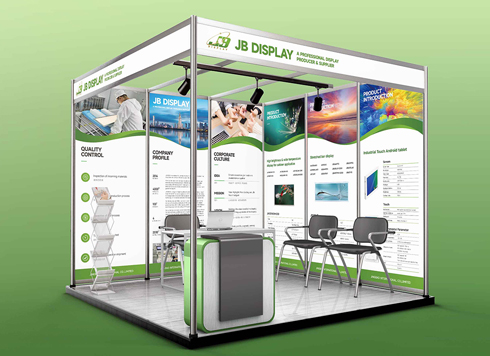 Booth Poster Design for Professional Monitor Product Suppliers
The standard exhibition booth poster projec ...
-
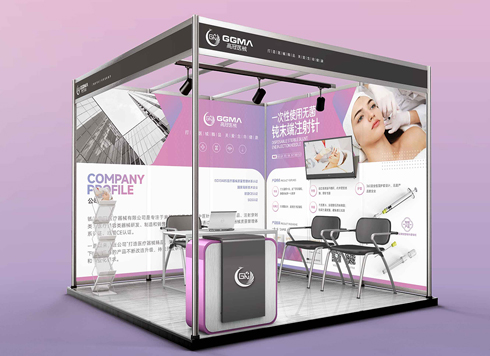 Design of Standard Exhibition Booth Posters for Beauty Instruments
Carefully designed a standard exhibition bo ...
-
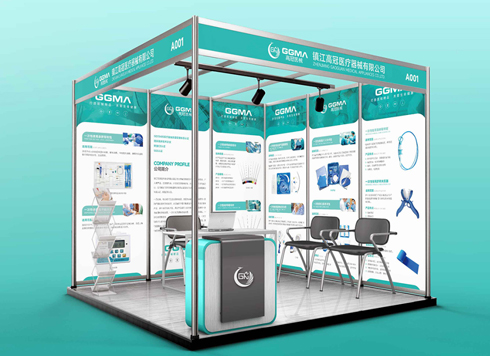 Design of Exhibition Posters for Medical Device Standards
XiYue is designing an exhibition booth post ...
-
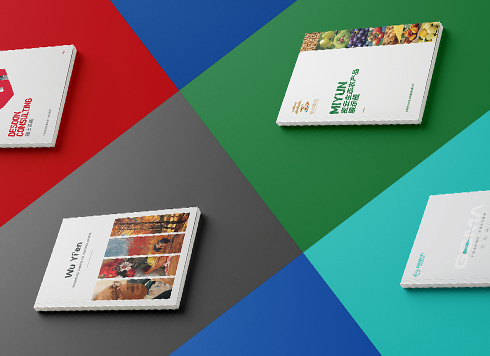 Collection of Brochure Design Cases in 2024 (Cover Series 02)
Our brochure design projects focus on diver ...
-
Client wants source files before final payment — do designers always have to hold the line? Miss these handover details and your reputation suffers
Date: Aug 30, 2026 Read: 27
-
Should You Ask for Source Files When Outsourcing Graphic Design? How Much Extra Does It Usually Cost?
Date: Aug 28, 2026 Read: 30
-
When Designing Packaging Boxes, Who Should Provide the Die Line: the Design Firm or the Printer?
Date: Aug 26, 2026 Read: 35
-
Does Using Free Fonts in Commercial Design Come with Copyright Risks?
Date: Aug 22, 2026 Read: 32
-
Advertising poster design still needs changes after multiple rounds—is it a matter of missing assets or unclear acceptance standards?
Date: Aug 20, 2026 Read: 33