



After a trifold is folded, the back cover ends up inside and the client says the opening order is wrong—can we still fold a blank dummy before re-layout?
When a trifold is folded, the front cover and back cover are not on the same side. This is usually not a layout software error; instead, the fold method was not fixed before layout started, and the flat layout was filled with content by splitting it into three equal left, middle, and right columns. Based on 2026 project delivery experience, first confirm whether the fold is a roll fold, accordion fold, or gate fold, then place copy and images according to panel numbers on the flat layout. When three columns are laid out by visual feel alone, rework commonly lands on the front/back cover and the opening sequence. If a blank folding dummy has already been produced or the job has gone on press, evaluate the reprint cost before deciding whether to change the fold method. This approach is suitable for short-run folded materials, not for multi-page bound brochures or purely electronic one-pagers.
Why trifolds most often go wrong on the front and back cover
A trifold may look like only two sides and six panels, but it is not as simple as dividing three columns evenly. When the fold method changes, the orientation, inside/outside position, and front/back relationship of the same panel change after folding. Whether the front and back covers are on the same side, and which panel readers see first when opening, depend on the fold lines and viewing direction, not on the page order in design software.
A common problem is filling all six columns with content first and then asking the printer to adjust according to the fold method. Once the fold changes, the headline, QR code, back-cover information, and fold-line safety areas all need to move. Based on the typical project experience range in 2026, revision labor commonly takes half a day to two days; if output has been produced or the job is already on press, the cost turns into a reprint. At delivery, checking the fold diagram first is more reliable than adjusting panels afterward.
- Front and back cover on the same side: After folding, they should both appear on the outside; one cannot be inside while the other is outside.
- Consistent opening direction: Whether readers open from left to right or right to left determines the content of the first and last panels.
- No type on fold lines: Leave a safe distance on both sides of fold lines; do not place text or QR codes on the fold lines.
Fix the fold method first, then number the six panels on the flat layout
A more reliable sequence is to first draw the fold method as a 1:1 flat layout diagram, number the six panels as front cover, back cover, and inside pages 1 through 4, and then fill in the content. The reason is to give copy, images, and QR codes fixed positions, not to add process steps. Once the numbering is fixed, the designer and printer share the same understanding of which panel is which.
The work can proceed in the following order, with a checkable result at each step:
- Set the opening direction: Confirm whether readers first see the front cover or an inside page when they receive it, and note this on the diagram.
- Set the fold method: Choose one of roll fold, accordion fold, or gate fold, and mark the fold-line positions and fold-line safety areas.
- Set panel numbers: Name all six panels on the two sides one by one; do not leave the back cover until the end to stuff in information.
- Make a blank folding dummy: Fold ordinary paper once at 1:1 to check the front/back cover, opening sequence, and type on fold lines.
- Then move into visual refinement: After the dummy is confirmed, adjust images, type, and color to reduce a full re-layout.
Do not rush to fill the layout with the key visual before step 5, because when the fold method is not fixed, the more complete the key visual is, the more troublesome the revision becomes.
Panel order differences among roll fold, accordion fold, and gate fold
There is more than one common trifold fold method, and the cover position and opening sequence are not interchangeable. A common misjudgment is to treat the fold method as a printer's finishing matter; in fact, it determines how the flat layout is divided into panels, which panel is the cover, and which panel is suitable for the back cover and QR code.
- Roll fold: One side folds inward to wrap the other side, so opening often reveals an inside page first; the front and back covers usually sit at the two ends, suitable for menus, product instructions, and other content that needs guided reading.
- Accordion fold: Panels alternate front and back, opening like an accordion; panel order is continuous, suitable for timelines, step diagrams, or trade show information, but the front and back cover are easy to misplace if direction is judged incorrectly.
- Gate fold: Both sides fold toward the center and open with a spreading effect; suitable for event invitations and brand promotion, but it places higher demands on fold-line positions and key visual integrity.
Four checkable comparison points: whether the cover is easy to identify, whether opening is smooth, whether fold lines easily press on images or type, and whether short-run proofing is convenient. If budget and lead time are tight, a common trifold practice is to make a blank dummy with digital short-run printing first, confirm the fold method, and then go to batch production. A dummy is usually less troublesome than a full reprint, and the cost is calculated by paper and quantity.
A common scenario comparison: Laying out three equal columns first and then asking the printer to adjust to the fold method may appear to save half a day to one day before layout starts. But once the fold changes, re-layout labor commonly takes half a day to two days; if the job is already on press, it may turn into a reprint. Making a 1:1 blank dummy first and then doing visual refinement adds half a day to one day upfront. Short-run digital blank dummies commonly fall in the range of tens of yuan to more than one hundred yuan per copy, varying with paper, store, and quantity; what it buys is one chance to revise before batch production. This comparison is not an absolute conclusion; the larger the batch, the more obvious the value of upfront confirmation.
Checklist for fixing the fold method before layout starts
Based on common project delivery practices in 2026, fold confirmation should come before final copy, not be added after design is complete. In projects, clients often provide only a paragraph of copy and reference images, control the budget for short-run digital printing, and set a lead time of three to five working days, yet do not specify whether they want a roll fold or an accordion fold. At that point, using a checklist to turn verbal descriptions into checkable items is more effective than repeatedly guessing from images.
Delivery floor experience: On one store event leaflet, the client provided only a paragraph of copy and reference images, controlled the budget for short-run digital printing, compressed the lead time to three to five working days, and said verbally to just fold it three times. We did not lay out the key visual first. Instead, we numbered a 1:1 flat layout and folded a blank dummy first. The result showed that the roll fold the client wanted would put the back-cover QR code on the inside. Adjusting the panel order took about half a day, but it avoided a full re-layout and a supplement print. Based on the experience range, this kind of upfront confirmation commonly costs an extra half day to one day, in exchange for one chance to revise before batch production. If the problem is found only after the job goes on press, the cost usually changes from re-layout labor to reprint expense.
- Write the fold name clearly: Roll fold, accordion fold, or gate fold; do not accept just “trifold.”
- Write finished size and flat size clearly: Mark them in millimeters to avoid design scaling by screen proportions.
- Mark the front and back cover positions clearly: Circle them on the flat layout and note whether they are on the same side after folding.
- Leave enough fold-line safety area: Keep text, QR codes, and thin lines away from fold lines; by experience, leave a buffer zone that can tolerate folding and pressure.
- Name the dummy approver clearly: Who will review it, which items they will check, and whether the fold method can still be changed after confirmation.
What counts as qualified: Print the flat layout, fold it once according to the fold method, and confirm that the front and back cover are on the same side, the opening sequence is smooth, and the fold lines do not press on key information. Only after all three pass should the job move to batch production. Nodding at a computer screen does not count as confirmation.
Applicable scenarios and boundaries where it does not apply
This approach of fixing the fold method first and then laying out panels is suitable for trifolds, menus, trade show flyers, store event leaflets, and other short-run materials that require manual folding. It is also suitable for projects where the client changes the fold method at the last minute but the job has not yet gone on press. Its value lies in fixing the front/back cover and opening sequence in advance, reducing re-layout and supplement printing.
The unsuitable cases should also be stated clearly: Brochures with more pages that require saddle stitching or perfect binding should not use the six-panel logic of a trifold. One-pagers that are electronic only and not folded do not need a blank dummy for the fold method. If materials have already gone on press or completed large-batch printing, changing the fold method is usually not cost-effective; evaluate the reprint cost first rather than forcing changes to the file.
- Suitable: Projects using short-run digital printing, with the fold method undecided, front/back covers easily confused, and a need to quickly confirm the opening sequence.
- Not necessary: Purely electronic publishing, unfolded one-pagers, and regular materials where the fold method is already fixed by a template and has been verified.
- Use with caution: Projects already printed in large batches, where fold lines press on the key visual, or where the client provides only reference images and cannot clearly specify the fold method.
Frequently asked questions
Is the front cover of a trifold always the rightmost panel on the flat layout?
Not necessarily. The cover position depends on the fold method and viewing direction; roll fold and accordion fold are not the same. Confirm by the numbering on the fold diagram; do not simply apply a left-right habit.
If the client changes from roll fold to accordion fold at the last minute, can we change only the fold lines in the file?
No, you cannot just move the fold lines. The panel order, front/back cover, and opening direction all need to be re-laid out; by experience, the change volume commonly falls in the range of 30% to 60%. It is more reliable to first confirm whether a new blank dummy is needed.
After folding a trifold, one inside panel is upside down—did the printer fold it the wrong way?
In most cases, it is not folded the wrong way; rather, the text direction of that panel does not match the fold method. First check the rotation direction of each panel on the flat layout against the fold diagram, then decide whether to revise the file or supplement print.
Do trifolds from digital quick printing also need the fold method fixed first?
Yes. Digital quick printing makes revisions fast, but a wrong fold method will still misalign the front and back covers. For short runs, fold a blank dummy once first; the cost is usually lower than a full reprint.
After the fold method is confirmed, which positions should be checked in the proof?
Focus on whether the front and back cover are on the same side, whether the opening sequence is smooth, and whether fold lines press on text and QR codes. Check item by item against the delivery acceptance checklist; do not look only at color.
In action terms, before layout starts, write the fold method, front/back cover, and six panel numbers clearly on a 1:1 flat layout in one pass, then ask the client to sign off on the blank dummy. If materials have already gone on press or batch production is complete, calculate the reprint cost first before deciding whether to change the fold method. The applicable boundary is short-run folded materials and projects with an undecided fold method; multi-page bound brochures and purely electronic one-pagers do not need to apply it. Following project delivery practice, we move into visual refinement only after the dummy is confirmed, reducing rework caused by front/back cover misalignment.
-
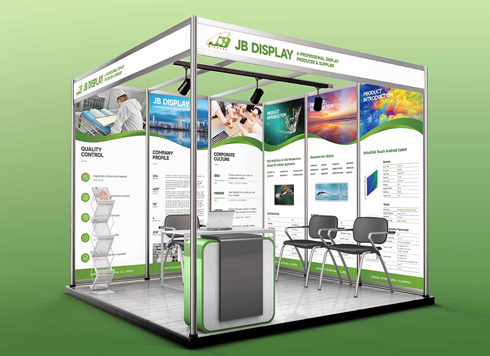 Booth Poster Design for Professional Monitor Product Suppliers
The standard exhibition booth poster projec ...
-
 Design of Standard Exhibition Booth Posters for Beauty Instruments
Carefully designed a standard exhibition bo ...
-
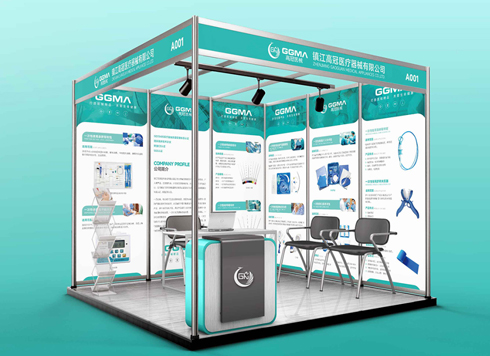 Design of Exhibition Posters for Medical Device Standards
XiYue is designing an exhibition booth post ...
-
 Collection of Brochure Design Cases in 2024 (Cover Series 02)
Our brochure design projects focus on diver ...
-
Tri-fold cover and back page order keeps getting reworked: did you mix up fold type and page order during layout?
Date: Sep 24, 2026 Read: 81
-
When a sample is shipped to another city and the client only signs back “OK,” who is to blame if mass production shifts color? Were the reference and tolerance missing from the approval form from the start?
Date: Nov 22, 2026 Read: 3
-
When text at both ends of a banner is pinched by rope, is moving the text inward enough—and should hole positions and hanging method be marked together?
Date: Nov 21, 2026 Read: 5
-
When the company name on a booth fascia can’t be read across the aisle, can checking letter height and stroke weight against the far viewing distance before artwork start save a reprint?
Date: Nov 20, 2026 Read: 11
-
The address along the bottom of a roll-up banner keeps getting covered by the base—can leaving a keep-out zone from the supplier die line before artwork save a site rework?
Date: Nov 19, 2026 Read: 13