



Tri-fold cover and back page order keeps getting reworked: did you mix up fold type and page order during layout?
Tri-fold cover and back page order keeps getting reworked. Usually it is not a design software error, but misalignment between fold type, fold marks, and post-fold reading order. Depending on the fold type—roll fold, accordion fold, and others—a tri-fold has a different page-turning order after folding. If you arrange the design by the visual order of the flat layout, the printer folds it according to fold marks and the cover may become an inner page or the back cover may end up in the middle, causing rework. Under 2026 folded material delivery habits, you can decide the order by first confirming the fold type, then arranging pages by post-fold reading order, and finally having the printer produce a folding proof for verification.
1. Why is tri-fold page order easy to get wrong? First separate fold type from fold marks
A tri-fold is not about dividing a long strip into six equal columns and placing content in order. The fold type determines which column faces out after folding and which column is read first. Common fold types in 2026 include roll fold, accordion fold, and half-fold then half-fold again. Printers usually ask for the fold type and fold marks when taking an order because imposition and folding machine settings differ.
Wrong page order affects more than appearance. In distribution scenarios, the cover determines whether people are willing to open it; the back cover often holds contact details and address; messy inner page order makes reading jump. If discovered only after printing, reprint cost depends on print run and process, and the experience range can be considerably higher than re-layout.
- Roll fold: the right inner panel folds in first, then wraps from the left. The cover and back cover are on the outer front and back, and the inner panel usually needs to be narrower by an experience range of 1–2 mm.
- Accordion fold: folds one forward and one reverse like an accordion. Each column is relatively intuitive, but the post-fold order can be opposite to the flat order.
- Half-fold then half-fold again: suitable for a single sheet with few pages and clear information blocks. Page order is relatively simple, but you still need to verify which column faces out.
- Fold marks: marks placed by the printer at fold line positions to align the folding machine; the page order in the design file should match the fold marks.
2. Use the “three-fix check” method to set tri-fold page order
Setting page order does not require memorizing complex formulas, but you need to fix three variables: fold type, cover position, and post-fold reading order. If any one is not confirmed, the printer may fold by default and the result may not match.
- Fix the fold type: first ask the printer or packaging structure provider whether this tri-fold uses roll fold or accordion fold, whether there are two or three fold lines, and whether the unfolding direction is horizontal or vertical.
- Fix the cover and back cover: specify which column faces out as the cover and which column holds the back cover. The roll fold cover is usually on the panel that wraps the outside; for accordion fold, confirm by the post-fold page-turning direction.
- Fix the post-fold order: number the six panels by post-fold page-turning order, then reverse-map them to flat layout positions. Do not number directly from left to right on the flat layout.
- Fix the folding proof: before final output, have the printer produce a folding proof or a white sample according to fold marks. The experience range is 0.5–1 working day, which can catch page order and fold line position issues early.
The key is step 3. Many reworks are not because the design is unattractive, but because the designer arranges by flat reading order while the printer folds by the folding machine default order. Under 2026 project delivery habits, adding a fold mark check before output for folded materials is much easier than remedying it after printing.
3. Fold lines, cross-panel images, and cracking at the fold: how to avoid common pitfalls
Correct page order does not mean it will look good when folded. Fold line position, cross-panel images, and fold-line processes all affect the finished piece. If key text or thin lines sit on both sides of a fold line, it may look crooked after folding; large dark areas across a fold line may crack or show white after folding.
- Fold line safety margin: leave an experience range of 3–5 mm on each side of the fold line, and avoid placing body text, thin lines, and QR codes too close to the fold line.
- Cross-panel image handling: images that need to cross the fold line can be broken or have the main subject kept away from the fold line; faces, product centers, and text are not recommended directly on the fold line.
- Roll fold inner panel: make the inner folded panel narrower by an experience range of 1–2 mm to reduce bulging and edge push after folding; the width difference is subject to the printer's folding proof.
- Cracking at the fold: laminated paper and dark solid areas are more likely to crack at the fold. Confirm crease line, paper grain direction, and lamination type with the printer in advance.
- Page numbers and fold marks: number pages by post-fold reading order, not by flat layout order; place fold marks according to printer specifications and do not delete or modify them on your own.
A common delivery scene is tight budget and schedule: the design file is sent to the printer in flat order, and when folded the cover ends up on an inner page. The typical range for rework and re-layout is about 1–2 working days. If it has already gone on press, the cost is higher. Therefore, in folded projects, fold mark verification is not optional. Under common project delivery habits, before output, having the printer produce a folding proof to check fold marks is more reliable than verbally describing the fold type.
4. How do you tell whether the page order folded by the printer is correct?
Inspecting folded pieces cannot rely only on the flat printed sheet; you need to flip through the folded final product. The criteria are not complex, but you need to check order and details.
- First flip the cover and back cover: the cover faces out, the back cover is on the reverse, and contact and address pages are not caught in the inner pages.
- Then flip the inner page order: after opening the cover, the reading order is continuous, with no skipped or reversed pages.
- Check fold line position: fold lines are basically centered or at fold mark positions, and text is not pressed by the fold lines.
- Check fold quality: there is no obvious cracking, white show, or bulging at the fold, and the roll fold inner panel does not push against the outer layer.
- Check proofs: digital proof for page order and layout; press proof for fold type and crease reproduction. In terms of experience range, digital proof can be produced in 0.5–1 working day, while press proof depends on the printer's schedule.
If the page order is wrong, do not rush to have the printer refold. First determine whether it is a design file page order issue or a folding machine fold mark offset; the former requires changing the file, while the latter can be solved by adjusting fold marks or the fold type. Judgment can follow the printer's folding proof and the delivery acceptance checklist item by item.
5. Applicable scenarios and boundaries
Folded page order rules are suitable for materials that need to be distributed or mailed after folding, such as tri-fold flyers, product manuals, menus, and event folded leaflets. As long as the material needs to be read in post-fold order, you should set the fold type before arranging pages.
Conversely, if the material does not need folding, or is mainly read as a PDF on screen, there is no need to apply folded page order rules. Single-page flyers, half-fold cards, and cards with very few pages have simple page order; just arrange them in reading order. Online files exported in page sequence are less error-prone.
- Suitable: tri-fold, four-fold, accordion fold, roll fold, manuals, folded menus.
- Not necessary: single-page flyers, half-fold cards, pure online PDFs, cards that do not need folding.
- Boundary sentence: If the material does not need folding, or is only read on screen, there is no need to apply folded page order rules; forcing it instead increases communication cost.
Common questions
Does a tri-fold cover always have to be on the front right?
Not necessarily. The cover position differs for roll fold and accordion fold, so follow the printer's fold marks and the post-fold page-turning order. Do not assume from the flat layout.
Why does one panel of a roll fold need to be narrower?
Because the inner folded panel is wrapped by the outer layer, narrower by an experience range of 1–2 mm can reduce bulging and edge push. The exact width is subject to the printer's folding proof.
If the design file is arranged in flat order, can the printer help change it?
Some printers can adjust it in prepress, but they may charge extra or extend the schedule. A safer approach is to check the page order yourself against fold marks before output.
Can fold lines run over images?
Images can cross fold lines, but within an experience range of 3–5 mm on both sides of the fold line, avoid key text, thin lines, and QR codes. Large dark areas across the fold line are prone to cracking.
Which is easier to get wrong, accordion fold or roll fold?
Roll fold is easier to get wrong because the inner and outer panel widths and page order are asymmetric. Accordion fold is relatively intuitive, but you still need to verify the post-fold order and fold marks.
Before output, run through the “three-fix check”: first fix the fold type and fold marks, then fix the cover and back cover, and finally arrange pages by post-fold order, leaving a 3–5 mm safety margin on both sides of fold lines. Suitable for tri-folds, manuals, and folded menus that need folded distribution; if it is only a single page or screen reading, there is no need to apply folded page order rules. Have the printer produce a folding proof first. The experience range is 0.5–1 working day, which usually reduces the cost of re-layout and reprints.
-
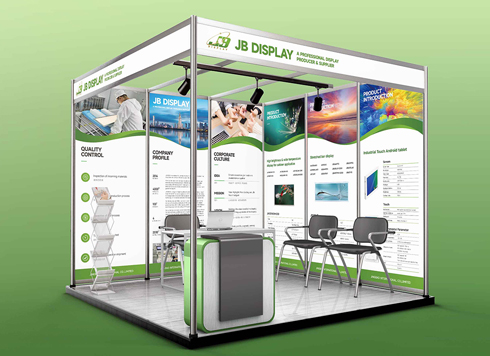 Booth Poster Design for Professional Monitor Product Suppliers
The standard exhibition booth poster projec ...
-
 Design of Standard Exhibition Booth Posters for Beauty Instruments
Carefully designed a standard exhibition bo ...
-
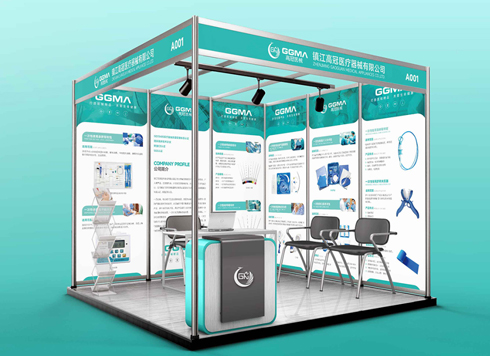 Design of Exhibition Posters for Medical Device Standards
XiYue is designing an exhibition booth post ...
-
 Collection of Brochure Design Cases in 2024 (Cover Series 02)
Our brochure design projects focus on diver ...
-
The logo is centered in the circular button, so why does it still look off to one side? Should I nudge it manually, or is something wrong with the file?
Date: Oct 15, 2026 Read: 1
-
Same logo looks clear in a brochure—why does it blur on a shipping box? Can switching the file to a box version save it?
Date: Oct 14, 2026 Read: 3
-
Brochure body text justified with uneven letter spacing and white gaps at line ends—is the software stretching the spacing? Will left alignment fix it?
Date: Oct 13, 2026 Read: 7
-
White Logo on Black Card Packaging Looks Gray—Was White Ink Printed Only Once? Will One More Pass Fix It?
Date: Oct 12, 2026 Read: 9
-
Why does a folded crease always crack with a white line first—is the paper too thick or the crease not scored deep enough?
Date: Oct 11, 2026 Read: 12