



Store sale poster goes up tomorrow, design finalized today—can it still make printing and posting?
Bottom line first: If a store sale poster needs to go up tomorrow and the design is only finalized today, whether it can still make it depends mainly not on design speed, but on whether three things can be true at the same time: the campaign price and copy are locked, the files pass prepress compliance, and the printer and posting crew have availability. In typical 2026 delivery, for same-city digital quick printing or photo printing, with a quantity in the tens to hundreds, simple artwork, and no special finishing, the typical range is same-day output or early arrival the next day, so there is a chance to make it. If it goes through offset printing, cross-city logistics, outdoor large-format, or finishing such as lamination and foil stamping, it usually cannot make it. The safer approach is still to lock information one week ahead, and for rush orders keep only the core artwork rather than carrying all extensions and finishing processes.
Below, we break it down by actual delivery sequence. Design is only one segment of the schedule; prepress, printing, finishing, logistics, and posting each take time.
Why 'finalize today, post tomorrow' gets stuck at printing and posting
From final artwork to being posted in a store, a promotional poster goes through at least several stages: design wrap-up, internal proofing, prepress processing, printing, finishing, logistics, and posting. A real schedule should be worked backward from the posting date as the anchor, not starting by asking how many hours design will take.
- Design and proofing: A regular promotional poster takes 2–4 business days including 1–2 rounds of revisions; an extreme rush order can wrap up the same day, but basically no structural revisions are allowed.
- Prepress processing: Bleed, font outlining, and color mode checks typically take half a day to 1 day; for rush orders this can be compressed to 2–4 hours, provided the files pass on the first try.
- Printing and finishing: Digital quick printing typically takes 1–2 business days, photo printing/inkjet typically 1–3 business days; offset printing including proofing typically 3–5 business days, and lamination, foil stamping, and die-cutting each add another 1–3 business days.
- Logistics and posting: Same-city delivery typically takes 1 day, and store self-posting needs another half day to 1 day; outdoor installation and approval take longer.
Adding these segments together shows that leaving time only for design but not for the printer and posting is a common cognitive bias in promotional poster delays. Conversely, if prices and assets can be confirmed the same day, a one-week schedule is feasible with digital processes; finalizing today and posting tomorrow can only follow an extreme path.
What is the difference between a regular one-week schedule and finalizing today for tomorrow posting?
For the same store promotional poster, the timeline, cost, and risk differ significantly by process and quantity. Below is a comparison based on experience ranges; the specific schedule is subject to the local printer's availability at the time.
- Regular digital quick printing (about one week): Suitable for tens to hundreds of copies for short-term store promotions. Design 2–4 business days, prepress half a day to 1 day, printing 1–2 business days, same-city logistics 1 day, posting half a day to 1 day. Including revisions, 5–8 business days is typical; one week is tight but feasible.
- Extreme rush order (finalize today, post tomorrow): Suitable for about tens to two hundred copies, conventional artwork, same-city pickup or same-day courier. Design finalized the same day, prepress 2–4 hours, digital quick printing with same-day output or early arrival the next day, and store self-posting. The trade-off is very little room for revisions; paper and color are based on the existing digital proof, and special finishing is basically removed.
- Offset printing (needs more lead time): Suitable for over a thousand copies and uniform color across multiple stores. Including proofing and finishing, 3–5 business days is common; plus logistics and posting, it usually takes more than a week. Last-minute price changes are not suitable for offset printing, otherwise the entire batch may need rework.
- Outdoor inkjet/large-format billboards: Artwork can be tiled, and output typically takes 1–3 business days, but outdoor billboards also require posting approval and installation; typical 2026 delivery practice suggests reserving 2–3 weeks.
Experience suggests that when the quantity is under a few hundred copies and only one or two days remain, prioritize digital quick printing or photo printing rather than waiting for an offset printing slot. Conversely, if materials need to be presented uniformly across multiple stores over the long term, offset printing's unit cost and color consistency are more worthwhile. The key is not which process is better, but matching the campaign cycle and quantity.
Delivery floor: when the price is only confirmed before printing starts, how is it usually remedied?
In project delivery, a common situation is this: the campaign schedule is fixed, but product images and promotional prices are repeatedly adjusted by the business team, and the printer's availability narrows further before holidays. A safer approach is to first lock the layout skeleton and key visual, leave the price area blank, and then make local replacements after the price is finally confirmed, rather than waiting until all assets are complete to start layout.
In practice, you can first digitally quick-print a batch of artwork that does not involve price, then after the price is confirmed, separately print price labels or apply adhesive stickers to cover; for same-city projects, arrange pickup or same-day courier, and the store posts them itself. The trade-offs should also be stated clearly: this type of operation usually requires one extra revision or one small-batch reprint, and manual sticker application increases store execution time; if the entire batch has already started printing, the only option is to switch to cover-up price labels, which increases both process steps and labor. For rush orders, the typical range for keeping the posting date is 1–2 business days, provided the quantity is in the tens to hundreds, the artwork is not complex, and no special finishing is needed. Information can be changed close to the deadline, but structure and quantity should not be changed close to the deadline—this is a practical boundary in poster delivery.
Applicable scenarios and boundaries
This extreme schedule is suitable for short-term promotional posters with a fixed date, such as holiday sales, store openings, limited-time discounts, and regular materials such as store window displays and elevator frames; the prerequisites are that prices and campaign rules are locked, files pass on the first try, and same-city printing and posting have people available to coordinate.
It is not suitable for projects where assets are completely undecided and campaign rules are repeatedly overturned, nor for rush orders that must be posted the same day and require cross-city delivery. Brand image posters and key visuals intended for long-term use generally cannot be rushed at the pace of a promotional poster; it is advisable to plan a more complete research and extension cycle separately. If only two or three days truly remain, a workable approach is to simplify the artwork, choose digital processes, and accept certain color and paper limitations, rather than increasing demands on both finishing and revisions at the same time.
Check these before sending to print to avoid one rework
- Information accuracy: Check the event date, store address, phone number, and offer restrictions word by word; for multi-store campaigns, verify QR codes or landing page destinations separately.
- Main headline readability: At the actual viewing distance in the store, the main headline can be read quickly, price figures use a larger font size than body text, and they do not clash with background patterns.
- Prepress technicalities: Bleed typically 3 mm; important text and QR codes should keep a safe distance from the trim edge; outline fonts and check image resolution according to the printer's requirements.
- Color and finishing: Large areas of brand color should be based on a proof or digital proof, not on screen appearance; for rush orders, remove unnecessary finishing—one less process step means a better chance of being on time.
- File delivery: Provide one editable source file and one final output file in the printer's format, note the version and date, and avoid sending multiple versions at once.
If the above items are done, it can basically be considered ready to print; if the price area, QR code, or event date is still changing, it is advisable not to send to print yet, or to switch to a replaceable price label solution. According to typical 2026 delivery practice, a final written confirmation before printing reduces rework more than one more round of artwork revisions.
FAQ
If I finalize today and post tomorrow, will digital quick printing definitely make it in time?
Not necessarily. It also depends on quantity, artwork complexity, and the printer's availability that day. For tens to two hundred copies, same-city, and files that pass on the first try, the typical range is same-day output or early arrival the next day.
If the price is not yet set, can I print the artwork first?
You can first leave the price area blank or leave a coverable space, print the non-price artwork, and after the price is confirmed, apply price labels or reprint. The trade-off is one extra manual step and one small-batch print run.
Offset printing vs. digital: which should a rush order choose?
Rush orders usually prioritize digital or photo printing. Offset printing including proofing typically takes 3–5 business days; plus logistics and posting, most 'finalize today, post tomorrow' orders cannot make it. Consider offset printing for large-volume, long-term materials.
Are outdoor billboards also scheduled within one or two days?
Usually not enough. Outdoor artwork output typically takes 1–3 business days, plus posting approval and installation; typical 2026 delivery practice suggests reserving 2–3 weeks.
How many revision rounds are normal, and can rush orders still be revised?
For regular promotional posters, the experience range is 2–3 rounds. Rush orders basically accept only minor text and price changes; structural revisions can easily squeeze out printing time and require adjusting the posting date accordingly.
If the event date is already fixed, work backward from the posting date, verify the four things—price, files, printer schedule, and posting crew—and then decide which process and how many revision rounds to use. When less than two or three days remain, it is advisable to simplify the artwork and accept process limitations, rather than compressing both design and printing at the same time; brand image materials should not be forced into the tight schedule of a promotional poster.
-
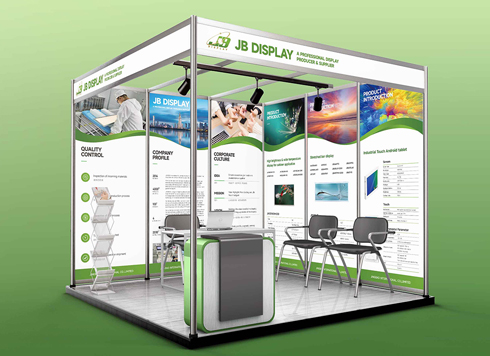 Booth Poster Design for Professional Monitor Product Suppliers
The standard exhibition booth poster projec ...
-
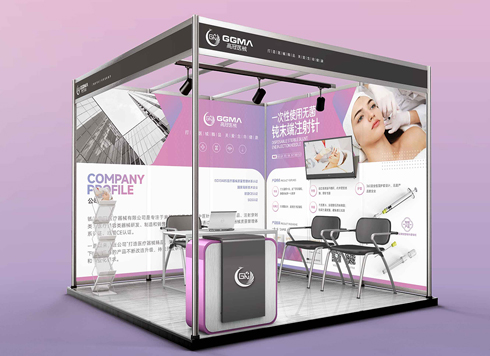 Design of Standard Exhibition Booth Posters for Beauty Instruments
Carefully designed a standard exhibition bo ...
-
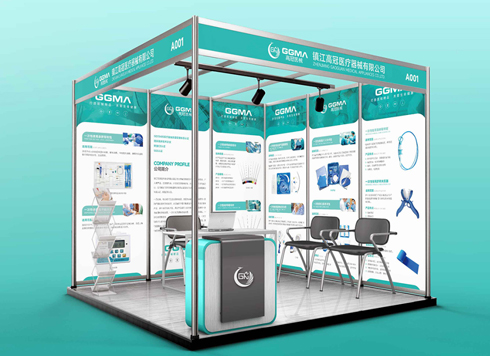 Design of Exhibition Posters for Medical Device Standards
XiYue is designing an exhibition booth post ...
-
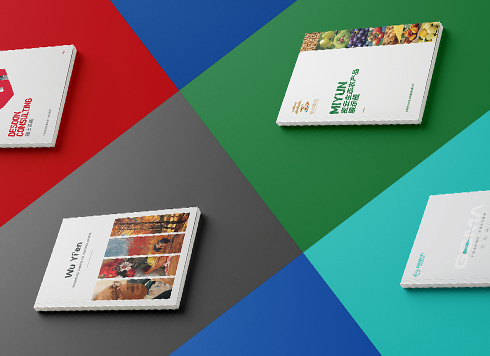 Collection of Brochure Design Cases in 2024 (Cover Series 02)
Our brochure design projects focus on diver ...
-
The printer says spine thickness has to wait for the white sample, but the design draft is pressing for the cover—which number should we set first?
Date: Oct 14, 2026 Read: 3
-
On a round bottle label, the front text looks straight but the sides bunch up—should it have been laid out to the bottle curve from the start?
Date: Oct 13, 2026 Read: 5
-
Client sent phone-shot product photos for an A1 lightbox poster: ask for the original files first or schedule a reshoot first?
Date: Oct 12, 2026 Read: 7
-
Single-column text with two-column figures: is a missing column-grid rule behind reflowing text every time a figure moves?
Date: Oct 11, 2026 Read: 11
-
Switching embroidery factories means the logo has to be redrawn—is the grid construction page the problem?
Date: Oct 10, 2026 Read: 15