


How Graphic Design Collaborates with AI: A Practical Guide for 2026 and Selection Methodology
What is AI-Collaborated Graphic Design
AI-collaborated graphic design does not replace designers with AI, but rather uses AI as a creativity accelerator and execution partner. Common practice in 2026: designers handle strategy, emotion, and aesthetic judgment, while AI quickly generates multiple proposals, handles repetitive tasks, and expands creative boundaries. Core value: while maintaining designer dominance, AI can shorten project cycles by 30%-60% and produce richer exploration directions.
This collaboration model applies to most graphic design scenarios such as brand design, advertising posters, packaging design, and digital media, especially projects requiring rapid iteration or multiple output versions.
- Efficiency improvement: AI can generate dozens of layouts or color schemes in seconds; designers select and refine.
- Creative divergence: Through text descriptions or reference images, AI explores style combinations that designers might overlook.
- Automation of basic tasks: Such as background removal, color adjustment, and size adaptation, freeing designers to focus on core creativity.
Why You Must Master AI Collaboration in 2026
Increased industry competition and higher client expectations are the main drivers. In 2026, clients demand not only high-quality final drafts but also quick responses and multiple alternatives. Pure manual design takes long cycles and high costs, unable to keep up with market pace. Meanwhile, AI tools can now generate professional-grade design elements; if not leveraged, designers will be at a disadvantage in delivery speed and proposal richness.
But note the boundary: AI is not omnipotent. Creative strategy, brand emotion delivery, and complex narratives still rely on human insight. Blind reliance on AI leads to homogeneity and lack of soul. Therefore, collaboration rather than replacement is the correct approach.
How to Implement: The Four-Step Integration Method
The Four-Step Integration Method is a reusable process framework that organically embeds AI into the design workflow. The framework consists of four stages: requirement analysis, concept generation, detail optimization, and delivery feedback. Each stage has clear human-machine division and checkpoints.
Step One: Requirement Analysis and Strategy Setting (Human-led, AI-assisted)
After communicating with the client, the designer translates requirements into structured prompts (e.g., target audience, brand tone, keywords). Based on this, AI can generate creative briefs or style directions to align expectations. Note: this stage cannot be fully delegated to AI; the designer must refine core demands.
- Output: Creative brief, list of style keywords, collection of reference images.
- Checkpoint: Whether requirements cover brand guidelines, target scenarios, and delivery formats.
Step Two: Concept Generation and Solution Exploration (Human-AI Co-creation)
Use AI to generate multiple layout, color, and font combinations. Designers provide initial sketches or text descriptions, and AI quickly produces multiple solutions. This stage focuses on rapid experimentation rather than perfect output. It is recommended to generate 10-20 directions, then manually select 3-5 for further development.
- AI Tools: Midjourney, DALL·E, Adobe Firefly, etc.
- Human Tasks: Evaluate based on brand context, discard unsuitable options, provide feedback for AI refinement.
Step Three: Detail Optimization and Manual Fine-Tuning (Human-led, AI-assisted)
After selecting a direction, the designer uses professional software (e.g., Photoshop, Illustrator) for fine modifications. AI can be used for local element generation (e.g., background textures, material expansion) or automatic retouching. At this stage, avoid directly applying AI outputs; ensure pixel-level quality and brand consistency.
- AI Assistance Points: Generative fill, smart background removal, color correction, upscaling without loss.
- Human Quality Control: Check alignment, colors, copyright compliance of all elements.
Step Four: Delivery Feedback and Version Iteration (Human-led, AI-assisted)
After delivering the initial draft to the client, quickly adjust based on feedback. AI can assist in generating variants (e.g., different sizes, color versions). However, final decisions and communication must be done by the designer, avoiding direct AI responses to clients.
- Efficiency Embodiment: Use AI to generate multiple sizes of social media graphics at once, reducing repetitive work.
- Considerations: Version control and file management still require manual handling to avoid confusion.
AI Tool Selection Comparison
In 2026, mainstream AI graphic design tools differ significantly in style consistency, output controllability, and learning curve. Below is a three-dimensional comparison of four tool categories to help designers choose accordingly.
- Image Generation (e.g., Midjourney, DALL·E, Stable Diffusion): Strongest creative divergence, diverse styles; but weak style consistency, unsuitable for projects requiring strict brand identity. Best for early concept exploration and inspiration.
- Design Assistance (e.g., Adobe Firefly, Canva AI): Integrated into professional software, compatible with existing workflows; relatively controllable output, but lower creative freedom. Suitable for detail optimization and rapid output.
- Smart Layout (e.g., Uizard, Designs.ai): Optimized for layout and UI design, can automatically generate grids based on content; but limited precision, often used for drafts or non-critical scenarios.
- Automation Plugins (e.g., Photoshop Generative Fill): Single-function (e.g., background removal, color adjustment, background expansion), highly efficient; but cannot directly generate complete designs. Ideal for repetitive tasks.
Selection advice: For small-to-medium projects or internal designs, combine image generation + design assistance; for brand projects or high precision, primarily use design assistance, using image generation only as inspiration. Key criterion: If the elements generated by a tool require more than 50% time to modify, it is not suitable for the current task.
Common Misconceptions and Boundaries
Common Misconceptions
- Blindly accepting AI output: Using AI-generated finished products without adjustments leads to similar styles and detail flaws. Correct approach: Treat AI output as semi-finished; manually optimize at least once.
- Ignoring copyright risks: In 2026, some AI-generated content still has copyright disputes; ensure training data compliance, and conduct traceability checks before commercial use.
- Over-reliance on AI prompts: Designers' communication skills (e.g., writing prompts) cannot replace aesthetic judgment. AI results must align with human intuition.
Applicable Scenarios and Boundaries
Applicable scenarios: Commercial projects with clear design requirements, multi-platform releases needing many variants, early stages of quick idea validation. Unsuitable scenarios: Highly original artistic creation, brand core logo design, public service or cultural projects requiring deep emotional resonance. AI lacks true empathy and breakthrough innovation. Also, if the client explicitly requests fully manual design, respect that.
Frequently Asked Questions
Will AI replace graphic designers?
No. AI replaces repetitive labor, not creativity and judgment. Designers who master AI can upgrade their role to creative director or strategist.
Which AI tool is best for graphic design beginners?
Start with Adobe Firefly or Canva AI. They integrate well with existing design software, have low learning curves, and are suitable for quickly testing collaboration workflows.
Who owns the copyright of AI-generated designs?
According to platform terms, most tools transfer copyright to the user, but ensure legal usage of materials. For commercial projects, complement with traditional asset libraries.
How to write effective prompts?
Use a "subject + style + details + technical parameters" structure, e.g., "a minimalist coffee packaging, flat illustration style, warm tones, shallow depth of field." Experiment with different parameter combinations.
What are the costs and time savings of AI collaboration?
Initial prompt tuning requires some time, but after proficiency, overall project cycles can be shortened by over 40%. Tool costs range from about $15 to $70 per month, far below labor costs.
Action guide: Practitioners are advised to start with small projects to practice AI collaboration, choose one text-to-image tool and one design assistance tool to use together, and record the time consumption and results of each collaboration. Review and adjust prompts and workflows after one month. Note that AI is a tool, not a teacher; your aesthetic and experience are the ultimate guarantee of quality. Do not use AI for the sake of using AI; when AI output does not meet expectations, decisively do it manually. In 2026, mastering AI collaboration will be a basic survival skill for graphic designers, but only by adhering to human-machine collaboration and maintaining critical thinking can you continuously produce excellent work.
-
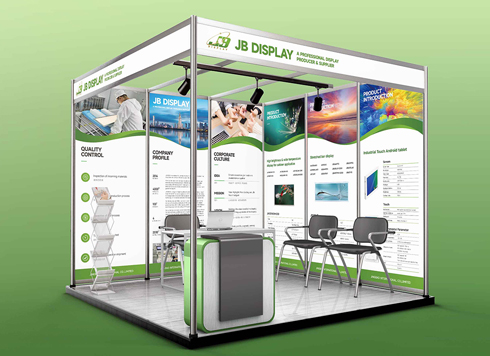 Booth Poster Design for Professional Monitor Product Suppliers
The standard exhibition booth poster projec ...
-
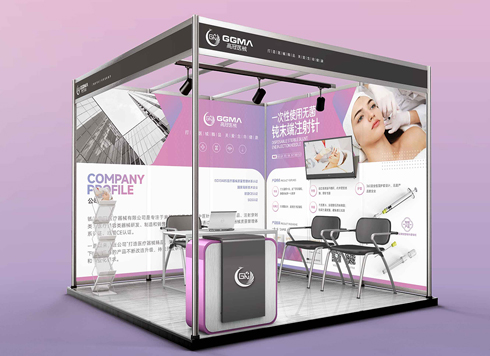 Design of Standard Exhibition Booth Posters for Beauty Instruments
Carefully designed a standard exhibition bo ...
-
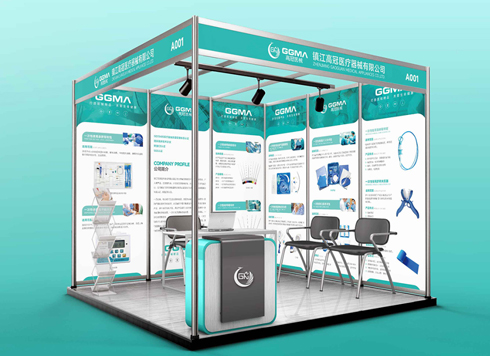 Design of Exhibition Posters for Medical Device Standards
XiYue is designing an exhibition booth post ...
-
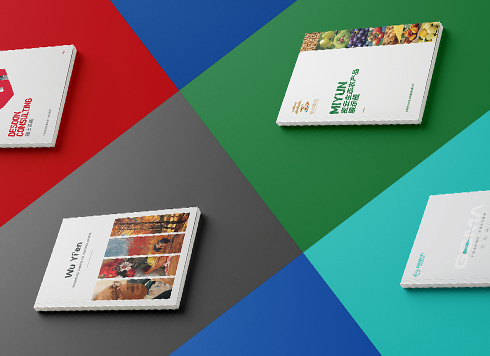 Collection of Brochure Design Cases in 2024 (Cover Series 02)
Our brochure design projects focus on diver ...
-
After I finished the front of a double-sided business card and started a new page for the back, I centered it by eye—now the trimmed white margins are wider on one side and narrower on the other. Should I have copied the finished frame over from the start
Date: Oct 21, 2026 Read: 0
-
Both the pen-barrel printer and the uniform embroidery vendor sent the logo file back—should versions have been separated from the start?
Date: Oct 20, 2026 Read: 7
-
When an A4 one-pager is scaled straight to A5 for print, where does it feel cramped first if font sizes and margins are not rechecked in millimeters before printing?
Date: Oct 19, 2026 Read: 11
-
Where does a semi-transparent white overlay on a cover photo fail first if it is not flattened before printing?
Date: Oct 18, 2026 Read: 12
-
Brochure spread photo has a strip eaten away in the middle—what number should you ask the printer before going to press?
Date: Oct 17, 2026 Read: 14