



Why do KT board-mounted display panels warp after arriving at the venue and turning on the air conditioning, even though they looked fine on mounting day?
Excerpt-ready conclusion: When KT board-mounted display panels warp at the corners or bulge in the middle after arriving at the venue, it is usually not solely because the board is damp, nor is it just one issue such as adhesive not being pressed firmly. It is the combined effect of the board material, the ink load of the graphic, air release in the adhesive layer, and the use environment. Based on 2026 exhibition material delivery experience, KT board-mounted photo prints can still be used indoors for short 1–3 day shows, smaller sizes, and covered positions; for sun exposure, damp conditions, hanging for more than a week, or a single panel exceeding about 1.2 m × 2.4 m, switch to PVC foam board, aluminum composite panel, or a fabric tension frame, and add edge sealing and back bracing. Before assigning responsibility, first check where the blisters appear first, how long they take to appear, and whether there is a hollow sound when pressed.
Why it looks fine on mounting day but warps only after arriving at the venue
On the day of mounting, temperature and humidity are relatively stable, and blisters need a temperature-change process to become visible. Air-conditioning airflow at the venue, dampness near entrances, sunlight, and hanging stress can push a panel that originally looked flat to its critical point. If solvents in the adhesive or ink have not fully evaporated and are sealed under the graphic, heat can also make them lift from the middle or edges. A thin KT board deforms first under temperature differences, and the graphic simply follows. So it is not contradictory for a panel to pass inspection at the factory and develop problems on the second day after arrival.
Check blister location first: edges, scattered spots, dark solid areas, and overall waviness
Blister location has more diagnostic value than blister size; distinguish the type first before discussing responsibility.
- Edges lift first: adhesive does not reach the edge, edge sealing is missing, and hanging tension adds stress.
- Small scattered blisters in the middle: uneven adhesive application, incomplete air release with the squeegee, or dust on the board surface.
- Patchy bulging along dark solid areas: high ink load was not fully dry before adhesive was applied, trapping solvent.
- Overall wavy undulation: more likely a board that is too thin or too large without back bracing, deforming first after moisture or sunlight exposure.
Adding adhesive only or replacing the adhesive only often leads to recurrence after a few days, because air, moisture vapor, or solvent remains trapped inside.
How to check the four layers: board, graphic, adhesive, and environment
Breaking it down into these four layers helps locate the problem and clarify what to ask before artwork is released for production.
- Board: KT board is typically 5 mm thick, and its core material deforms easily under heat and moisture; for large formats, long hanging periods, or proximity to sunlight, switch to PVC foam board or aluminum composite panel. The board surface must be clean and not warped.
- Graphic: photo paper, PP synthetic paper, and self-adhesive paper have different stretch rates; with eco-solvent or water-based inks, wait until fully dry before mounting, especially for large dark solid areas. Photo fabric is not suitable for direct board mounting.
- Adhesive: self-adhesive backing, double-sided tape, spray adhesive, and heat mounting each have their applicable uses; spray adhesive should be thin and even, allowed to flash off before bonding, and the squeegee should work from the center outward to release air. Pressing fully in one pass, then peeling up and repositioning, easily leaves marks and blisters.
- Environment: indoor, semi-outdoor, or outdoor; whether there is sunlight or dampness; how it will be hung; and whether there is back bracing and edge sealing. The environment layer must be clarified before artwork release, because remediation later is costly.
At delivery: dark large backgrounds on KT board—letting them rest and rechecking is cheaper than firefighting on site
Three days before an exhibition, you need to produce around twenty 90 × 120 display panels; the budget is tight, so KT board is the only option, and the graphics include many dark solid areas—this is a common constraint. A safer approach is to take two or three finished panels, place them by a window or near a heat source to rest for 24 hours, simulate one temperature change, and then check the edges. The cost is space and half a day; the benefit is identifying panels that need rework in advance. In terms of experience range, for dark, high-ink-load graphics, letting panels rest for 12–24 hours after mounting before crating is more stable than loading them immediately. If this step is skipped, the common cost is discovering warped edges only at the venue, buying boards on site, finding a place to remount, and adding freight and rush charges to the project.
Where it applies and where it does not
The reasonable use of KT board-mounted prints is indoor, short-term, covered, and non-load-bearing display. It is suitable for conference backdrops within one or two days, short-term store promotion signs, specification signs next to demo units, and temporary wayfinding for internal events; for throwaway use, sizes within one meter, and fully air-conditioned rooms, there is no need to force a more expensive option. Conversely, once the graphic is exposed to sun and rain, needs to hang for more than a week, requires repeated disassembly and transport, or a single panel exceeds about 1.2 m × 2.4 m and is hung under load, it is beyond the applicable scope and should use PVC foam board, aluminum composite panel, or a fabric tension frame for structure and edge sealing. This boundary is best stated before quoting.
A checkable comparison of KT board, PVC foam board, aluminum composite panel, and fabric tension frame
In 2026 exhibition and store materials, these four approaches each have their place; the criteria are the use environment, hanging duration, single-panel size, and whether they will be reused—not just unit price.
- KT board-mounted photo print: suitable indoors for 1–3 days, single panels within about 1 m, and covered positions; material cost is relatively low; typical production lead time is same day to 1 day. Not suitable for sun exposure, damp conditions, or load-bearing hanging.
- PVC foam board: suitable for medium-term indoor use or covered semi-outdoor use; at the same size, material cost is typically one tier higher than KT board, about 30%–50% higher, varying with thickness and graphic; typical production lead time is half a day to 1 day longer. It is heavier, so the fixing method must be adjusted accordingly.
- Aluminum composite panel with applied graphic: suitable for storefront headers, long-term outdoor use, and a rigid, crisp look; cost and weight are higher, and a reliable fixing structure is required behind it; typical lead time is 1–2 days longer than KT board, within the experience range.
- Fabric tension frame or tensioned mesh frame: suitable for touring exhibitions and large background walls, and can be disassembled and reused; initial fabrication and installation coordination are more complex, with typical lead time 2–3 days longer, within the experience range.
When the budget only allows KT board, accept three constraints at the same time: do not make the size too large, avoid sun-exposed and damp locations, and change the hanging method to leaning close to a wall or using frame support nearby—do not rely on hanging from just four points.
Common questions
Can a KT board-mounted graphic be used outdoors for half a day?
On a cloudy day with cover, half a day is barely workable, but repeated sunlight or dampness will clearly increase the probability of blistering and edge warping; for outdoor use, the more stable options are PVC foam board, aluminum composite panel, or a fabric tension frame, depending on the number of use days and location.
It was flat right after mounting and only bulged the next day—was the adhesive not dry?
Check two layers: solvent in the adhesive or ink was sealed in before fully evaporating, or the thin board deformed first under temperature change. Scattered small blisters are more likely an adhesive application and air-release issue; overall waviness is more likely a board material issue.
Will switching to PVC foam board eliminate blistering?
Not necessarily. PVC foam board is less prone to moisture absorption and deformation, so the probability and severity of blistering will decrease, but uneven adhesive application, incomplete air release, and ink that is not fully dry can still cause bulging; large sizes still need back bracing and edge sealing.
Do large display panels always need a frame or back bracing?
In experience, when a single panel exceeds about 1.2 m × 2.4 m, or needs to be hung under load, adding an aluminum frame or wood furring back bracing, or switching to a fabric tension frame, is more stable than simply making the board thicker.
If you have a batch of display panels going out, decide three things before artwork release: whether the use location is indoor or outdoor, how many days it will hang, and the maximum single-panel size and hanging method. These three points determine how to choose the board material, edge sealing, and back bracing, and also determine who bears the cost of any rework later. When the schedule is tight and only KT board can be used, follow the common 2026 practice of allowing at least 12–24 hours for resting and rechecking, rather than loading directly after mounting.
-
 Booth Poster Design for Professional Monitor Product Suppliers
The standard exhibition booth poster projec ...
-
 Design of Standard Exhibition Booth Posters for Beauty Instruments
Carefully designed a standard exhibition bo ...
-
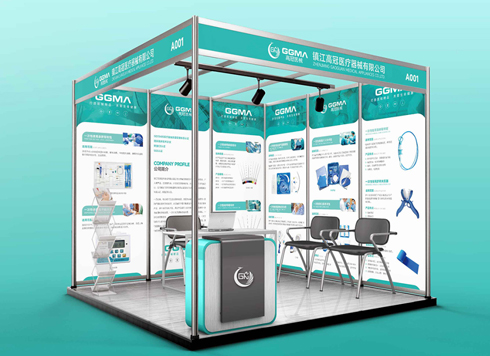 Design of Exhibition Posters for Medical Device Standards
XiYue is designing an exhibition booth post ...
-
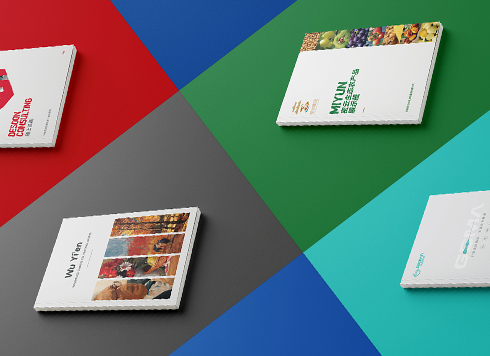 Collection of Brochure Design Cases in 2024 (Cover Series 02)
Our brochure design projects focus on diver ...
-
When a sample is shipped to another city and the client only signs back “OK,” who is to blame if mass production shifts color? Were the reference and tolerance missing from the approval form from the start?
Date: Nov 22, 2026 Read: 5
-
When text at both ends of a banner is pinched by rope, is moving the text inward enough—and should hole positions and hanging method be marked together?
Date: Nov 21, 2026 Read: 5
-
When the company name on a booth fascia can’t be read across the aisle, can checking letter height and stroke weight against the far viewing distance before artwork start save a reprint?
Date: Nov 20, 2026 Read: 11
-
The address along the bottom of a roll-up banner keeps getting covered by the base—can leaving a keep-out zone from the supplier die line before artwork save a site rework?
Date: Nov 19, 2026 Read: 14
-
The booth spotlight hits the center of the display panel, and customers at the meeting table say it is a washed-out white blur—is it material glare or a light mounted too low?
Date: Nov 18, 2026 Read: 18