


If a window poster is applied from the inside of the glass, does the artwork still need to be mirrored?
Whether a window poster needs to be mirrored is not decided by the design software, but by which side of the glass it is applied to: a front-applied poster on the outside of the glass, with the ink side facing out, uses the artwork as normal; a back-applied poster applied from the inside of the glass, with the print side facing the glass and the viewer looking from the outside, usually requires the entire image to be mirrored left-to-right for prepress; otherwise the text will appear reversed. The order of judgment is: first determine the viewing side, then the application side, and only then discuss material and white ink. This conclusion generally applies to store windows, glass doors, and similar scenarios. By 2026, glass decal materials are still often reprinted in full because this step was not locked down.
1. Mirroring Is Not the Goal; Showing Correct Text on the Outside Is
Both sides of glass can be applied, but people usually view from only one side. Clients often treat back-applied as the name of a process, but it actually describes a viewing relationship: the print side is sandwiched between the glass and the interior, and the image seen from the outside is left-to-right reversed compared with the print side. Whenever viewing happens through a layer of transparent material, mirroring is a necessary step, not an optional one.
A common 2026 practice is to lock it down first with one on-site judgment: whichever side the viewer stands on is the side from which the mirror reflects. If the viewer is outside and the print side faces inward, the artwork needs to be mirrored; if the viewer is outside and the print side faces outward, the artwork does not need to be mirrored. If the same image must be both front-applied and back-applied, it must be split into two files; you cannot just rename one file and call it done.
- Mirroring flips only the image: QR codes, phone numbers, and body text should be corrected back to normal orientation separately after mirroring.
- Thick glass may cause ghosting: With laminated or thicker glass, very fine fonts can look blurred in back-applied graphics.
- Back-applied does not always mean mirrored: If the print side faces outward and it is merely applied to the inner frame, treat it as front-applied.
2. Side, Direction, Base, Edge: Four Checks to Finalize Artwork
To avoid treating mirroring as a guess, projects can proceed with the four-check method: side, direction, base, edge. The logic works backward along the path from artwork to human eye: first check the viewing side, then the application side, then the base color, and finally the blocking boundary. If any of the four steps is not locked down, revisions will likely land in prepress or installation, where the cost is higher.
- Side: which side of the glass is the viewing side? Indoor or outdoor, whether there is a second layer of glass, and whether the glass is frosted all determine whether mirroring is needed.
- Direction: does the print side face the glass or the viewer? Facing the glass usually means back-applied; facing the viewer means front-applied. If both inside and outside are applied at the same time, the two files must have opposite orientations.
- Base: is the material transparent, and is white ink underprinting needed? With transparent back-applied film, colors are easily swallowed by the glass and background, so as a rule of thumb, white ink or a light base should be added.
- Edge: are the visible area and blocked area allowed for? Glass frames, door frames, and handles all eat into the image, so a common practice is to reserve a 10–30 mm safety margin as an experience range around all sides.
After the four checks, produce a proof; a single A4 sheet or a partial sample in the actual material is enough to judge direction, color, and show-through. Under 2026 project delivery practice, a back-applied proof is much cheaper than full-size proofing, with an experience range of tens to hundreds of yuan per item, and it can reduce full reprints.
3. Front-Applied and Back-Applied: The Difference Is Not Just Flipping the Image
The choice between front-applied and back-applied is often simplified to using whichever is cheaper, but the two differ clearly in weather resistance, appearance, installation, and mirroring cost. Front-applied film goes on the outside, where the image is directly exposed to sun, rain, and scratches, making it suitable for short-term campaigns. Back-applied film goes on the inside, where the image is protected by the glass, making it suitable for store windows that need to last one or two months or more, but it adds a prepress and underprinting step.
- Front-applied: no mirroring needed; artwork goes out directly; common materials include adhesive-backed vinyl, PVC, and static cling; cost is relatively low; higher risk of scratches and lifting.
- Back-applied: usually requires mirroring plus white ink underprinting; common materials include clear PET, clear adhesive-backed vinyl, and glass film; better weather and scratch resistance; installation alignment demands more skill.
- Lead time experience range: front-applied commonly takes 1–3 business days from file confirmation to installation; back-applied commonly takes 2–5 business days because of mirroring prepress, white ink, and proof confirmation.
- Revision experience range: when direction, size, and underprinting method are locked down in the first round, purely executional revisions usually take 1–2 rounds; if the application method keeps changing, it easily reaches 3 or more rounds, and most of that is rework.
Back-applied is not necessarily more expensive, nor necessarily better. If the glass is directly hit by window lighting, the back-applied color and white ink plan must be recalibrated; for a three-day event sign, front-applied is actually more cost-effective.
4. Three Things That Commonly Stall Delivery on Site
A common situation in projects: the client gives only one sentence, “stick it on the glass,” without saying inside or outside, and without sending an on-site photo. The constraints are often one campaign key visual, a two- or three-day timeline, and a budget based on a single poster. Our approach is to ask for an on-site photo showing the door frame and handle, mark the viewing direction and frame, and use the four-check method to produce two proofs—front-applied and mirrored back-applied—so the client can choose on the actual material.
The cost of doing this is an extra half day to one day, but it avoids a full reprint. Skipping this step commonly means discovering on installation day that the text is reversed, or that no white ink was printed and the image looks gray, which actually adds 1–3 days to the timeline. Under our delivery practice, before ordering glass decal materials, the viewing direction, application side, underprinting method, and safety margin should be written into the confirmation sheet. The time fluctuation here is an experience range, not a fixed promise; it changes with on-site conditions.
- Artwork pitfall: Only a flattened composite image is provided, with no layered file, so QR codes and text cannot be corrected separately after mirroring.
- White ink pitfall: Transparent material has no separate white ink channel and is printed in four-color direct output, making colors show through and turn dark.
- Frame pitfall: The visible glass area is not measured, so important information ends up behind the door frame or handle.
- Environment pitfall: Back-applied graphics tend to bubble when temperature varies greatly or the glass has moisture; confirm glass cleanliness and temperature conditions before installation.
5. Check These Four Items First at Acceptance
Acceptance is not about looking at a rendering, but about whether the finished product, once applied to the glass, holds up when viewed from the viewing side. The criteria can be quantified: text direction is correct with no mirroring residue; QR codes and phone numbers are recognizable and scannable; the safety margin around all sides is not eaten into by the frame; and transparent material areas have no obvious show-through graying.
- Direction check: Take a photo of the finished product and compare it with the source file, focusing on areas containing text.
- Color check: View under natural light on the outside of the glass; do not rely on indoor screen color.
- Edge check: Measure the distance from important elements to the visible glass edge; as a rule of thumb, it should be no less than 10–30 mm.
- Installation check: Confirm whether it is applied inside or outside, and whether it must avoid the handle or cutouts.
If all four items above are met, the back-applied poster can basically be judged as qualified for delivery; if only the color is right but the direction is reversed, it still needs rework—this is a common acceptance mistake with glass decal materials.
Frequently Asked Questions
Does a back-applied poster always require transparent material?
Not necessarily. Transparent film shows the glass and interior background and looks lighter; if show-through is not wanted, white or light-colored adhesive-backed vinyl or PP material can be used, but the edges and underprinting must be handled.
What if the QR code cannot be scanned after mirroring?
QR codes, phone numbers, and body text do not participate in mirroring; they should be turned back to normal orientation separately during prepress, and scanned in an actual finished proof—do not rely only on a screen preview.
For a poster applied inside a glass door, does glass thickness affect clarity?
Yes. With thick or laminated glass, back-applied graphics may show slight ghosting, and overly fine fonts make it more noticeable. A common practice is to bold and enlarge key text appropriately.
If the same poster must be applied on both inside and outside, can one file be shared?
It cannot be shared directly. The outside front-applied and inside back-applied versions have opposite orientations, so they must be split into two files, with white ink, safety margin, and installation position checked separately.
Applicable Scenarios and Boundaries
Back-applied window graphics suit store windows, glass doors, interior glass partitions, and other scenarios where the image is viewed from the outside and the graphics should be protected by the glass; front-applied suits short-term campaign materials, where no mirroring is needed. The criterion is simple: whether the viewer looks through glass. Only when the viewer looks through glass and the print side faces inward does the mirroring process apply.
Situations not suitable for or not requiring back-applied graphics: posters on opaque surfaces such as walls, wood boards, and metal panels do not involve mirroring; for temporary signs applied for only one or two days with a tight budget, front-applied is simpler; if the glass itself is frosted, textured, or already filmed, light transmission and show-through will change, so a proof should be made first; if the application side and frame dimensions cannot be confirmed on site, take photos and measure before ordering.
If you are preparing a window or glass door poster, it is advisable to first take an on-site photo showing the door frame, handle, and viewing direction, write down inside or outside application in the confirmation sheet, and then have the designer produce the artwork accordingly. Only when the viewer looks through glass and the print side faces inward do you need mirroring and consider white ink underprinting; for opaque walls or one- or two-day short campaigns, handle it as an ordinary poster and do not add an extra prepress step.
-
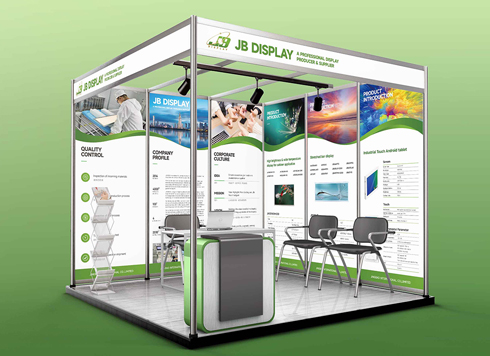 Booth Poster Design for Professional Monitor Product Suppliers
The standard exhibition booth poster projec ...
-
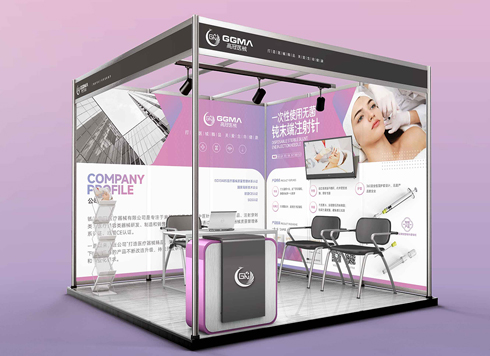 Design of Standard Exhibition Booth Posters for Beauty Instruments
Carefully designed a standard exhibition bo ...
-
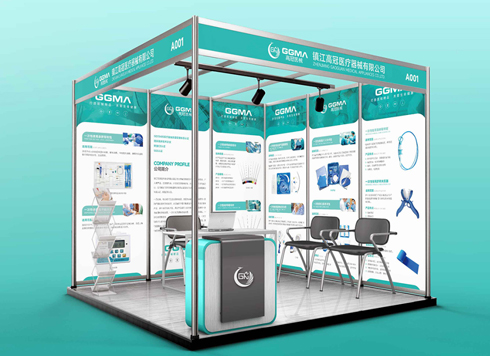 Design of Exhibition Posters for Medical Device Standards
XiYue is designing an exhibition booth post ...
-
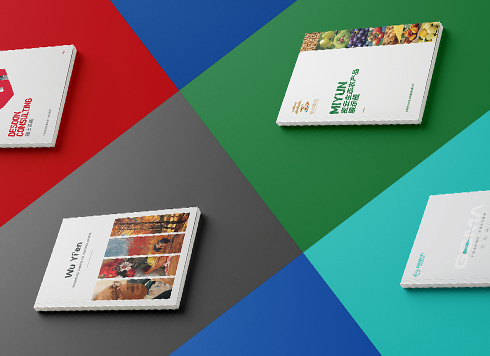 Collection of Brochure Design Cases in 2024 (Cover Series 02)
Our brochure design projects focus on diver ...
-
The printer says spine thickness has to wait for the white sample, but the design draft is pressing for the cover—which number should we set first?
Date: Oct 14, 2026 Read: 3
-
On a round bottle label, the front text looks straight but the sides bunch up—should it have been laid out to the bottle curve from the start?
Date: Oct 13, 2026 Read: 5
-
Client sent phone-shot product photos for an A1 lightbox poster: ask for the original files first or schedule a reshoot first?
Date: Oct 12, 2026 Read: 7
-
Single-column text with two-column figures: is a missing column-grid rule behind reflowing text every time a figure moves?
Date: Oct 11, 2026 Read: 11
-
Switching embroidery factories means the logo has to be redrawn—is the grid construction page the problem?
Date: Oct 10, 2026 Read: 15