


Only Want a Few Hundred Packaging Bags for a Test Run, but the Printer Asks for a Plate Fee—Can This Order Still Be Taken?
Conclusion first: if you only want to make a few hundred packaging bags for a test sale and the printer asks for a plate fee, the usual answer is not that you must pay more and force the run through, but that you should switch to a different printing route. Stand-up pouches, zipper pouches, roll film, and laminated pouches are mostly produced by gravure or flexographic printing, which requires plates and a minimum order quantity. Under common 2026 delivery practice, orders of a few hundred to a few thousand units often move to digital short-run printing, or switch to a standard pouch format with pressure-sensitive labels. The plate fee can be spread to an acceptable level, but usually only after sales are stable and the replenishment rhythm is clear.
For small-batch packaging bags, why does the printing plate get stuck rather than the design?
The printing logic of flexible packaging and paper folding cartons is quite different. Cartons can first produce a digital proof to confirm the effect before going on press, while flexible packaging commonly uses gravure printing: one color corresponds to one plate cylinder, and the cylinder is priced by circumference and number of colors; flexographic printing requires flexo plates. Every extra spot color in the design file, or every color adjustment, may mean re-plating and re-registering.
This matters because it in turn constrains the design itself. Gradients, fine lines, full-bleed solids, and reverse small text perform visibly differently on gravure and flexo than on screen. If a designer stacks details only according to the on-screen effect, the job eventually gets stuck at plate making and registration, and the extra rework still has to go back to the design file.
- Gravure is suitable for large solid areas and long-run orders, with relatively stable color, but higher plate-making investment;
- Flexo is a compromise between cost and material adaptability, and fine-line performance needs to be discussed in advance;
- Digital printing has flexible minimums and lower revision cost, but there are limits on material thickness, lamination structure, and color gamut;
- Laminated pouches require the material structure to be settled first, such as single-layer or multi-layer lamination and whether a barrier layer is needed; plate making and materials are two parallel lines.
Set quantity and replenishment rhythm first, then discuss pouch format and process
To judge whether small-batch production is possible, following the order of the “three questions to set batch size” is more efficient than directly asking the printer “can you print fewer?” The reason for this order is: quantity determines the printing method; the printing method determines the choice space for color and materials; and once color and materials are locked, changing quantity later is costly.
- First ask about quantity and replenishment rhythm: a one-time test sale of a few hundred units and stable monthly replenishment of a few thousand units follow two different routes; the former must accept a higher unit price, while only the latter can spread the plate fee.
- Then ask what barrier the contents need: food, tea, and pet food have different requirements for moisture resistance, light blocking, and oxygen barrier. If the material structure is not confirmed, the pouches after plate making may not be able to hold the product.
- Finally ask whether color must be exact: if the brand primary color must be strictly reproduced, fewer spot colors make things easier; if close is acceptable, the brand color can be converted to a four-color approximation, at the cost of visible color difference between batches.
The key point: if the answer to any of these three steps changes, the previous conclusions need to be rechecked. Clients often cut corners here, and the result is that cost is transferred to later mass production and rework.
At delivery: materials are not ready, but the schedule is already booked
A common situation in projects: the client provides only one front main visual image, while back-side information, barcode, net content, and ingredient list are not yet finalized, but the sales date is fixed and the printer’s production window is only about ten days, so only a process requiring plates can be used. A more reliable approach is to first finalize the unchanged parts, such as the main visual, brand information, and pouch dieline; concentrate variable information in one area, leave replaceable text blocks, check them word by word as black-and-white artwork, and reduce the number of spot colors. The trade-off is real: if later text changes, either new plates must be made or a pressure-sensitive label must be added; a typical range for one round of rework is from several days to more than a week, and the plate fee must be recalculated.
Common pitfalls in packaging bags
- Treating a color change as a file revision: adjusting curves in a four-color file is not the same as adding or removing a spot-color plate; when spot colors change, it is safer to handle it as re-plating;
- Fine lines and small text made too thin: pouch surface materials expand and shrink, and reverse small text and extremely fine lines can blur together; fault tolerance should be left at the design stage;
- Ignoring shrinkage and registration: printing and lamination cause dimensional changes, so the pouch dieline and cutting line need allowance;
- Not checking seal edge and zipper position: insufficient seal width affects strength, and zipper and spout positions must be confirmed according to the actual structure;
- Adding environmental and recycling claims casually: words such as recyclable and biodegradable involve compliance claims and should be checked against the latest official documents and platform rules, not decided unilaterally by design.
What is the difference between digital short-run and traditional plate making?
Looking at the two routes under the same set of dimensions makes the judgment much more intuitive. The ranges below are experience ranges; actual numbers depend on printer equipment, materials, and region.
- MOQ: digital short-run commonly starts at a few dozen to a few hundred units; traditional plate making is usually more cost-effective at several thousand units or more.
- Plate-making investment: traditional plate making is priced by number of colors, with an experience range of hundreds to thousands of yuan per color; digital short-run generally has no plate cylinder fee, but may have setup and adjustment fees.
- Unit price trend: digital short-run unit price is higher and falls slowly as quantity increases; traditional plate-making unit price falls noticeably as quantity increases.
- Color performance: traditional printing is better at stability for spot colors and large solid areas; digital printing is more flexible for gradients and short-run revisions, but there may be color difference between batches.
- Suitable applications: digital is suitable for test sales, co-branded limited editions, small e-commerce orders, and sample bags; traditional plate making is suitable for products with stable sales and a finalized packaging format.
Inspecting packaging bags: feel the seal edge first, then look at color
The inspection order for packaging bags differs from paper printed matter; color is not the first step. A bag is a container: it must first hold, seal, and transport, before appearance is discussed. It is advisable to check in the order of “structure first, function second, color last,” and to keep a sealed sample confirmed by both parties before placing the order.
- Structure and function: seal edge width and strength, zipper opening and closing, spout and handle, and whether leakage or deformation occurs after filling and standing;
- Print quality: whether registration is offset, whether there is white gap in overprinting, whether reverse text and fine lines are clear, and whether the ink layer has obvious scratches;
- Information correctness: whether the barcode scans smoothly, whether net content and ingredient information match the brand’s confirmed artwork, and whether the date coding position is usable;
- Comparison with the sealed sample: view once under natural light and once under common supermarket lighting, and judge color difference against the sealed sample.
Applicable scenarios and boundaries
Packaging with small batches, short cycles, and much variable information is suitable for digital short-run printing or standard bags plus labels; products with stable sales and clear requirements for barrier performance and color consistency are more suitable for long-run plate printing. The boundaries should be clear: if the contents are liquid, oily, or require oxygen barrier and light protection, or if the brand primary color must be strictly reproduced, small-batch digital printing can often only serve as a test-sale and proofing method, not directly as a mass-production solution.
Conversely, there is no need to force plate making just to unify the process. Using digital short-run printing during the test-sale stage and switching to plate making after sales stabilize is a relatively common approach in 2026, provided the design file is made from the start to be workable under both processes. Experienced design teams taking on such projects usually deliver the pouch dieline, spot-color notes, and variable information area as layers in the same file, so that later process switches require fewer revisions.
FAQ
How much is the plate-making fee for packaging bags, and can the printer cover it?
The experience range is roughly hundreds to thousands of yuan per color, depending on plate circumference and number of colors; this cost is usually borne by the brand, but can be negotiated for sharing or reduction when committing to an order volume.
If only one color is changed, is re-plating required?
It depends on whether the change is to a spot-color plate or a four-color file. Adding or removing spot colors is generally handled as re-plating; minor adjustments within a four-color file mostly require only file updates and proofing, then production scheduling after confirmation.
Can small-batch color represent mass production?
Usually it can only be a reference. Digital, gravure, and flexo have different color gamuts and substrates; before mass production, it is advisable to keep a sealed sample made with the mass-production process before placing the bulk order.
What files should be given to the printer before plate making?
Commonly the pouch dieline or cutting line, color-separated artwork, spot-color notes, bleed and registration marks, barcode and variable information, and outlined font files, exported in the format required by the printer.
If the MOQ cannot be negotiated down, are there other options?
You can switch to a standard pouch format with pressure-sensitive labels, use generic pouches with custom labels, or first run digital short-run test sales and then move to plate printing in one go after sales stabilize.
If this packaging needs to go on sale for a test run soon, it is advisable to first write down three items clearly: quantity and replenishment rhythm, content barrier requirements, and brand color reproduction requirements. Then have the designer and printer confirm the process against the same set of criteria, so you do not find out after design finalization that it cannot be printed. If the product is liquid or has high requirements for barrier and color consistency, going directly with the mass-production process is more reliable.
-
 Booth Poster Design for Professional Monitor Product Suppliers
The standard exhibition booth poster projec ...
-
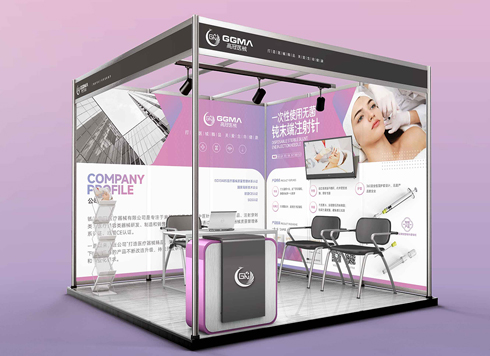 Design of Standard Exhibition Booth Posters for Beauty Instruments
Carefully designed a standard exhibition bo ...
-
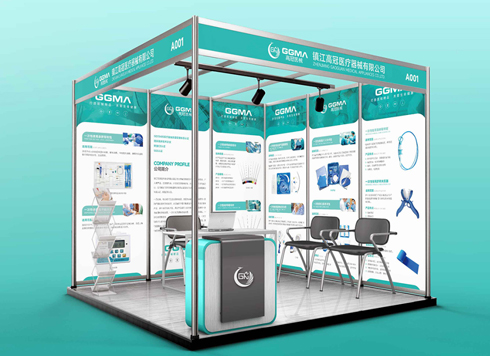 Design of Exhibition Posters for Medical Device Standards
XiYue is designing an exhibition booth post ...
-
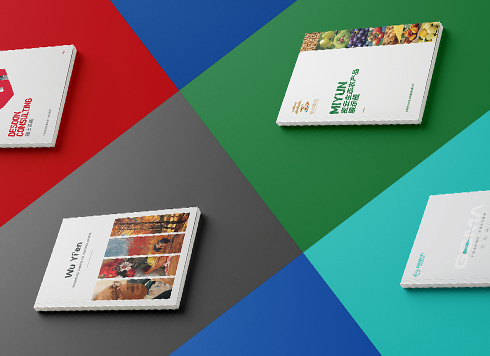 Collection of Brochure Design Cases in 2024 (Cover Series 02)
Our brochure design projects focus on diver ...
-
The printer says spine thickness has to wait for the white sample, but the design draft is pressing for the cover—which number should we set first?
Date: Oct 14, 2026 Read: 3
-
On a round bottle label, the front text looks straight but the sides bunch up—should it have been laid out to the bottle curve from the start?
Date: Oct 13, 2026 Read: 5
-
Client sent phone-shot product photos for an A1 lightbox poster: ask for the original files first or schedule a reshoot first?
Date: Oct 12, 2026 Read: 7
-
Single-column text with two-column figures: is a missing column-grid rule behind reflowing text every time a figure moves?
Date: Oct 11, 2026 Read: 11
-
Switching embroidery factories means the logo has to be redrawn—is the grid construction page the problem?
Date: Oct 10, 2026 Read: 15