



The printer asks me to approve color on press the day it runs—is a full day of travel worth it, and is there an easier way to confirm without going?
Not every job is worth a dedicated trip to the printing plant. Based on 2026 project delivery practice, for color-sensitive materials, offset runs, spot colors, or large flat tint areas, confirming the first sheet on site can clearly reduce the probability of a full reprint; for short-run digital printing, text-and-table-heavy materials, or items with inherently wide color tolerance, a press proof photo plus written confirmation is usually enough. The criterion is not attitude, but whether the trip can contain the cost of rework.
What on-press color approval actually confirms
On-site color approval is not sitting by the machine to see whether the color looks nice; it is making a decision after makeready and before the full run, on the first sheet or press proof: whether ink density needs to be increased or decreased, whether the spot color needs fine-tuning, whether the solid background is even, and whether it will darken after drying. It handles the final step between the design file's color values and the actual substrate.
Color on a screen is light; color on paper depends on ink reflection. The two can never match perfectly. Based on common 2026 project delivery practice, the design side first produces a digital proof; after the printer goes on press, a press proof is pulled and confirmed by the client or designer. This confirmation action is the core of color approval. If no one makes the call, the printer usually proceeds based on its own equipment and experience; once the full run is finished, any change usually means a reprint.
- What to check: first sheet, press proof, spot color step wedge, solid background areas.
- What is checked: ink density, dot gain, spot color match, front-to-back color consistency.
- Basis for approval: the color sample confirmed in the contract, or a previously signed digital proof—not the screen color from memory.
Which materials justify the trip, and which can be confirmed online
Whether to go depends mainly on three variables: color sensitivity, print quantity, and how the color is produced. The higher the combined risk, the greater the value of on-site confirmation; conversely, if the material is only for internal circulation and has loose color tolerance, a dedicated trip can instead delay the schedule.
A common misjudgment in projects is equating conscientiousness with showing up for every job. In reality, going on site cannot fix a design file that used the wrong color mode, nor can it replace the prior step of confirming a color sample. If there is not even a signed proof as a basis, being on site only leads to arguments based on feel, which is very inefficient.
Situations where going has limited value, and prerequisites
Writing the boundaries clearly helps avoid both missing trips that should happen and forcing trips that should not. Color approval fits scenarios where color itself carries brand recognition or sales persuasion, and where an error and reprint would cost clearly more than travel.
Conversely, it is also clear: if the main information is text, price, or QR codes and color is only background, spending the budget on pre-press file checking is usually more effective than sending someone on site. Also, if the printer does not accept pre-run confirmation and is unwilling to retain a signed proof, going on site may become a mere formality; in that case, switching to a more cooperative supplier is more practical than insisting on color approval.
- Worth attending on site: brochure covers, packaging key visuals, brand color blocks, standardized materials for chain stores.
- Not necessary: internal notices, one-off event flyers, low-cost materials with inherently wide color tolerance.
- Prerequisites: a signed proof, a stable light source, and agreed color difference acceptance criteria. If any one is missing, the value of attending is discounted.
Cost comparison: on-site color approval vs. alternatives
Color approval is not a zero-cost action. Putting several options side by side makes the decision much clearer. The figures below are experience ranges that vary by region, print quantity, and process; they are not fixed quotations.
- On-site color approval: locally it usually takes half a day to a day; labor time plus transport commonly falls in an experience range of several hundred to a little over 1,000 yuan, and out-of-town trips add travel and accommodation.
- Mailing a press proof + comparison under a stable light source: adds half a day to a day of waiting; mailing cost commonly falls in a range of tens of yuan, and judgment accuracy is much higher than with phone photos.
- Only viewing a phone photo of the press proof: near-zero investment, but affected by shooting light, screen color shift, and transmission compression; suitable for loose-tolerance materials.
- Full reprint: beyond the reprint fee, it may also cause delivery delays and event materials missing deadlines; the experience range is often clearly higher than the cost of one color-approval trip.
The decision rule can be simplified to one sentence: if the cost of a reprint is clearly higher than the cost of attending, it is worth going.
A color approval with no one available to travel: how it was actually handled
The constraints were as follows: a chain store's materials were being offset-printed at an out-of-town printer; the key visual was a large light gray-blue flat tint, and any color shift made it look muddy. The client had only one contact person, who could not spare a full day in the week before the event, let alone two days for round-trip travel.
The approach had three steps: first, ask the printer to photograph the press proof under a standard light source and place the signed digital proof in the same photo for comparison; second, ask the printer to mail a physical press proof; third, after receiving it, compare it with the signed proof in natural light by a window, then send back a one-sentence confirmation of ink density adjustments. The key here is that the photo is only used to judge the trend; the final decision is based on the physical proof in hand.
The result was that the deviation between the first sheet and the signed proof fell within an acceptable range, and there was no reprint. The trade-off was waiting one day longer than attending on site, which compressed pre-installation preparation time by half a day. Based on the typical range for this kind of project, mailed-proof confirmation saves about one day compared with attending, but the accuracy of tolerance judgment is indeed lower than having someone stand by the machine. This compromise suits materials with medium print quantity where color matters but has not reached brand key visual level; for brand-level materials, we still handle them by attending on site.
A few common pitfalls during on-site color approval
Most frequent problems on site are not due to someone being careless, but to inconsistent judgment conditions. For example, looking at blue under warm workshop light makes it seem off no matter what; moving to natural light by the window gives another conclusion. Another example: a freshly printed proof has ink that is not fully dry, so the color looks darker, but after drying it becomes lighter.
- Pitfall 1: Making the call under a non-standard light source and ignoring metamerism.
- Pitfall 2: Using screen color as the basis and ignoring the monitor's own color shift.
- Pitfall 3: Checking only a local area and not the whole sheet, so solid background evenness is not inspected.
- Pitfall 4: The signed proof lacks a date and version, making later batches untraceable.
Signing the proof, comparing after drying, and keeping a record: if any one of these three is missing, the value of color approval is discounted.
Common questions
If the printer will only photograph the press proof and refuses to mail a physical copy, is that confirmation reliable?
It is only a compromise. Require them to shoot under a stable light source, include the signed proof in the same photo for comparison, and confirm the acceptance range in writing; for color-sensitive materials, attending on site or mailing a proof is still recommended.
If the digital proof has already been signed, do I still need to go again for the press run?
A digital proof is mainly for layout and approximate hue. The press run is affected by paper, ink density, and equipment; for offset runs with color sensitivity, it is advisable to check the press proof again.
It looked right on site, but when the finished goods came back it seemed off—where is the problem?
Common causes are different light sources during judgment, ink becoming lighter after drying, or post-press lamination or varnish changing surface reflection. Acceptance should return to the agreed light source and compare against the signed proof.
What should be signed during color approval so the trip is not wasted?
Sign the first sheet, mark the date, version, and that this sample prevails, keep one copy for each side, and check the full run against this sheet. Verbal agreement is not a valid basis.
For an out-of-town printer with two days of round-trip travel, is the trip always necessary?
Not necessarily. You can first ask for a mailed press proof and write the color difference acceptance criteria into the contract; only materials with high reprint cost—such as brand key visuals, spot colors, or large offset runs—are more worth the trip.
Before the run starts, it is worth asking the printer three questions: Can you retain a press proof? Can you confirm under a stable light source? After the proof is signed, what criteria will be used for acceptance? If all three can be implemented, follow the confirmation sequence. If not, consider whether to switch to a more cooperative supplier. The boundary is equally clear: for materials where color does not affect recognition, the print quantity is very small, and tolerance is inherently wide, there is no need to force an on-site visit; it is more cost-effective to focus on pre-press file checking.
-
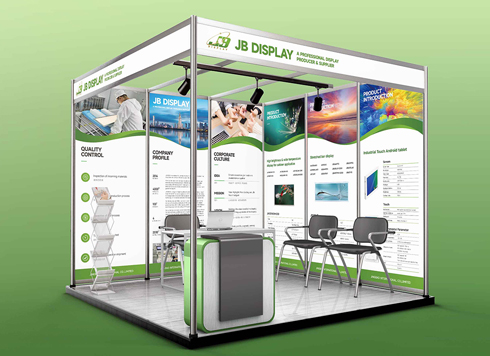 Booth Poster Design for Professional Monitor Product Suppliers
The standard exhibition booth poster projec ...
-
 Design of Standard Exhibition Booth Posters for Beauty Instruments
Carefully designed a standard exhibition bo ...
-
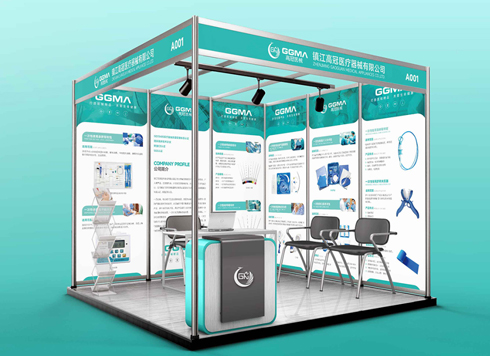 Design of Exhibition Posters for Medical Device Standards
XiYue is designing an exhibition booth post ...
-
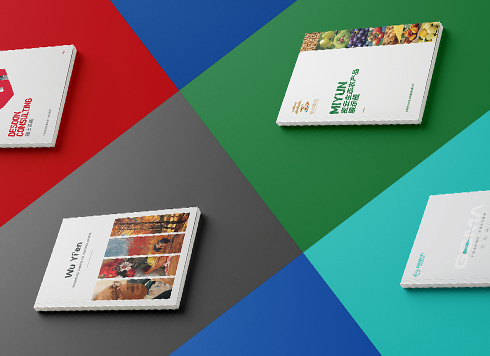 Collection of Brochure Design Cases in 2024 (Cover Series 02)
Our brochure design projects focus on diver ...
-
The logo is centered in the circular button, so why does it still look off to one side? Should I nudge it manually, or is something wrong with the file?
Date: Oct 15, 2026 Read: 0
-
Same logo looks clear in a brochure—why does it blur on a shipping box? Can switching the file to a box version save it?
Date: Oct 14, 2026 Read: 3
-
Brochure body text justified with uneven letter spacing and white gaps at line ends—is the software stretching the spacing? Will left alignment fix it?
Date: Oct 13, 2026 Read: 7
-
White Logo on Black Card Packaging Looks Gray—Was White Ink Printed Only Once? Will One More Pass Fix It?
Date: Oct 12, 2026 Read: 9
-
Why does a folded crease always crack with a white line first—is the paper too thick or the crease not scored deep enough?
Date: Oct 11, 2026 Read: 12