


Restaurant Menu Price Changes Keep Causing Full Redos—Did You Merge the Price With the Background Pattern?
Restaurant menus changing prices every few months does not necessarily lead to a full redo. The key is whether, during layout, price, dish names, descriptions, and decoration were split into independently replaceable zones. Under 2026 food-service material delivery habits, a well-structured menu usually only requires changing one price text layer or one independent text area when prices change, with a typical range of completion within half a day. If prices are bound to background patterns or art text, or if the number of dish rows is hard-coded, then a single change often requires a full-page re-layout, with rework commonly taking 1–2 working days. That difference is already decided at the moment of final artwork approval.
Why restaurant menu price changes easily become full-page rework
Menus are a rare high-frequency iterative material in graphic design: they carry both accurate information and appetite appeal, and prices often change more frequently than dish names. Rework is usually not a matter of designer skill, but of layout structure binding variable information to fixed decoration. Once prices are presented as graphics or outlined text, changes cannot be made by editing text alone; the whole block must be re-laid out.
The causal chain is fairly clear: if the price layer is merged with decoration, a price change requires redoing the graphics; if dish rows are fixed, adding dishes means shrinking font size or deleting descriptions; if fonts leave no room for replacement, swapping fonts changes text width and causes overflow; if source files are not layered, later edits can only be reverse-engineered from an exported image. All of these amplify a small change into full-page rework.
- Prices made as images or art text: changing a number means recreating the graphic; it cannot be done by text replacement.
- Dish rows hard-coded: with no blank rows or flexible room, adding one dish requires shifting everything.
- Decorative background covering the text area: after a price change, text and background misalign and must be re-aligned.
- Font licensing or replacement not checked: after a font swap, character widths change and the layout overflows.
- Source files not layered: if only a flattened exported image is available, the cost of changes multiplies.
What signals tell you whether a menu can be changed easily?
Before final approval, you can judge by several checkable signals rather than discovering the problem when prices change. The core is three points: whether prices are independent, whether rows have spare room, and whether decoration avoids text. These do not require complex tools; you can confirm them one by one by opening the source file.
- Is the price column its own layer? When you select a price, do you select only the numbers themselves, rather than a background or graphic along with it?
- Can you add or remove 2–3 rows and still align? Temporarily insert two dish-name rows and observe whether column widths and line spacing remain tidy.
- Are texts clear when the decoration layer is turned off? Background patterns, photos, and hand-drawn elements should not carry the readability of key information.
- Does text overflow after a font replacement? Swap to a font with similar weight and see whether dish names and prices still fit within their boxes.
- Are source files layered and editable? At delivery, confirm there are editable layered files, not only exported images.
What counts as acceptable: the price column is on its own layer; the dish-name area can add or remove 2–3 rows while staying aligned; background and text keep an experience range of 3–5 mm safe distance; and source files are layered and editable. If these cannot be achieved, a fast, low-cost menu may actually have higher price-change costs later.
A reusable three-zone reservation method for menus
This method divides areas by change frequency: the price zone changes more often, the dish-name and description zone less so, and the decoration zone basically does not move. After zoning, a price change only touches the price layer, adding dishes only adjusts the flexible zone, and decoration does not need redrawing. This division is not about complexity; it keeps the impact of each edit controllable.
- Independent price zone: Put prices in a separate text box or layer, uniformly right-aligned or decimal-aligned, not merged with the background image, and not outlined.
- Flexible dish-name and description zone: Reserve 2–3 blank rows, with line spacing controlled by paragraph styles, so adding dishes does not require re-laying out all content.
- Decoration and background avoidance zone: Place background patterns, photos, and hand-drawn elements below the text layer, and leave an experience range of 3–5 mm safe distance for the text area.
- Style and font layer: Use paragraph styles to manage font size and line spacing. Before replacing fonts, check character widths to avoid misalignment during price changes.
- Deliver layered source files: Provide editable AI, PSD, or layout layered files, with a font list and color annotations, to make later maintenance easier.
What to watch in each step: the price zone is a higher-frequency area, so the more independent it is, the better; do not use spaces as placeholders in the flexible zone, since spaces easily misalign after font replacement; when avoiding decoration, leave a little extra rather than letting text sit on patterns. What counts as acceptable: at delivery, you can change one price on the spot, completing it within minutes without affecting other rows.
Fixed layouts vs. modular layouts: what is the difference?
The difference is not aesthetics but how first-time design cost and later change cost are allocated. Fixed layouts pack dishes tightly and look fuller, but compress change room very small; modular layouts require building grids and styles upfront, but later price changes cost less. Which to choose depends on estimating how many times you will change prices within a year.
- First design cycle: Fixed layouts commonly take 1–3 working days; modular layouts add an experience range of 0.5–1 working day because styles and grids must be built.
- Single price-change cost: Fixed layouts often need full-page re-layout, with an experience range of 1–2 working days; modular layouts commonly finish within half a day.
- Who it suits: Fixed layouts suit stalls with few dish types that barely change within a year; modular layouts suit seasonal dishes, market-price dishes, and chain stores.
- Main risk: The risk of fixed layouts is that a price change means rework; with modular layouts, if grids and styles are not well built, misalignment can still occur later.
When comparing, do not look only at the one-time quote; multiply it by the number of price changes within a year. From an experience-range view, if you change prices more than 3 times a year, modular upfront investment is easier to amortize; for low-frequency menus changed only once, there is no need to invest too much in structure.
Applicable scenarios and boundaries where it does not apply
The cases suited to modular reservation are fairly clear: dishes change by season, prices adjust multiple times a year, multiple stores need a unified layout, and both digital and printed menus are needed. In these scenarios, price changes are frequent, and the value of structural reservation is easier to realize.
It is also important to state when complex structure is unnecessary: one-time event menus, dishes fixed long-term, and small stalls with extremely tight budget and timeline. In these cases, keeping editable text layers and an independent price column is enough; there is no need to build extra grids and many blank rows. Boundary judgment should be based on price-change frequency and number of stores, not on how many pages the menu has.
- If a menu changes only once a year, the extra investment in a modular grid may not pay off.
- If changes involve only a few prices, an independent price column is already enough.
- If dishes are fixed long-term, there is no need to reserve many blank rows; 1–2 rows for emergencies is enough.
- If the menu frequently changes images, image layers and text layers should also be managed separately.
Where delivery often gets stuck
In food-service project delivery, a common situation is tight opening schedules, undecided dishes, and limited budget, with the client asking for a printable menu first. If the approach is to flatten prices and decoration into one image layer, the first price change after opening requires re-exporting and proofing, adding proofing fees and waiting time, with a typical range of 1–3 extra days. A more stable approach is to do a price-change demonstration before final approval: confirm prices can be independently replaced, source files are layered, and fonts remain editable, then sign off for printing. That way, even if later adjustments are needed, the whole layout does not have to be torn down and rebuilt.
FAQ
Does a menu price change always require a full redo?
Not necessarily. If the price column is independent and text is editable, a price change usually requires only local adjustment, with a typical range of within half a day; only when prices are bound to background images or rows are fixed does a full-page re-layout become likely.
Is it better to set prices as text or as images for easier changes?
Text layout is easier to change. Keeping prices as editable text with uniform alignment makes later number changes less likely to affect the layout; if made as images or art text, each change often requires recreating the graphic.
What if the menu needs new dishes but the layout has no room?
Reserving flexible rows is more stable than temporarily shrinking font size. Leave 2–3 blank rows during design and let line spacing be controlled by styles, so new dishes can be adjusted locally and full-page re-layout is reduced.
Are reservation methods the same for digital menus and printed menus?
The idea is consistent, but the methods differ. Printed menus are limited by paper and printing, so physical blank rows are needed; digital menus can be designed for scrolling or pagination, making price updates more flexible, but it is still advisable to separate price and decoration into layers.
When coordinating with a printer on a menu, what should be checked first?
First check finished size, bleed, whether fonts are outlined, and whether prices are an independent layer. If prices will change frequently later, it is advisable to keep un-outlined source files and leave a trim safety area according to platform specifications.
If the menu involves seasonal dishes, market-price dishes, or a unified chain layout, it is advisable to build the price layer and flexible rows using the three-zone reservation method during the design stage, and demonstrate price changes on the spot at delivery; if it is only a one-time event menu with dishes fixed long-term, there is no need to add grid and layering costs for low-frequency changes. Whether it applies depends on price-change frequency and number of stores.
-
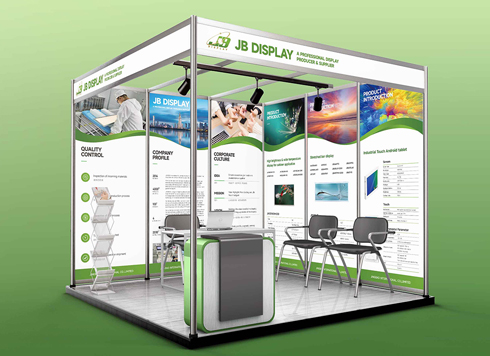 Booth Poster Design for Professional Monitor Product Suppliers
The standard exhibition booth poster projec ...
-
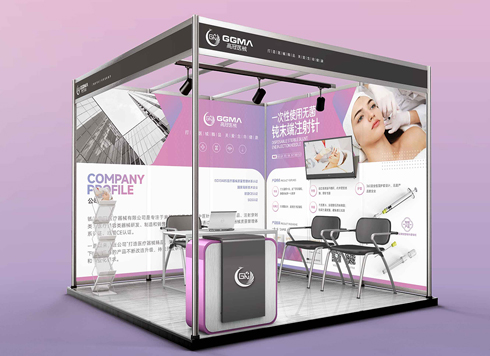 Design of Standard Exhibition Booth Posters for Beauty Instruments
Carefully designed a standard exhibition bo ...
-
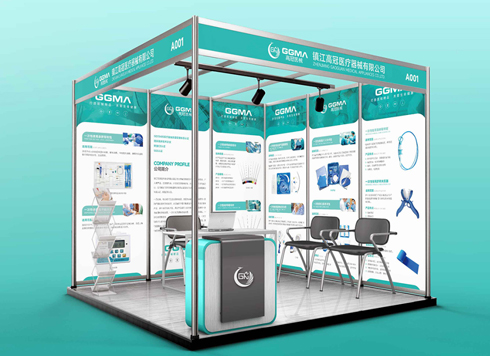 Design of Exhibition Posters for Medical Device Standards
XiYue is designing an exhibition booth post ...
-
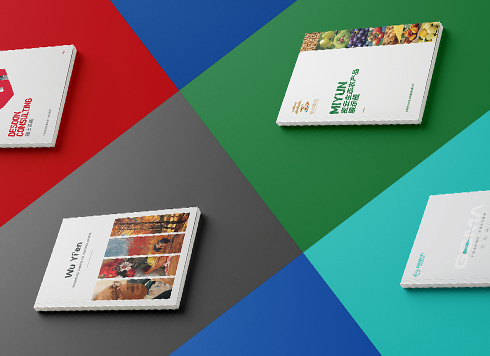 Collection of Brochure Design Cases in 2024 (Cover Series 02)
Our brochure design projects focus on diver ...
-
Storefront sign faded in less than a year—was indoor photo printing used as outdoor inkjet printing?
Date: Sep 22, 2026 Read: 6
-
Only Printing a Few Hundred Copies: Is the Printer Steering Me Away From Offset Because the Run Is Too Small, or Because the Costs Really Don’t Spread? If I’m in a Hurry, Should I Just Switch to Digital?
Date: Sep 21, 2026 Read: 10
-
Does a catalog cover look cheap without lamination and with only a varnish coat? Can this step be skipped when the budget is tight?
Date: Sep 20, 2026 Read: 9
-
Inner pages switched from 80g to 105g—does the spine width need recalculating? Is there still time if the cover is already laid out?
Date: Sep 19, 2026 Read: 19
-
Brand Color Doesn't Match Between Two Packaging Print Runs—Will Paying Extra for a Spot Color Keep It Consistent?
Date: Sep 18, 2026 Read: 24