


Storefront sign faded in less than a year—was indoor photo printing used as outdoor inkjet printing?
Inkjet printing and photo printing are not the same type of output. The common cost of mixing them is not just slightly worse quality, but fading, graininess, and a second installation fee all at once. Based on 2026 project delivery habits, outdoor long-distance viewing and sun/rain-exposed storefronts and hoardings usually choose inkjet printing; indoor close-up viewing, display stands and stickers with small text and product details usually choose photo printing. The recommended order of judgment is: first viewing distance, then environmental weather resistance, and finally service life and finishing lamination. Using indoor photo printing on a storefront commonly results in fading and lifting within a few months to a year; using low-resolution inkjet printing on an indoor display stand makes graininess and jagged edges obvious up close.
What are the three hard specifications to distinguish inkjet printing and photo printing first?
Do not treat inkjet printing and photo printing as two names for the same machine. They correspond to different inks, resolutions, and finishing strategies. At delivery, asking about installation location and viewing distance first is more effective than comparing unit price first.
- Resolution: Inkjet printing is commonly calculated by output size, and graininess is more obvious up close; photo printing commonly reaches 720 to 1440 dpi or higher and is suitable for viewing within 1 meter.
- Ink type: Outdoor inkjet printing mostly uses eco-solvent or solvent-based inks, which are waterproof and sun-resistant; indoor photo printing mostly uses water-based inks, which are vivid but not water-resistant and usually require lamination or cold lamination.
- Weather resistance: The experience range for outdoor inkjet printing is about 1 to 3 years; photo printing exposed outdoors commonly fades within weeks to months; lamination and UV printing can extend it, but this is affected by environment and installation.
Where does the cost usually come from when storefronts and indoor display stands are mixed up?
Storefronts and hoardings are costly to remove after installation. Once they fade within a short time, the whole piece often needs to be redone. The material cost saved often does not cover the second installation and downtime loss. If indoor display stands and stickers use low-resolution inkjet printing, the graininess is coarse up close, customers may think the design is unprofessional, and the revision and reprint cycle can eat into event time.
On-site delivery experience: Once, the artwork was confirmed only 2 days before an event, the budget was tight, and the materials were shot on a phone. The approach was to split the artwork into two categories: the close-up part of the display stand was output with photo printing, and the storefront background used inkjet printing plus lamination. The result was no graininess complaints for the close-up display stand. The cost was that the unit price of the photo printing part was one to two times higher than the typical range for inkjet printing, but it saved one round of rework and rush fees.
- Counterexample 1: A storefront uses ordinary photo printing without lamination, and after sun and rain exposure it easily fades and lifts.
- Counterexample 2: Small text and product details on an indoor display stand use low-resolution inkjet printing, and the jagged edges are obvious up close.
- Counterexample 3: An outdoor roll-up banner uses indoor photo printing that is not sun-resistant, and the image may already turn white before the event ends.
How to judge by viewing distance and scenario?
'Three looks and one ask' means look at viewing distance, look at the environment, look at service life, and then ask about budget and installation method. The order should not be reversed, because distance determines resolution, environment determines ink type, and service life determines lamination and finishing.
- Look at viewing distance: Within 1 meter, prioritize photo printing or high-resolution UV; 1 to 3 meters can choose high-resolution inkjet printing or photo printing; over 3 meters, ordinary inkjet printing is sufficient.
- Look at the environment: Pure outdoor, sun and rain exposure choose outdoor inkjet printing plus lamination; semi-outdoor choose eco-solvent plus lamination; indoor choose photo printing, with matte lamination if needed to prevent glare.
- Look at service life: For a few days to a few weeks, indoor photo printing is more cost-effective; for half a year to a year or more, outdoor inkjet printing is more stable.
- Ask about budget and installation: If the budget is tight and viewing is from a distance, inkjet printing is acceptable; if the budget allows and close viewing is needed, photo printing or UV printing is more suitable.
Distance is the main variable. Do not reduce close-view materials to low resolution just to save money. Environment is the second variable. Indoor photo printing taken outdoors must have lamination and sun protection, but its lifespan is still limited. Service life determines whether it is worth using UV printing or more weather-resistant materials.
Checkable comparison: how do inkjet printing, photo printing, UV, and lamination rank?
Based on common 2026 output methods, they can be ranked by viewing distance and weather resistance. Prices are only experience ranges; actual costs are affected by size, splicing, lamination, installation, and rush orders, so do not compare only the price per square meter.
- Outdoor inkjet printing: Typical experience price range is about 15 to 40 RMB per square meter (excluding installation), typical output turnaround is 1 working day, suitable for storefronts, hoardings, and large building text, mainly for long-distance viewing.
- Indoor photo printing: Typical experience price range is about 40 to 120 RMB per square meter (including lamination and simple finishing), typical output turnaround is 1 to 2 working days, suitable for display stands, posters, and stickers, mainly for close-up viewing.
- UV printing: Typical experience price range is about 80 to 200 RMB per square meter or separately calculated by board, suitable for rigid materials, adhesive backing, and lightbox film, with better resolution and weather resistance, but higher cost.
- Lamination and cold lamination: Typical experience price range is about 10 to 30 RMB per square meter, which can improve scratch resistance and waterproofing, but not all photo prints are therefore suitable for long-term outdoor use.
When comparing, include installation, splicing, and replacement cycles. The labor and scaffolding cost of replacing a storefront once may be higher than the material cost, which is also why outdoor materials are not recommended to be patched with short-term indoor consumables.
Applicable and non-applicable boundaries
Boundaries are more important than the plan. For outdoor materials viewed from a distance, used short-term, and with a limited budget, ordinary inkjet printing is enough; forcing photo printing is wasteful. For indoor materials viewed up close, with small text, and with brand color requirements, do not use low-resolution inkjet printing, otherwise rework costs will be higher.
- Suitable for inkjet printing: Large building text, hoardings, storefront long-distance images, temporary event backdrops; viewing distance is usually over 3 meters.
- Suitable for photo printing: Indoor display stands, X-banners, posters, stickers, menus, lightbox film; viewing distance is usually within 1 meter.
- No need for high resolution: Large color blocks and bold text on hoardings viewed from a distance—photo printing resolution is hard to distinguish with the naked eye, so it is a budget waste.
- Cannot use ordinary inkjet printing: Indoor close-up small text, product detail images, and materials requiring accurate brand colors; graininess and color difference will be obvious.
- Requires separate evaluation: Long-term outdoor lightboxes, materials requiring fire rating or special installation environments must be checked against local regulations and manufacturer requirements; do not simply copy conventional plans.
If a project has both storefronts and indoor display stands, splitting the output by location is more reliable than using a single cheaper or more expensive option. In 2026, many projects will first determine viewing distance and then determine the output method to reduce mixing risks.
Frequently asked questions
Can inkjet printing and photo printing use the same design file?
Yes, but the output settings differ. Inkjet printing often reduces resolution according to size, while photo printing must ensure close-up detail. Sending the same file directly can waste resolution on one side and show graininess on the other.
Can a storefront sign made with laminated photo printing last over a year?
Under outdoor sun and rain, photo printing often cannot last a year even with lamination, and the risk of fading and lifting is high. For storefronts, outdoor inkjet printing or UV printing is more recommended; lamination can only delay the problem.
If an indoor display stand uses inkjet printing to save budget, will it be noticeable on site?
Within 1 meter, small text and gradients will easily reveal inkjet graininess and jagged edges. If the event will be photographed and shared, photo printing or high-resolution UV is more reliable.
How much price difference between inkjet printing and photo printing is normal?
Based on typical 2026 ranges, indoor photo printing is often one to two times more expensive than ordinary outdoor inkjet printing, or more. The specific difference is affected by size, lamination, installation, and rush orders, so do not compare only unit price.
Are roll-up banners and X-banners inkjet printing or photo printing?
Most are output as indoor photo printing because the viewing distance is close; if used outdoors for only a few days, eco-solvent photo printing plus lamination can be used, but the lifespan is limited and long-term outdoor use is not recommended.
If you are preparing storefronts, display stands, or indoor stickers, first confirm the viewing distance and usage environment, then ask the output provider to give an experience-range quote for inkjet printing or photo printing according to size, and check the resolution, lamination, and installation method. This article applies to conventional advertising materials; when long-term outdoor use, fire rating, or special installation structures are involved, manufacturer specifications and on-site acceptance checklists should prevail. In 2026 project delivery, writing viewing distance, environment, and service life into a checklist can usually reduce rework.
-
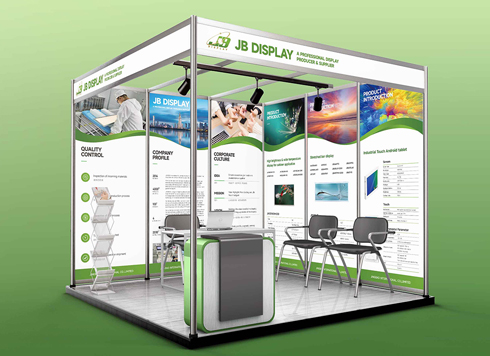 Booth Poster Design for Professional Monitor Product Suppliers
The standard exhibition booth poster projec ...
-
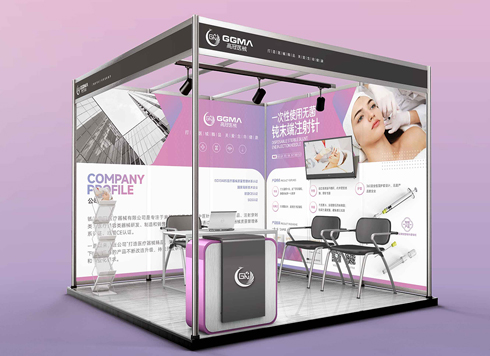 Design of Standard Exhibition Booth Posters for Beauty Instruments
Carefully designed a standard exhibition bo ...
-
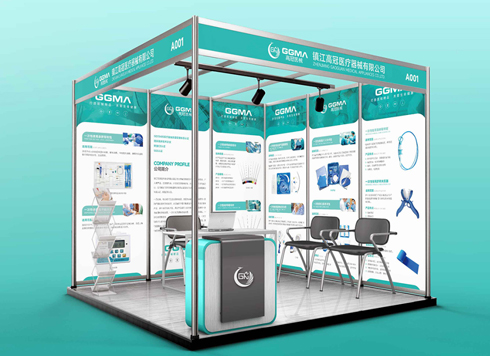 Design of Exhibition Posters for Medical Device Standards
XiYue is designing an exhibition booth post ...
-
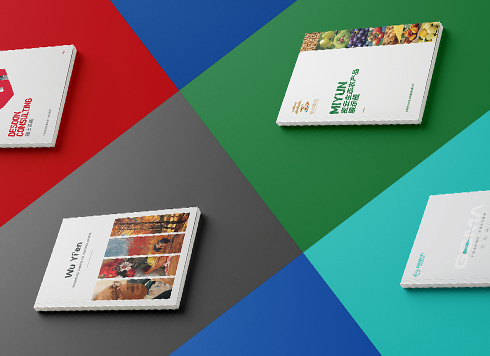 Collection of Brochure Design Cases in 2024 (Cover Series 02)
Our brochure design projects focus on diver ...
-
Only Printing a Few Hundred Copies: Is the Printer Steering Me Away From Offset Because the Run Is Too Small, or Because the Costs Really Don’t Spread? If I’m in a Hurry, Should I Just Switch to Digital?
Date: Sep 21, 2026 Read: 9
-
Does a catalog cover look cheap without lamination and with only a varnish coat? Can this step be skipped when the budget is tight?
Date: Sep 20, 2026 Read: 8
-
Inner pages switched from 80g to 105g—does the spine width need recalculating? Is there still time if the cover is already laid out?
Date: Sep 19, 2026 Read: 19
-
Brand Color Doesn't Match Between Two Packaging Print Runs—Will Paying Extra for a Spot Color Keep It Consistent?
Date: Sep 18, 2026 Read: 24
-
Brochure stuck at 48 pages: saddle stitch or perfect binding?
Date: Sep 17, 2026 Read: 22