



Brand Logo Design Only Delivered as a JPG? Which Source Files Should You Request from the Designer?
After a brand logo design is finalized, you should not only receive a JPG. Based on our habits in brand implementation projects in 2026, the client should obtain from the designer editable vector source files (AI/EPS/SVG), font outlining or licensing details, multiple production files (PNG/JPG/PDF), standard color value tables, and a one-page logo usage guide. Among these, the source file is often overlooked but is crucial: without it, revisions, trademark registration, printing, or cross-media applications may incur additional communication and modification costs.
Why can't a finalized logo be delivered as only a JPG?
JPG is a raster format made of pixels, suitable for screen preview and ordinary printing. But when enlarged for outdoor signage, packaging, or vehicle wraps, edges will show jaggedness and blur. More problematically, editing text, changing colors, or adjusting composition in a raster file is inconvenient—almost any change requires redoing the work.
Vector files record graphics using paths and anchor points; they do not lose quality no matter how much they are scaled, while preserving layer and object structures for later adjustments. The logo is the core visual of a brand and will appear on business cards, official accounts, packaging, lightboxes, and other dimensions and materials. Without editable AI/EPS/SVG files, you lose control over all future modifications.
What should a complete Logo delivery package include?
A complete logo delivery is not a single image but a set of files. According to our delivery practices, these fall into four categories: source files handle "whether it can be edited," production files handle "whether it can be used directly," color schemes handle "whether the colors are correct," and usage guidelines handle "whether it is used properly."
- Editable source files: Vector formats such as AI, EPS, or SVG; ensure they open correctly and layers are complete; if text is not outlined, include the fonts.
- Production reference files: High-resolution JPG, transparent background PNG, print-ready PDF, preferably including black/white and reversed versions for direct online and offline use.
- Color scheme: Provide CMYK (print), HEX (screen), and PANTONE (spot color) values to avoid discrepancies between screen and print.
- Usage guidelines: Safe spacing, minimum usage size, background color restrictions, and incorrect usage examples so that colleagues unfamiliar with design can apply the logo correctly.
Use the "Four Checks and One Use" method to quickly accept logo files
After receiving files, do not just look at preview images. The acceptance checklist we commonly use is "four checks and one use," specifically to address the situation of "no problem found at the time, only to rework before printing."
- Check format: Are there editable source files such as AI, EPS, or SVG, rather than only JPG and PNG?
- Check fonts: Does opening the source file prompt missing fonts? If text is outlined, the text becomes paths and cannot be edited as text, but this avoids copyright issues and cross-platform deformation.
- Check colors: Are CMYK, HEX, and PANTONE values all provided? PANTONE numbers are especially needed for spot color printing.
- Check safe space: Is there a minimum clear space around the logo that remains clear even when reduced to business card size?
- Actual trial use: Place the logo on different backgrounds—white, black, photographs—to check recognition of the reversed version and in dark scenarios.
Format and fonts are checked first because file-related errors are more critical. Color values and safe space affect usage quality. Actual trial use exposes all these issues in real scenarios at once.
What is the difference between full delivery and simplified delivery? How to choose with a limited budget?
Not all logo projects require the same set of files. Based on project experience, the typical range can be divided into complete brand logo delivery and simplified logo delivery.
Complete brand logo delivery: typical duration is about 2–4 weeks, with a fee range from several thousand to tens of thousands of yuan. It includes vector source files, standard construction, standard typography and font licenses, color systems, combination guidelines, and no fewer than 3–5 revision rounds. Suitable for trademark registration, packaging printing, corporate VI, or chain store branding.
Simplified logo delivery: typical duration is about 3–7 days, with a fee range mostly from several hundred to two to three thousand yuan. It usually provides only JPG, PNG, or PDF production files, with 1–2 revision rounds. Suitable for official account avatars, event posters, temporary exhibitions, and one-time materials, but not ideal for long-term brand asset accumulation or formal printing traceability.
Before choosing, ask about your purpose: if you only need short-term materials, the simplified version is enough; if you plan to register a trademark, do packaging, or open chain stores, it is recommended to at least secure a "complete basic version" with source files and basic guidelines. In experience, using a simplified version for market testing and then supplementing with a complete version later is common. With a limited budget, spend money first on editable source files and basic usage guidelines; application extensions can be added in the next phase. Conversely, if it is only temporary online graphics, a single promotional page, or one-time roll-up banner, high-resolution JPG/PNG or PDF is sufficient—no need to pay extra for a full set of vector source files.
Three common pitfalls at the delivery scene, and a real handling case
What truly slows down the final stage of a brand project is often not creativity but incomplete files. Ranked by delivery frequency, three pitfalls are typical:
- Only JPG, no source file: The logo cannot be edited, and trademark registration and VI extensions are restricted.
- Fonts not outlined and no license: When opening the AI file, fonts are missing; a print shop may substitute other fonts, changing the glyphs. If an unauthorized commercial font is used, it can also lead to copyright disputes.
- Inconsistent color specifications: The design is RGB but printing requires CMYK; not specifying clearly can cause color deviation in the final product.
Once, a client's budget and schedule were already locked, and the designer sent only a JPG. We did not realize it was not editable until making business cards. We manually traced the paths to recreate the outlines. Although the shape was preserved, details still had slight deviations, and it cost about one extra day of work. Similar emergency remedies are not uncommon in our experience range, with additional costs typically ranging from a few hundred to over a thousand yuan. So the current practice is: at project start, the delivery checklist is agreed in writing, and the final round is uniformly checked against the checklist, rather than inspecting files only right before printing.
Common Questions
If the logo is only given as JPG, can I vectorize it myself?
Not recommended. Automatic tracing can deviate from the original design details, and complex logos are prone to distortion. It is safer to request the original vector source file from the designer and specify ownership in the contract.
If the fonts are not outlined in the AI file, can I edit the text myself?
If the font has been outlined, the text becomes paths and cannot be edited as text. If not outlined, you need to purchase a license for a commercial font. It is best to require outlining at delivery and have it stated.
Which is more accurate for color: screen viewing or proofing?
Use printed proofs as the standard. Screens display RGB, while printing uses CMYK; the two cannot be perfectly consistent. Before bulk printing, do a proof for color calibration and keep PANTONE references.
Is it reasonable for the designer not to provide source files?
Depends on the contract. If you only purchased the right to use the final images, source files may be charged separately. For trademark registration or VI extensions, it is recommended to agree on source file copyright ownership before commissioning.
If only used for an official account, do I still need these files?
Not necessarily. PNG or SVG is enough for an official account, but it is wise to keep a vector version in SVG or PDF for future printing or signage.
Action guide: before finalization, item by item request source files, font licenses, and color specifications, and include these in the commissioning contract. If you only need temporary materials, retaining high-resolution JPG or PNG is acceptable; if you are serious about brand assets, prioritize purchasing a project with complete delivery files.
-
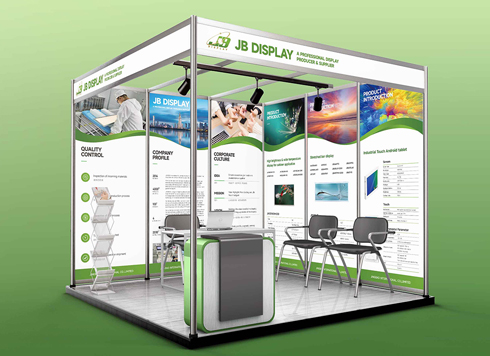 Booth Poster Design for Professional Monitor Product Suppliers
The standard exhibition booth poster projec ...
-
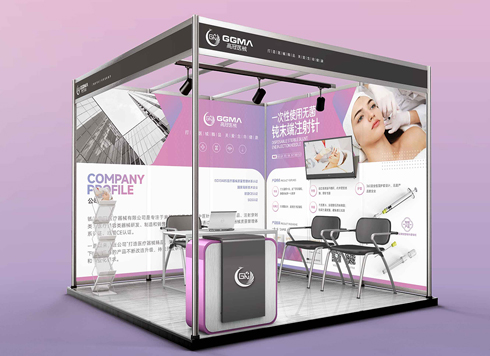 Design of Standard Exhibition Booth Posters for Beauty Instruments
Carefully designed a standard exhibition bo ...
-
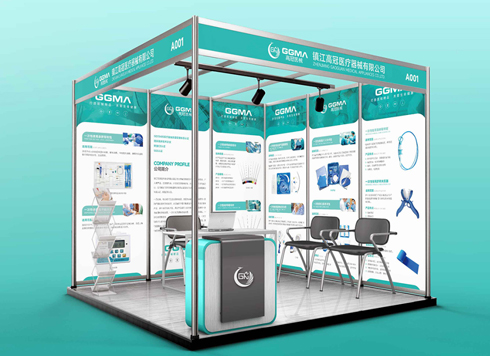 Design of Exhibition Posters for Medical Device Standards
XiYue is designing an exhibition booth post ...
-
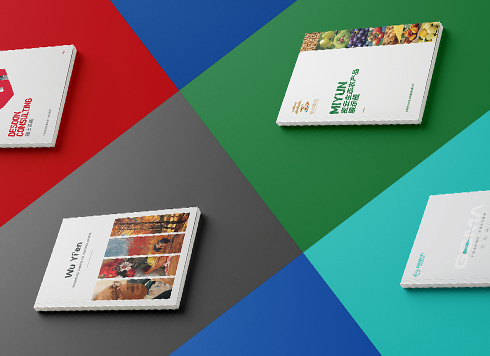 Collection of Brochure Design Cases in 2024 (Cover Series 02)
Our brochure design projects focus on diver ...
-
Can a Logo Created by a Designer Be Directly Registered as a Trademark?
Date: Sep 3, 2026 Read: 21
-
Can trademark registration guarantee 100% success?
Date: May 30, 2025 Read: 396
-
What is the validity period of a registered trademark?
Date: May 30, 2025 Read: 337
-
Brochure spread image prints with a missing chunk in the middle—is it not enough gutter allowance or the wrong binding method?
Date: Sep 14, 2026 Read: 1
-
If the printer provides the die, will packaging design still charge for structural drawings?
Date: Sep 13, 2026 Read: 6